UPDATE: New Zealand Trade and Investment Minister Todd McClay has warned exporters face "considerable uncertainty" following the US Supreme Court's ruling against US President Donald Trump's global tariffs.
In a brief statement this morning, McClay said the ruling had the potential to be important for New Zealand exporters. He said exports to the US had been holding up well since the administration imposed a 15% tariff on New Zealand, with evidence that in many cases cost increases were being passed on.
"Any reduction in tariffs is welcome news. New Zealand does not believe the 15% tariff imposed on many of our exporters is warranted given the average tariff rate applied to US goods into New Zealand is just 0.3%," he said.
"Our Embassy in Washington will engage with their counterparts to get more information so we can continue to work with exporters, however uncertainty around US tariff policy is likely to remain for an extended period of time."
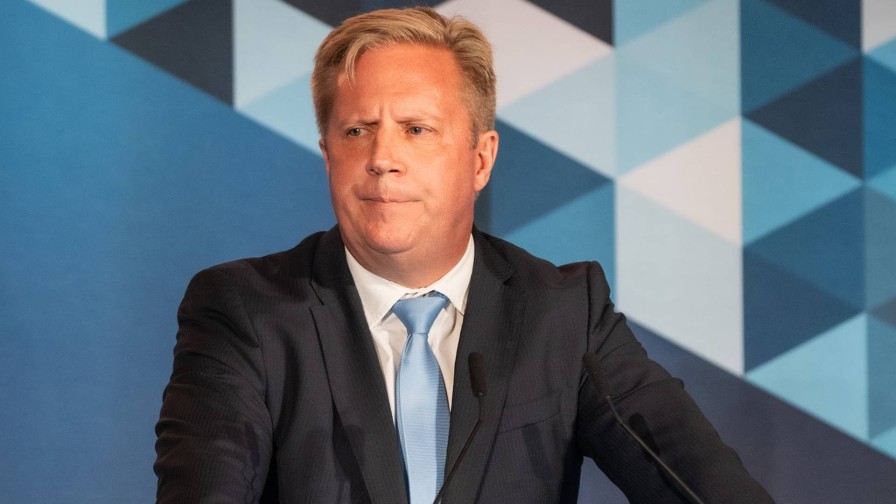
Todd McClay.
EARLIER: US President Donald Trump has vowed to impose a global 10% tariff on all imports into the United States, hours after the Supreme Court ruled he had exceeded his authority by imposing them.
Overnight NZ time, the US Supreme Court in a 6-3 ruling struck down Trump's use of federal emergency-powers law to impose his "reciprocal" tariffs across the globe, saying that law "does not authorise the president to impose tariffs".
At a press conference following the decision, Trump called the ruling "deeply disappointing" and said he was "absolutely ashamed" of the members of the court. He further labelled them "fools and lapdogs" and alleged the Supreme Court was influenced by foreign interests.
He then said he would impose a 10% global tariff, over and above tariffs already being charged, under a different law. He claimed he would not need Congress approval to do so.
"I don’t have to. I have the right to do tariffs,” he told a press conference. “We’re the biggest [economy] in the world and now we’re the strongest by far.”
Amazon goes top
Otherwise, Amazon has surpassed fellow retailer Walmart to become the company with the largest revenue in the world.
This week, Walmart reported annual revenue of US$713.2 billion ($1.19 trillion) for its most recent fiscal year, a figure just short of Amazon’s US$716.9b in revenue.
The overtake wasn’t unexpected, after Amazon’s quarterly sales surpassed Walmart’s last year and while market watchers classed the shuffle as largely symbolic, it highlighted a retail fight to keep up with changing consumer preferences.
Amazon’s rise to the top was bolstered by non-retail divisions such as cloud computing, fulfillment, and advertising.
In December, Walmart shifted its listing to the tech-focused Nasdaq exchange from the NYSE as a way to emphasise its investment in technology such as automation and AI. The retailer has tried to follow in Amazon’s footsteps and position itself as both a retailer and a tech company.
Walmart shares were up more than 20% over the past year. 
In other news, Amazon broke a nine-day share slide after shares were up more than 1% when markets closed on Tuesday.
About 18% of the stock’s market cap was shed after investors questioned its AI spending plans.
Amazon was expected to spend US$200b in capital expenditures this year, a nearly 60% increase from last year and more than US$50b above Wall Street’s forecast. Most of the spending was expected to go to AI-related initiatives, which required more infrastructure such as data centers, chips and networking equipment.
The multi-day slide marked the company’s worst losing streak since 2006 and cost Amazon about US$450b from its US$2.2 trillion market cap.
Apple takes on podcast rivals
Meanwhile, Apple has taken steps to become more competitive in the podcasting space.
This week the company reported plans to launch a new integrated video experience later this year. Within the podcast app, users will be able to switch between watching and listening to shows from the same feed. While Apple Podcasts has supported video since 2005, feeds were kept separate from audio versions of the same show.
It’s a move to bring Apple Podcasts in line with competitors such as Spotify and YouTube, which have already leaned into video podcasting, while Netflix has also stepped into the market.
Apple’s senior vice president of services Eddy Cue said Apple had helped make podcasting mainstream two decades ago by adding podcasts to iTunes. “By bringing a category-leading video experience to Apple Podcasts, we’re putting creators in full control of their content and how they build their businesses, while making it easier than ever for audiences to listen to or watch podcasts.”
While Apple does not break out revenue specifically for the podcast division, its services segment – which includes digital content and subscription businesses – generated US$30b in revenue during the most recent quarter.
Nvidia exits investment
In other news, technology company Nvidia has divested a company it once hoped to acquire.
Documents submitted to the US Securities and Exchange Commission (SEC) this week showed Nvidia had sold its stake in British semiconductor designer, Arm. Nvidia had held about 1.1 million shares in the company, valued at about US$155.8m.
Nvidia invested in Arm’s IPO back in 2023 after plans to acquire the company for US$40m fell through in 2022.
Arm – whose commercial partners include companies such as Meta, Google, Microsoft and Amazon – has a market cap of about US$135b. Earlier this month, third quarter results showed sales rose 26% year on year to US1.24b, surpassing analysts’ expectations. In July 2025, Arm CEO Rene Haas confirmed the company was looking to develop its own chips.
While Nvidia has exited as an investor, the two companies still have a license agreement together.

Kate McVicar and Hamish McNicol.
Sat, 21 Feb 2026


