Gold investors received a rude shock when the recent rally in the precious metal turned into a dive earlier this month. After climbing 16% in the first weeks of 2026 – to peak briefly at US$5500 ($9111) an ounce – it was this week hovering around the US$5000 mark.
Now it’s the turn of bitcoin and other cryptocurrencies. In the week to February 6, they plunged the most in more than three years and handed back all the gains made since US President Donald Trump won the election in November 2024.
The price of bitcoin, ether, and other digital assets reached their peak of US$126,000 last October and then began a retreat that accelerated in 2026 to below US$70,000.
Their origins go back to a 2008 paper supposedly authored by Satoshi Nakamoto, an apocryphal entity no-one has identified, although many have tried. He was last heard from in 2014, by which time his idea for a “peer-to-peer electronic cash system” had taken root.
Satoshi had proposed a formula for creating a monetary system that could operate over the internet, without any bank, without any central node – in other words, electronic money.
The idea had been floated before, but never in the way Satoshi proposed it. Essentially, he had come up with a system for creating digital gold.
“It was, in theory, a flawless system,” writes Jake Adelstein, in the updated paperback edition of The Devil Takes Bitcoin, a true-crime story set mainly in Japan about Mt Gox, the world’s first successful bitcoin exchange.
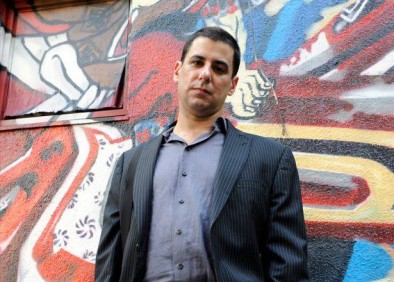
Jake Adelstein.
Inflation-proof
Adelstein goes on to explain other details, such as capping Bitcoin at 21 million bitcoins, making it inflation-proof and difficult to forge.
“In addition, every single Bitcoin transaction would be logged in a public ledger, to be called the blockchain, thus also ensuring that forgery would be next to impossible.”
Adelstein and his reporter-colleague Nathalie Stucky were at the coalface in Tokyo, where Mt Gox was based and faced near collapse in February 2014. They specialised in crime reporting for outlets such as the Los Angeles Times. Their collaboration has produced Tokyo Vice (an HBO series) and two books, The Last Yakuza (2023) and Tokyo Noir (2024).
Cryptocurrency was still a novelty when Adelstein took an interest in Mt Gox and pursued the story thanks to Christopher Dickey, foreign editor at The Daily Beast, the news website launched in 2008 by Tina Brown, former editor of Vanity Fair and The New Yorker.
(The Daily Beast was briefly merged with Newsweek before moving to IAC, a conglomerate whose publishing assets include former Time Inc magazines People, InStyle, and Entertainment Weekly.)
Ceased operations
Mt Gox was launched in 2010 and by 2014 was handling 70% of all Bitcoin transactions. It suddenly ceased operations after reporting the “disappearance” of 650,00 bitcoins, then worth US$450 million.
It looked like the end of a promising venture. But, as Adelstein tells us, Bitcoin turned out to be a semi-sentient zombie. Cryptocurrency became bigger than ever.
“People simply couldn’t resist the allure of an unregulated, decentralised currency that spoke to the anarchist, libertarian, and get-rich-quick schemer in all of us,” he says. Bitcoin was followed by other cryptocurrency platforms such as Ethereum, and altcoins such as Ripple and Litecoin.
In the decade or so since Mt Gox, the industry has reached a scale that a half-billion “loss” through hacking, embezzlement, or other criminal acts poses little threat. The collapse of Sam Bankman-Fried’s FTX – then the third-largest cryptocurrency exchange by volume – involved tens of billions of dollars.
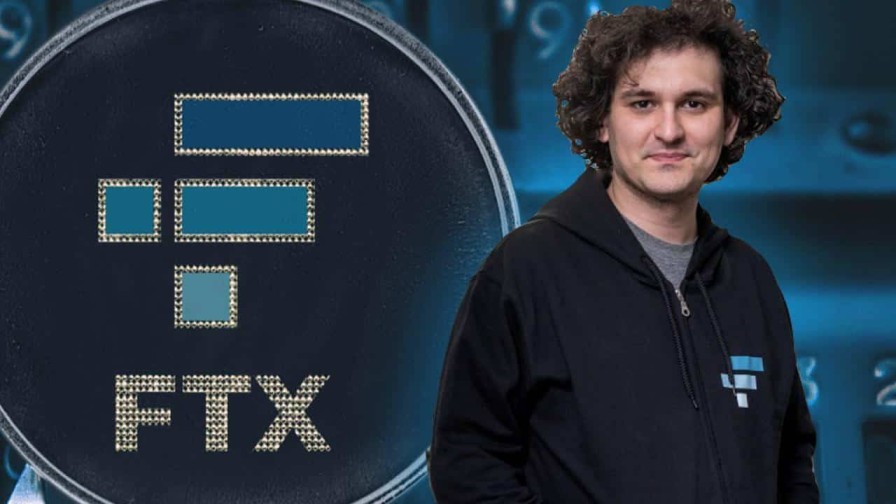
Sam Bankman-Fried.
While Mt Gox’s US$450m loss was a big deal at the time, it was not a fraud perpetrated by insiders. Just what happened is the substance of The Devil Takes Bitcoin, and it unfolds like a thriller.
If you don’t already know the story, then I hope to minimise any spoilers. Before I introduce Adelstein’s leading characters, he does provide a few riders. “I can’t say I understand it all. But then again, I don’t have to. In the end, it seems the secret to surviving in this world of Bitcoin and blockchain isn’t understanding – it’s just believing.”
First, among the four main characters is Mt Gox founder Mark Karpelès, a Frenchman living in Tokyo who bought a tradable card game service, Magic: The Gathering Online, from its programmer. It offered a service for trading bitcoin as well as other currencies.
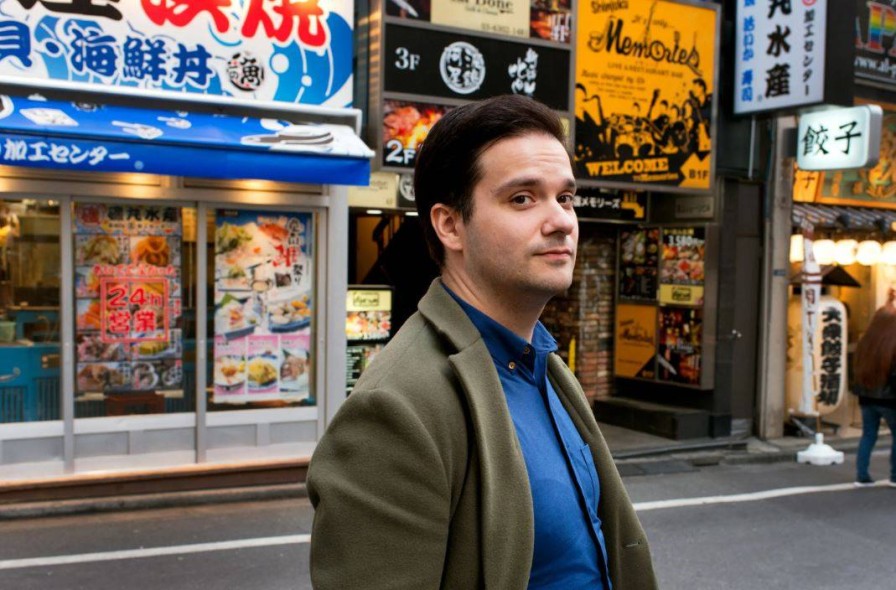
Mark Karpelès.
Management was not among his strengths and, as the company’s transactions business surged, so too did efforts by hackers to get a slice of the action. Karpelès was arrested after Mt Gox’s collapse and faced a series of charges related to the missing millions.
Here, Adelstein brings his experience with the Japanese justice system into close focus, and none of it is flattering. The police's aim in any criminal case is to get a confession. If that doesn’t happen with the first charge, others are serially laid until it does.
The courts accept all confessions at face value, hence the near 100% conviction rate.
“The questions of guilt or innocence have very little to do with the Japanese justice system – it’s more about winning and losing. And a confession is worth more than all the evidence in the world,” Adelstein says.
He then segues into the case of Carlos Ghosn, the Brazilian-born boss of the Renault-Nissan-Mitsubishi car company, who was smuggled out of Japan rather than face prosecution.
The next major character is Ross Ulbricht, the 26-year-old Texas founder of Silk Road, a darkweb site that used Bitcoin for trading illegal commodities such as his homegrown psychedelic mushrooms.

Ross Ulbricht.
TV inspired
Ulbricht was inspired by Breaking Bad, the TV series in which a chemistry teacher dying of cancer turns his talents to making crystal meth, or 'P' as it is known here.
Silk Road emerged into public prominence after a 2011 article in Gawker, a blogsite that broke all the rules until it was shut down by a defamation suit in 2016. It described Silk Road as “The Underground Website Where You Can Buy Any Drug Imaginable”.
Ulbricht was an idealist who had rules against trading anything coerced, created victims, stolen goods, or violent services. He operated under the pseudonym of Dread Pirate Roberts, and was pursued by the FBI, who charged him with narcotics trafficking, computer hacking, and other crimes.
It may be a spoiler to note that Ulbricht was among the first to be pardoned in Trump’s second term. The president has long championed cryptocurrencies, but that story is beyond the scope of this review.
Russian President Vladimir Putin also appears as the rescuer of the next major character for a similar reason. He arranged for cybercriminal Alexander Vinnik to be part of a prisoner swap in 2025. He had been arrested in Greece nine years earlier and put on trial in France.
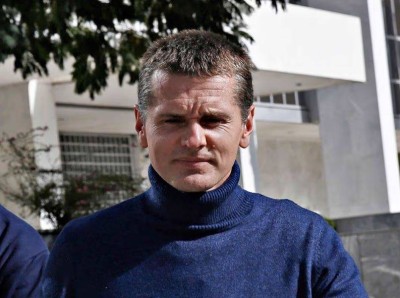
Alexander Vinnik.
Master hacker
US authorities did not get their chance to charge Vinnik, although he was reputed to be the master hacker and billion-dollar money launderer who had looted many Bitcoin exchanges, including Mt Gox. That means the missing millions ended up in Russian hands.
The book’s final major character is Tigran Gambaryan, who led the US investigation against Vinnik, proving that you could identify Bitcoin transactions, despite the claims otherwise.
Gambaryan’s story, also told in Andy Greenberg’s Tracers in the Dark (2022), ended badly after he left the US Internal Revenue Service to work for Binance, a cryptocurrency-exchange platform.
He was falsely accused and jailed by Nigerian authorities after being asked to investigate the collapse of that country’s currency. Trump came to his rescue and obtained his release, but the time in prison left him permanently scarred.
As for Satoshi Nakamoto, he remains an enigma. Adelstein posits he was English, due to the style and substance of his many posts. The hours when he did so suggest he had limited free time from a full-time job. His story is yet to be told.
The Devil Takes Bitcoin: Cryptocurrency crimes and the Japanese connection, by Jake Adelstein with Nathalie Stucky (Scribe).
Nevil Gibson is a former editor at large for NBR. He has contributed film and book reviews to various publications.
This is supplied content and not paid for by NBR




