This year’s annual Auckland Writers Festival, to be held on May 10 to 17, is bigger and better than ever. That’s not an empty boast, as it reflects the healthy state of book-buying.
Some 220 writers will make an appearance in 140 separate events over six days. It’s probably the biggest event of its kind in the Southern Hemisphere.
Among the authors will be three Booker Prize winners – all males in what has become a female-dominated activity. Most of the attendees will also be women.
Similar festivals have attracted record audiences around the country – an indication that publishing is no longer endangered. This was not guaranteed when the digital revolution tore through the print industry.
Newspapers were the first to succumb. But a surprising ally emerged to keep the book alive. Amazon.com offered a choice no bookshop could match. Soon, it had dozens of online competitors, including major bookselling chains.
Among the choices were e-books and Kindle readers. Amazon added self-publishing, vastly increasing the range available to readers, as well as new genres that were eventually absorbed by mainstream publishers.

Jeremy Lewis.
Much different
The industry today is much different from that of the 1930s, when printing technology, social changes, and economic circumstances conspired to create the mass-produced paperback. Its success is told in The Man Who Changed the Way We Read, a biography of Penguin Books founder Allen Lane by Jeremy Lewis, who was a distinguished publisher and writer.
His other books include biographies of literary figures such as Cyril Connolly and Tobias Smollett, Lord David Astor (longtime publisher of The Observer), and three volumes of autobiography, noted for their humour and self-deprecation.
Lewis, who died in 2017, was also an editor and contributor for the London Magazine, The Oldie, and the Literary Review – all devoted to the world of books. His biography of Allen Lane was first published in 2005 and has been reissued, in paperback of course, to mark Penguin’s 90th year.
Lane’s first job in publishing was at The Bodley Head, founded by a distant relative, John Lane, who ‘adopted’ the 16-year-old Allen Williams as his nephew. This opportunity required a change in surname to Lane, the same as his mother's.
In 1919, The Bodley Head remained one of London’s leading publishers but was finding it hard to recover its pre-World War I position. Seven years later, Allen Lane inherited it after ‘Uncle’ John Lane’s death. But Allen, with his two brothers Richard (Dick) and John, could not sustain the business, selling it to Stanley Unwin.
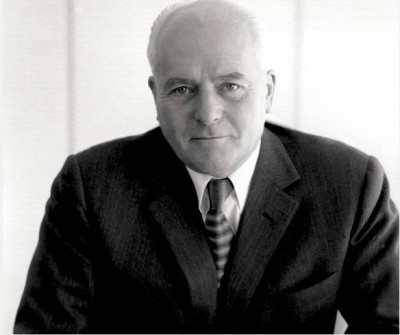
Sir Allen Lane in 1961. Photo: National Portrait Gallery.
‘Lurid covers’
Cheap, paper-covered books selling for between 6d (sixpence) and one shilling (1/- or 12d) had existed since 1848. They were available in railway stations and considered “ephemeral trash, with lurid covers and advertisements”.
At the other end of the spectrum, some publishers in Europe sold cheap editions of classic literature. But British retailers, such as WH Smith, resisted anything except for the traditional hardback, with popular novels selling for between 7/6 and 12/6 when newly employed workers were paid about 15/- a week.
The economics were daunting for the Lane brothers. They had to persuade publishers to sell them reprint rights for titles that would be sold for as little as 6d. This meant a royalty for an author of just £50 (pre-decimal) based on a farthing for each of 50,000 sold copies.
But the first Penguins, launched in August 1935, were a hit. Jonathan Cape provided six of the first 10 titles, including Ernest Hemingway’s A Farewell to Arms, and the remainder from The Bodley Head, including Agatha Christie’s The Mysterious Affair at Styles.
Faced with a boycott by bookshops, Woolworths became the primary outlet. Within four months, one million Penguins, with their distinctive text-only orange covers for contemporary fiction, had been sold. That tripled to three million within the first 12 months. Classics were coloured dark blue, crime was green, and, in 1937, light blue non-fiction Pelicans appeared.
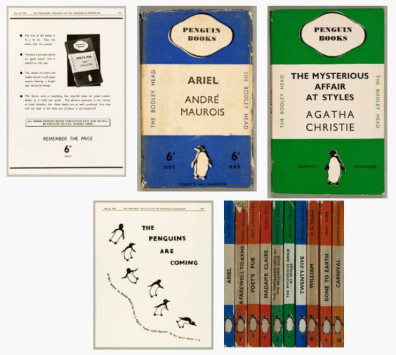
A promotional display of the first 10 Penguins.
Strict conditions
Allen Lane had stamped strict conditions on design, content, and what qualified as a Penguin, helping to hold off competitors for paperback rights, while attracting authors for Penguin Specials, launched in November 1937.
These were published in print runs of up to 250,000 just a week after the manuscript was delivered. In content, they reflected Lane’s left-wing politics, which remained solid for the rest of his life.
Penguin published 35 Specials up to the outbreak of World War II, when paper began to be rationed. Despite these restrictions, the war proved a bonanza: the total output reached 600-odd titles, half of them originals, as demand soared and literacy was encouraged.
The price rose from 6d to 9d, and books were limited to 256 pages, which enabled stapling rather than binding. War also brought change to the Lane brothers. John was killed in action in 1942, while Allen, then in his late 30s and not required for war service, married Lettice Orr, producing a family of three daughters. Dick spent the war in the navy.
Allen was in full control and continued to innovate. Illustrated Puffins for children were launched in 1941, while the New Writing and Modern Painters series provided morale boosters. Penguins slipped easily into the pockets of uniforms in the armed services.
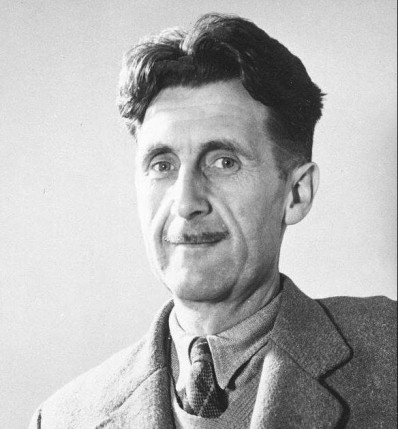
George Orwell.
Optimism fuelled
The post-war intellectual resurgence and hopes of egalitarian socialism fuelled optimism for a higher form of civilisation. George Orwell noted it was common to read “print articles which would have been considered hopelessly above their readers’ heads a few years ago”.
Penguin had achieved thought leadership in society that no other publisher could match. But competition in the mass market challenged this, with rival publishers in the UK and the US launching brands such as Pan, Corgi, Panther, and Bantam.
Penguin was urged to be “hostile to frivolity and the corrupting effects of American culture”, with comparisons made to the high-minded BBC under Lord John Reith. Meanwhile, Lane had separated from Lettice and travelled widely in the 1950s with a German maid and his daughters.
Another turning point occurred in 1960, when Penguin published an unexpurgated version of DH Lawrence’s Lady Chatterley’s Lover, leading to a sensational censorship trial. The result was three million copies sold almost overnight and the floating of the company on the stock exchange.
Original titles
Lane owned 51% and had another 19% in a family trust. Allen had earlier bought out Dick, who had emigrated to Australia and was in poor health. A bookseller, Tony Godwin, became the chief editor, and pushed Penguin further into hardback territory to bolster original titles.
This introduced a corporate culture into what had been an ideological business. “Godwin acquired a reputation for extravagance and paying over the odds for books of a kind that, all too often, combined laudatory reviews with modest sales,” Lewis states. In doing so, “he led the way into a world in which advances bore little or no relation to the actual sales of a book”.
Goodwin revived the Specials and had lured to Penguin by far the most impressive list of British and American authors of the 1960s. Yet he also rejected Joseph Heller’s Catch-22 and John le Carré’s The Spy Who Came in From the Cold.
It was Goodwin’s idea to launch serious non-fiction hardbacks under the Allen Lane The Penguin Press imprint, the egghead Peregrines, as well as the Penguin Modern Classics, Modern Poets, and African Library series.
The Goodwin era of aggressively promoted middlebrow fare was cut short in 1967 when he made Lane livid over a costly promotion for Len Deighton’s Funeral in Berlin and published a book of anti-clerical cartoons by a Frenchman, Siné. It offended the clergy and, more importantly, booksellers.
Lane ordered the copies to be withdrawn, and the sacking of Goodwin became a public controversy. Lane himself had to bow to the outside pressures of business disciplines such as cashflows and budgets, while dealing with the “red moles” in editorial who had no understanding of business or sense of financial responsibility.
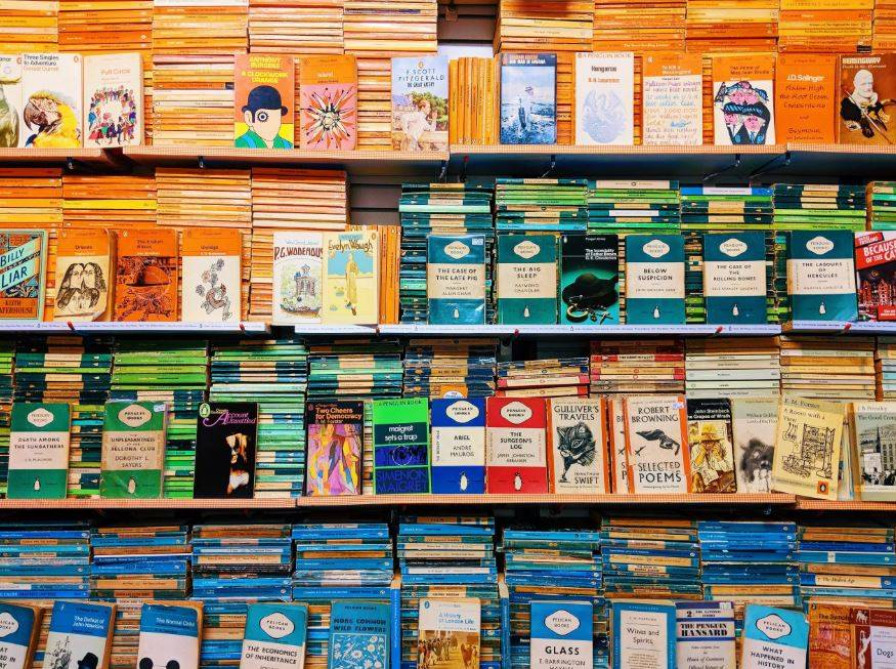
Penguins at the Ironbridge Bookshop in Shropshire, England.
Facing reality
Paperbacks remained big sellers, with 1.5 million extra copies sold each year from 1964 to 1970. But the business had to face reality when accountants discovered a huge inventory of unsaleable books, unpaid suppliers, and a large overdraft.
Margins had reduced, books were underpriced, and runs were too large. Penguin turned from being a predator of publishers and authors into a target. American publisher McGraw-Hill bought a shareholding that reached 17% at its peak.
Lane was forced to retire after being diagnosed with cancer, dying soon after, aged 67. A day later, Penguin merged with Pearson Longman.
In an epilogue, Lewis records how Penguin – now one-third of a company called Penguin Random House owned by Germany’s Bertelsmann – acquired traditional London publishers Hamish Hamilton and Michael Joseph, as well as New York’s Viking, and switched to the larger B-format paperback that dominates new book sales.
Lane’s practice of resetting the type for pocket-sized A-format paperbacks was abandoned. New novels typically sell for £10.99 in the UK – about half the price of a hardback. This compares with a difference of 15 or more times for their equivalents in 1935.
Lewis spares few details in Lane’s densely packed life, both public and private. The reduced-sized text runs for 400 pages, plus an extensive bibliography and index. The sheer volume of words will overwhelm readers who are not avidly interested in publishing and literature. For them, it is a worthy 90th memorial to a talented and visionary man.
The Man Who Changed the Way We Read: The Story of Allen Lane and Penguin Books, by Jeremy Lewis (Penguin Books).




