The annual celebration of Anzac Day offers a rare opportunity to reflect on the role of conflict in the protection of values that define a liberal democratic society.
This runs counter to the usual message served up daily in the media that all wars are bad and that appeasement – usually in the form of calls for ceasefires and diplomatic solutions – is the best means to resist aggression, repression and authoritarianism.
The past four decades have seen a retreat from resisting nefarious global forces that view the West and liberal democracies as their enemy – both from within and without.
Military historian Ron Crosby (NZSAS: The First Fifty Years) best describes this in examples of terrorism employed by the jihadist Muslims of the Taliban in Afghanistan. This is where New Zealand sent armed forces in 2009, continuing a long Anzac tradition.
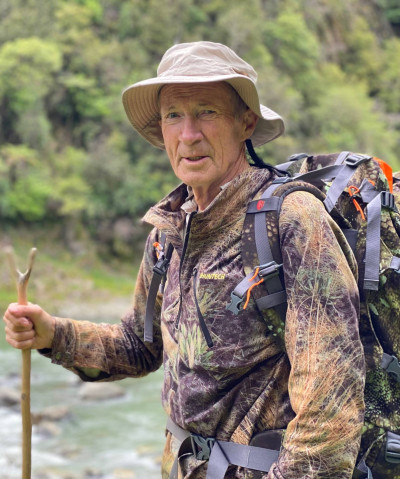
Ron Crosby.
At first, Anzac commemorated those who died at Gallipoli defending the British Empire in World War I. It was later widened to include all killed in foreign wars fought by New Zealanders.
Interest in Anzac Day faded in the decades after World War II due to more peaceful and prosperous times. It fell victim to political developments in the 1960s as nation-building gave way to identity issues.
Anti-war movements reached their peak when Western media coverage was given considerable freedom to report from conflict zones without censorship. The result was a viewing public that did not have the stomach to sustain heavy casualties on a long-term basis.
“Eventually that meant that in recent guerrilla insurgencies, Western governments had succumbed to pressure from their own public, particularly in response to repetitive television coverage depicting the horror of war,” Crosby says.
Suicide bombers
The Taliban learned from tactics honed in Iraq against US-led forces. “[These] involved the random, ruthless killing of civilians – particularly high-profile civilians from Western nations – by use of a mix of terror attacks, hostage-taking, IEDs (improvised explosive devices), VBIEDs (vehicle-borne IEDS) and suicide bomber explosions.”
The more spectacular these attacks, the more they would undermine the civil administration and add to pressure for the withdrawal of Western forces.
In Keep Calm – We Are Coming, commissioned by the NZSAS Trust, Crosby describes three episodes in Kabul where the Special Air Service engaged directly with Taliban insurgents. In each case, the same tactics were used.
A large vehicle-borne bomb was exploded outside the target building, usually housing office or hotel workers, tourists and other non-military personnel. Heavily armed insurgents, wearing suicide vests and carrying grenades, would then enter with the aim of inflicting as much carnage as possible.
The suicide vests, when “clacked off” or detonated, sprayed out a mix of ball-bearings, bolts, nuts and other small metal objects. The favoured time was at night or dawn – daytime in many Western countries where the attacks would be seen on TV.
The primary role of the initial 82-member SAS contingent was to train local Afghans for a Crisis Response Unit (CRU) of the police. They took part in all three operations that Crosby describes.
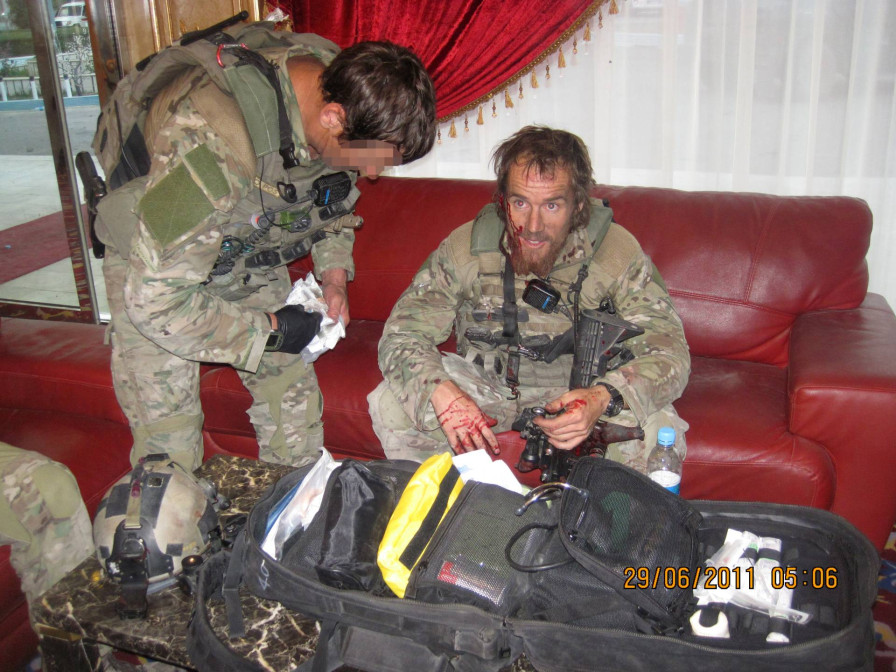
Wounded Corporal Steve Askin with medic Sergeant Bruce at the Intercontinental Hotel. (NZSAS Historical Collection)
The first, in February 2010, occurred at dawn at the Indian Guesthouse, which was used by the UN and was next to the Park Residence Hotel. Many of the residents were health professionals who worked at a nearby medical clinic.
The explosion had largely destroyed the building, and occupants were being shot. A large police contingent had already arrived and had taken casualties when the SAS arrived. These incidents always attracted large crowds as well, despite the high risk, until the insurgents had been eliminated. Among those rescued was a fellow New Zealander.
The second attack, in June 2011, involved the Intercontinental Hotel, situated on a prominent hill overlooking Kabul. The hotel was hosting VIPs attending a security conference, including Baroness Fiona Hodgson, who championed women’s rights in Afghanistan.
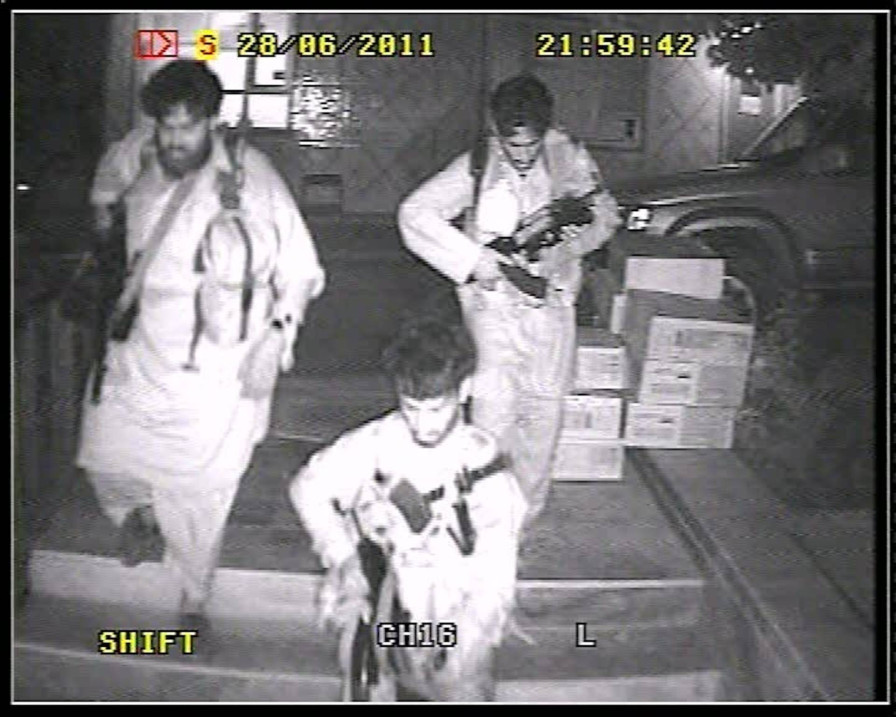
Surveillance camera shows Taliban insurgents entering the Intercontinental Hotel. (NZSAS Historical Collection.)
Helicopter sniper
Eight or nine insurgents, with handlers based in Pakistan, attacked at night and were shooting hotel staff and guests. The response included a Blackhawk helicopter with an SAS sniper. The SAS team was equipped with night-vision goggles. Their job was to hunt down the attackers, room by room, in a multi-storied building.
Two SAS operatives were seriously injured when a suicide bomber 'clacked off' during the search. In his eyewitness account, Captain Damon (SAS soldiers are not identified with surnames) described how their training at the Ellerslie Racecourse and Kingseat Hospital had paid off: “The tactics, techniques and procedures that we had spent hours training and drilling in New Zealand proved themselves very effective in battle.”
Among those injured was Corporal Steve Askin, who later died in a helicopter accident during the Port Hills fires near Christchurch in February 2017. Apart from the casualties, the operation was a success, and hundreds of lives were saved. They included the baroness, who had locked herself in a room but had telephone contact with British authorities throughout her ordeal.
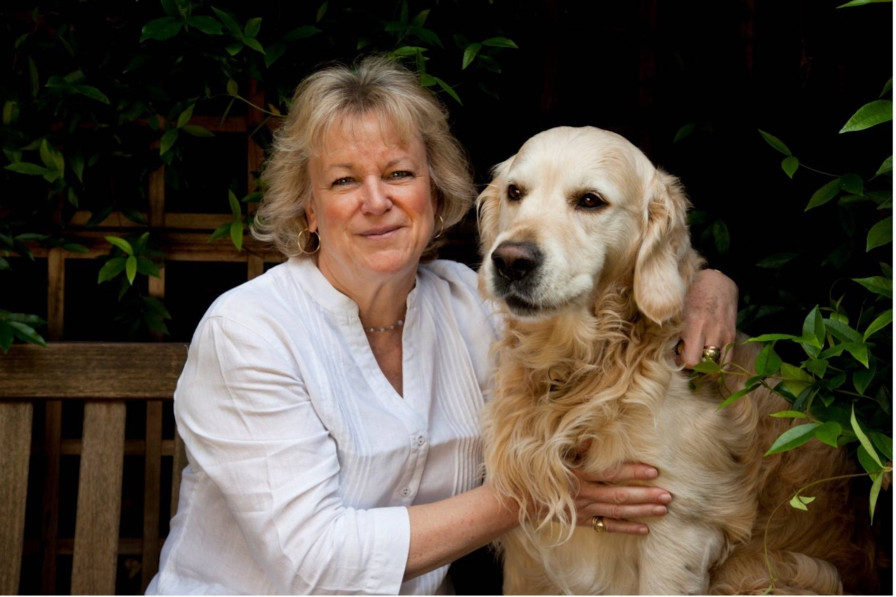
Baroness Fiona Hodgson in July 2011, shortly after her return to England. (Source: Tom Stoddart)
‘Fierce determination’
“… A fierce determination developed in me to ensure that the terrorists did not stop me making every effort I could to assist [in the] struggle to improve the dreadful lot of women in that war-torn country, so dominated by men,” she later recalled in an interview with the author in 2019.
The third and final of Crosby’s case studies was the attack on the British Council, a cultural centre that was hit by two vehicle bombs two months later, in August 2011. When the SAS arrived, “there was the usual chaos of Afghan forces of all types on the ground – police units, army units, security guards of various types, and of course now the CRU,” wrote Senior Sergeant Ru in his report.
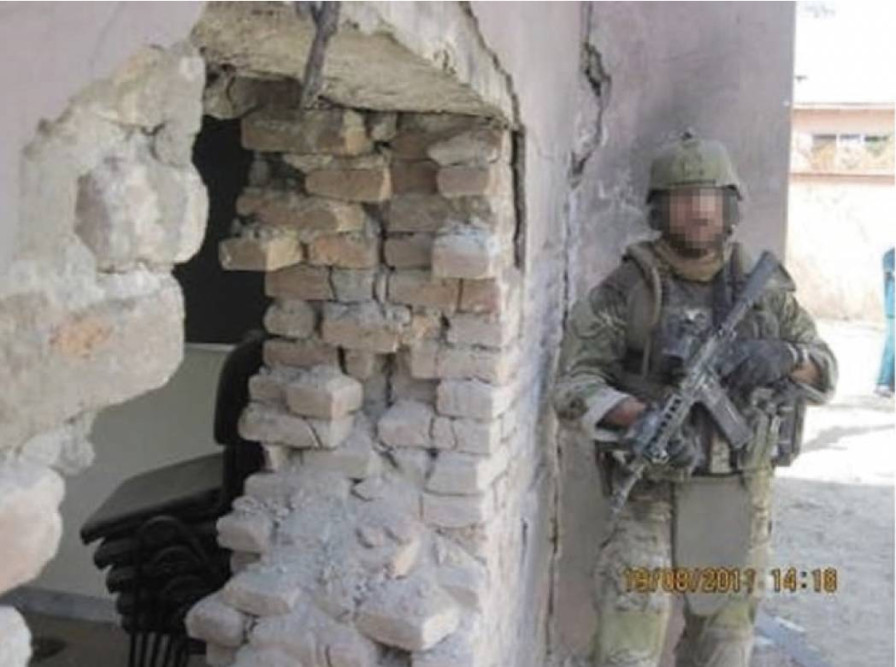
The hole blown in the 1m brick wall allowing entrance to the British Council compound. (NZSAS Historical Collection.)
Dramatic rescue
The compound was entered by blowing a hole in a 1m-thick brick wall. The New Zealanders were involved in a dramatic rescue of two female staff and a security guard who were in a secure room. This required setting off another explosion to enter the foyer.
Corporal Douglas (Dougie) Grant was fatally shot during the rescue, becoming the first of two SAS operatives to be killed on duty in Afghanistan. (The other was Lance Corporal Leon Smith, who helped to recover Grant’s body. Smith died in a separate operation.) Grant’s wife, Tina, a medic in the Defence Force, later headed a trust set up to support bereaved families.
In all three cases, Crosby uses detailed accounts by those involved. While often repetitive and overlapping, they give an unvarnished view of what it’s like to be under fire and making decisions that have lasting consequences.
The SAS ended its mentoring role of the CRU in mid-2012 as the operation known as Wātea wound down and the task was handed back to Norwegians. An SAS liaison officer, Major Gary, later observed in 2013 that the Afghan CRU had impressed him with their improvement since their ill-disciplined and chaotic behaviour back in 2010.
They had taken part in some 17 spectacular attacks in Kabul during his time there, including an attack on the Afghan War Wing at Kabul’s North Airport in June 2013.
The final section of Keep Calm – We Are Coming marks the return of an SAS contingent to lead the final withdrawal of Coalition forces in August 2021. President Donald Trump, in his first term, had declared the withdrawal in 2020, before his defeat by Joe Biden in the presidential election.
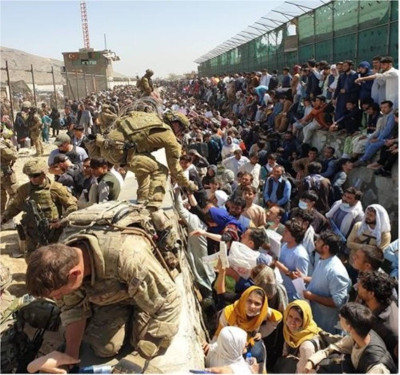
Crowds at Kabul Airport. (Source: NZ Defence Force.)
Horrific scenes
As is well known, the withdrawal was marked by horrific scenes at Kabul Airport as tens of thousands of Afghans feared retribution by a resurgent Taliban that had overthrown the Government. Their fears were justified, as the Taliban failed to keep their side of the truce and launched a full-scale offensive that included releasing jailed jihadist terrorists.
The NZSAS mission managed to extricate 300 New Zealand document holders, including Afghan nationals, instead of the planned 70. This involved some hair-raising moments and crafty deceptions in getting them away safely.
Crosby has crafted an informative and valuable, if selective, record of the SAS Regiment in Afghanistan. It does mention the negative media coverage of Operation Burnham. This is a rewarding read for the Anzac long weekend and a reality check for those who want to know more about the workings of an elite military force.
Keep Calm – We Are Coming: The NZSAS in action in Afghanistan, 2009-2012, by Ron Crosby (Oratia Books)




