When hedge fund manager Scott Bessent was nominated for the US Treasurer role, hopes were high he would disabuse President Donald Trump that tariffs were a sensible trade policy.
But Bessent soon turned from sceptic to believer. His latest media interview, in Texas, concerned his reaction to the Supreme Court decision that tariffs imposed under the Emergency Economic Powers Act were illegal.
He insisted that existing tariffs would remain. “We [the Treasury] believe that the 2026 tariff take will be virtually unchanged,” Bessent said. The amount for 2025 was about US$130 billion ($218b). He attributed that to the potential for the Trump administration to increase tariffs under different measures. The president has already imposed a new, five-month 15% global tariff.
Bessent also pointed out no ruling was made on refunds. "The Supreme Court pushed it back down to the International Trade Court," he said. "So, they haven't told us that we do have to repay it. But we'll see whether we have to repay. We will see what the duration of the repayment is.”
He added that the Treasury has more than US$900b cash on hand.
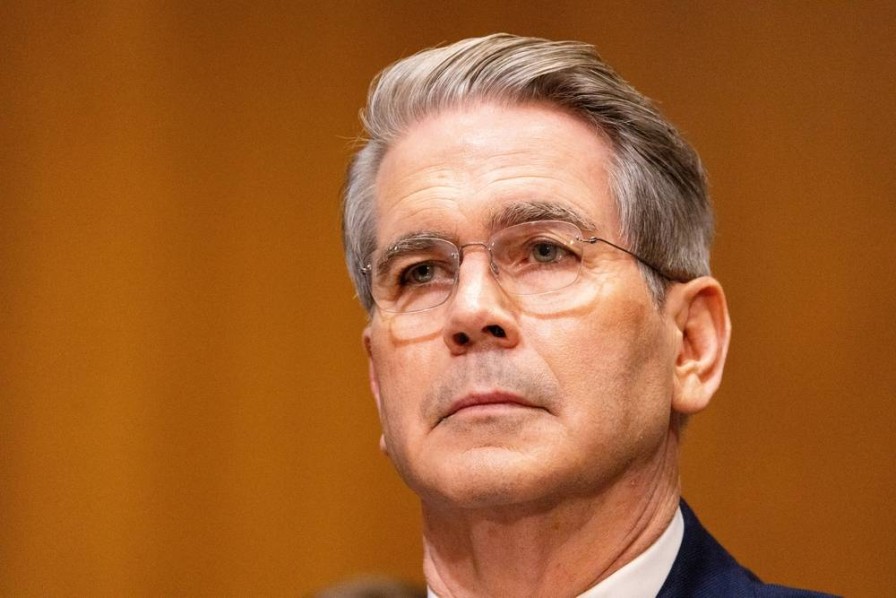
US Treasury Secretary Scott Bessent.
Little attention
The key point to note is that Bessent’s background is in the private fund sector of financial markets rather than traditional banking. The rise of private equity and the so-called alternative investment industry have occurred in plain sight but attracted little attention.
Alternative-investment companies operate in the world of pension management, private equity, private credit, infrastructure, hedge funds, and technology venture capital. Recent figures show they control more than US$17 trillion in assets and are quickly supplanting banks as the preferred source of capital for millions of consumers and tens of thousands of companies.
But their public profile remains low, which suits them as, when they do come to notice, their result is far from flattering. Four recent books throw light on the subject, and it’s not pretty.
In Private Equity, Chinese-American Carrie Sun describes her two years as the personal assistant to a hedge fund billionaire, exposing his modus operandi, extravagant tastes, disciplined work ethic, and unlimited demands on his staff to produce high financial returns.
Fund managers far outnumber tech moguls and bankers on the most recent Forbes list of billionaires. JPMorgan chief executive Jamie Dimon sits below about 40 private-equity executives on the list.
They have become powerful in other spheres, such as Bessent’s appointment. As university trustees, they have fired academic leaders for their left-wing leanings by withholding funds. They also resisted Biden Administration attempts to regulate their activities, including the setting of fees.

Carrie Sun.
Short-term profits
Sun’s memoir, now in paperback, was first published in 2024 and has since been joined by three others. Plunder, by former federal prosecutor Brendan Ballou, exposes the cost in jobs of companies that failed due to cost-cutting in the pursuit of short-term profits.
Hedged Out, by Megan Tobias Neely, draws on interviews with 48 hedge-fund workers in an industry that operates on absolute power and has few rules. Two and Twenty, by Sachin Khajuria, is an insider’s account, depicting alternative investing as a Darwinian pressure cooker where only the most capable succeed.
“Not only is immense wealth accumulated in the hands of the few, but these individuals also have profound influence on increasingly broad swathes of the economy,” he writes.
Sun’s Private Equity, which is the only one I have read, is also told from the coal face, but not at partner level. Her story begins with an arduous recruitment process that involves dozens of interviews, including by the manager’s wife.
Sun is the sole daughter of ‘accidental’ Chinese immigrants. After being banished to the countryside during the Red Guard’s cultural revolution, they both continued their education at tertiary level in California during the opening of China under Deng Xiaoping.
President George H W Bush offered permanent residence to all Chinese in the US after the Tiananmen Square massacre in 1990, and that included their four-year-old daughter.

President George H W Bush granted Carrie Sun’s parents asylum after the Tiananmen Square massacre in 1989.
High achiever
Sun was a high achiever. She gained degrees in maths and finance at MIT and went on to study for an arts master’s degree and an MBA at the Wharton School, University of Pennsylvania.
But she dropped out, taking jobs as an analyst at Fidelity Investments and Two Sigma, a hedge fund, before landing at Tiger Global Management and working for founder Chase Coleman III.
Both are renamed in the book as Carbon and Boone Prescott, but Sun says the people and events, which are recorded like a novel, are all true to the best of her recollection. The 340-page text is rich in anecdotes about the working environment.
Carbon had evolved from a pure hedge fund into a crossover – investing across the board, from Series A to pre-IPO, with capital spread across the entire life cycle of a company through separate public and private equity vehicles.
It had become more generalist as others specialised. “In doing so, it could better identify themes and synthesise data from disparate networks: it could bring its stock-selection skills and deep industry expertise into the start-up space; it could bring its venture capital knowledge – of where the disruptions might be – into the hedge fund,” Sun writes.

Tiger Global Management was based in New York’s Solow Building.
Motivational coaches
This need for in-depth information and speed in decision-making was backed up by motivational sessions from high-performance sports coaches, in this case ice hockey.
“Carbon did not have any superpowers beyond the boring and the total efficiency of the enterprise. The genius of training your brain through practice and more practice to encode as much as possible into procedural memory so there would be no deliberations of the ‘Do I feel like doing this now?’ sort; no excuses of the ‘I’m tired’ or ‘I’m having a bad day’ sort.”
At 28, she was in a job over which she had no control. “Boone did not merely influence my days – he owned them. I could never choose to prioritise my needs over his unless he, he who decides if and when, let me.”
Sun recalls being told during one of her interviews before she joined Carbon that “the goalposts move every day”. Her first day of work happened to be a Family Day event, and Boone emailed her a photo of his kids at the party later that evening.
Moving the goalposts
As predicted, “The goalposts moved the next day”. She hadn’t replied to the email when she first saw it. Boone told her she needed to do so immediately: “I want to know that you read everything I send.”
She had also been warned that “Boone cares about every detail of everything, from periods and commas in investor letters to perfect alignment of text on PowerPoints”.
Despite her personal assistant label, Sun’s responsibilities extended to an investment role that called on her academic qualifications. She describes her five jobs as “executive assistant, personal assistant, research assistant, project manager, communications consultant”.
The tone becomes more ‘me-tooish’ as Sun realises she is reaching the burnout stage and seeks some balance. She relives her past love life, a sexual assault, a persistent suitor, eating disorders, and the fraught relationship with her parents who don’t see a future for their daughter as a career-focused singleton.

The cast of Billions – a TV series that ran for seven seasons, from 2016 to 2023.
‘Hidden help’
Media coverage of funds focuses on the individuals at the top. Sun counters this with her revealing visit to the writers’ room of the television series Billions, telling them there is no big secret. “It’s all about the hidden help,” she says, “the people to whom you can farm out tasks covering every inch of your life, so you only spend your time in total devotion to your … tiny little hedgehog thing.”
Of course, it all becomes too much, and Sun decides she can no longer be the “perfect handmaiden for financial capitalism”. Boone tries everything to retain her – given the long process in finding a replacement – while she stirs up resistance among the other single females who make up the ‘hidden help’.
Private Equity has a parallel in the reaction by Facebook to New Zealander Sarah Wynn-Williams in last year’s Careless People. Before publication, defamation law firm Clare Locke pressured Sun to change real names to pseudonyms and make other changes to ‘salacious’ material.
After release, Coleman and Tiger Global refused all public comment. Nor was any forthcoming from the original Tiger fund, founded by Julian Robertson, who is portrayed in a mentoring role as the art-collecting Martin from Argon.
Facebook took an aggressive stance toward Wynn-Williams doing any promotion, but this doesn’t appear to be the case for Sun. Despite the title, Private Equity is primarily a personal memoir rather than a study of financial behaviour. That is better covered in the other titles mentioned above. Consider Private Equity a tasty appetiser.
Private Equity: Coming of age at the height of capitalism, by Carrie Sun (Bloomsbury).
This is supplied content and not commissioned or paid for by NBR.




