Moves to bar younger teenagers from social media have gone viral. Parents and critics blame it for deteriorating mental health and an epidemic of screen addiction.
In recent developments:
- German entrepreneurs have developed a ‘dumbphone’ called the Nodi Flip that allows messaging and audio in a controlled environment. It’s described as a cross between a phone and a smart speaker aimed at 5- to 12-year-olds who want to send messages and listen to music and stories. The Flip is linked to an app controlled by an adult who can choose the contacts and content.
- In a six-week trial in Los Angeles, a jury found Meta (Facebook, Instagram, WhatsApp) and Alphabet/Google (YouTube) liable for the harm caused to a young woman who became addicted to their platforms. The jury awarded US$3 million ($5.15m) to the 20-year-old complainant. It ruled Meta was responsible for 70%, and YouTube the remainder. A further US$3m was awarded in punitive damages. The case is likely to be appealed. A similar case in New Mexico resulted in a US$375m ruling against Meta.
- Dozens of governments throughout the world are considering or implementing measures to limit social media access to young people. Australia took the lead with a ban on under-16s having access to most forms of social media, including Snapchat and TikTok.
While reading up on the topic – which doesn’t affect me personally – I came across a prophetic account written in Italy during the 1970s. Giorgio De Maria’s The Twenty Days of Turin: A report from the end of the century was first published in 1977 and translated into English in 2017 by Perth-based Italian journalist Ramon Glazov.
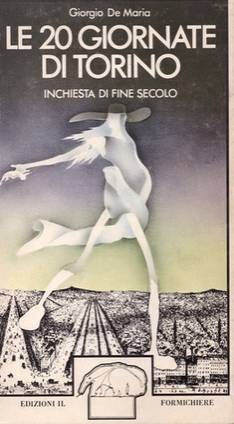
The original Italian cover from 1977.
Its prescience has been compared with George Orwell’s Nineteen Eighty-Four and Aldous Huxley’s Brave New World as pointers of dystopian futures. Others have compared it to Thomas Pynchon’s The Crying of Lot 49 (1966).
An American paperback edition was published last year, making it easily available from online suppliers such as Amazon, The Nile or Blackwell’s. It won’t achieve the same status as the first two of those classics. But its relevance to the social media debate is chilling for its prediction of how a society tries to fill a void of loneliness and isolation through technology-driven social connection; that is, Facebook.
In his foreword, Jeff VanderMeer, an American author, editor, and literary critic, places De Maria in the tradition of “weird fiction” going back to Edgar Allan Poe and HP Lovecraft. VanderMeer is best known for his sci-fi novel Annihilation, which was made into a Netflix movie starring Natalie Portman (2018).
De Maria, VanderMeer says, “invokes the weird to find the distance, dislocation, and the disruption of the landscape necessary to lay bare what otherwise becomes banal, ordinary, or is subsumed into what is invisible to us most of the time”.
The parallels to claims that widespread social media and smartphone use are to blame for rising teen anxiety, depression and self-harm are obvious. De Maria was writing at a time when Italy was wracked with daily acts of political terrorism and police-state crackdowns – a period known as the Years of Lead. His European precursors include Franz Kafka with his depiction of a helpless citizen and an all-powerful bureaucratic state.
Turin itself is not dissimilar to Kafka’s Prague – both are brooding, atmospheric cities of museums and dark secrets. Turin has long been associated with the supernatural and the occult. These places are ideal settings for a ghostly story of how a population gives up its privacy and creates a lack of security by revealing all to technologically guided algorithms that feed addiction.
But this is getting ahead of what De Maria has written. In his introduction, translator Glazov describes Turin as a city full of bookshops about witchcraft and Satanism. De Maria, a trained musician, made his debut as a writer in 1958 with a long story describing the 1995 assassination of a “fictional Pope Benedict XVI”.
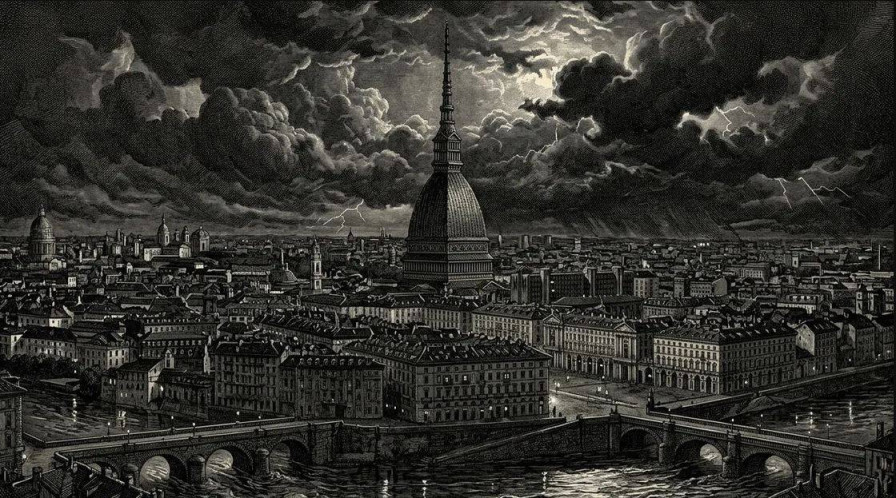
Turin is noted for its interest in the supernatural and occult.
De Maria was initially an anti-clerical leftist but had become a fervent traditional Catholic by the time he died in 2009, aged 84. The Twenty Days of Turin was his fourth novel, but its initial reception and the onset of depression also made it his last.
The newspaper La Stampa, in its obituary, noted the novel’s legacy for its “image of a gloomy, disquieting Turin, stalked by demonic and violent underground forces which anticipate the reality of terrorism”.
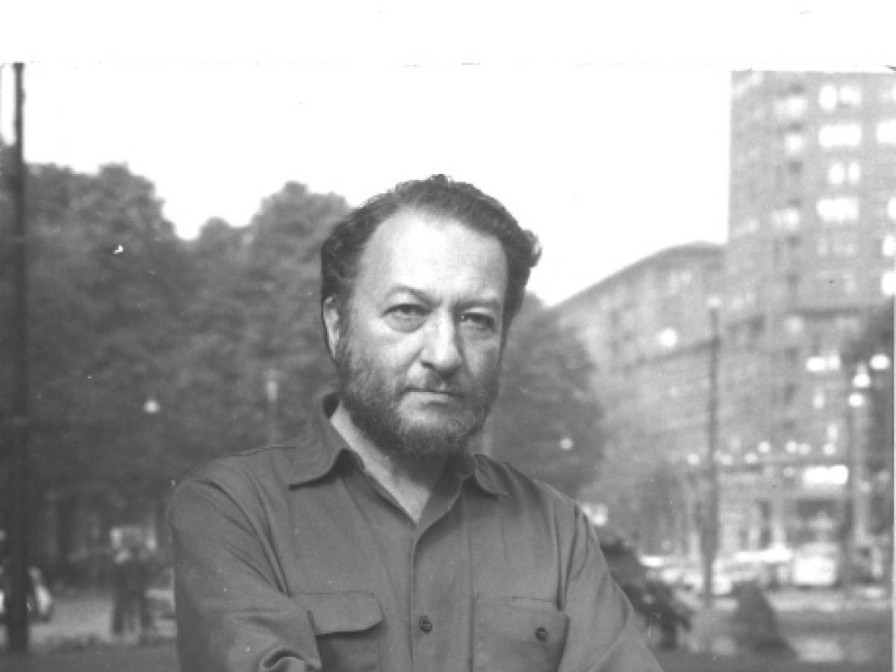
Giorgio De Maria.
Since its translation into English, the novel's cult status in Italy has helped it to become a favourite of creative writing advisers, who admire its simple prose and modernity as an antidote to formulaic bestsellers.
So, what is it about?
It begins with a nameless narrator researching a bizarre event from 10 years earlier called the Twenty Days of Turin. At the event’s centre was The Library, a repository of “true, authentic documents reflecting the real spirit of the people, the kind of things we would rightly call popular subjects …” (emphasis in the original).
All kinds of manuscripts were accepted and then shelved so anybody could read them. Interested parties could then be connected with each other. It was popular and addictive. “The pen could scribble freely whatever the spirit dictated. And once it started, it was hard to stop!”

Jeff VanderMeer.
However, the researcher found there was little left of The Library, as it had been destroyed at the end of the Twenty Days. The effect of this sharing of highly personal confessions was to reduce the population to a mass spiritual psychosis in the form of insomnia.
At night, people would leave their beds to wander the streets. Some of these silent sleepwalkers were brutally murdered. Eventually, The Library was destroyed, ending the Twenty Days. Or so it seems.
The researcher’s efforts 10 years later lead to the discovery of a new underground and far more anarchic version of The Library. He becomes the target of an anonymous letter writer, who describes in detail the researcher’s daily activities.
The means of communication are notes left in rubbish tins. The users of this new iteration of The Library become less and less human in their behaviour.
Mysteries such as the killers during the Twenty Days suggest secret forces are at work. They appear to offer solutions through social connection, but they only make things worse by encouraging further use as the only remedy. Glazov likens these methods to the ‘lone wolf’ terrorism that surged in the 2000s.
American creative writing adviser Hilary Layne provides another insight: “All the while they would remain in the background, draining an addicted population too sedated by their own emptiness to realise – or care – what was happening. This population could then be effortlessly controlled.”
Twenty Days in Turin is not a perfect novel. It ends abruptly and offers no resolution. In that sense, it is prophetic about today’s search to find ways to mitigate the effects of social media on impressionable minds.
The paperback edition contains a bonus short story and an essay, also translated by Glazov: The Death at Missolonghi and Phenomenology of the Screamer.
The Twenty Days of Turin: A report from the end of the century, by Giorgio De Maria. Translated by Ramon Glazov (Liveright).




