When US President Donald Trump 'chickened out' of his threat to annihilate Iran out of existence, it was a welcome 'circuit breaker' on Wednesday, but global equity markets have generally maintained relative composure in the face of recent geopolitical tumult.
The Nasdaq, S&P500 and NZX50 were only down 5%, 2% and 3% respectively from highs experienced in October and January, noted Generate Wealth investment specialist Greg Smith. “I suppose the volatility that we've seen in commodity markets hasn't really been matched in the equity markets.”
That composure may be due to the US economy being relatively strong going into the war, and a net exporter of oil, unlike the situation around the oil shocks of the 1970s.
The prevailing view had been that the conflict wouldn’t be a prolonged one, and that the 'Taco' effect (Trump Always Chickens Out) would come to the fore again, “which it looks like it has”, Smith said.
“We've seen the stakes are higher but ... last year you saw the bravado and deadlines and threats, and then there were the pauses, extensions, and then ultimately, the deals. So, it'll be interesting: does this follow a similar pattern?”
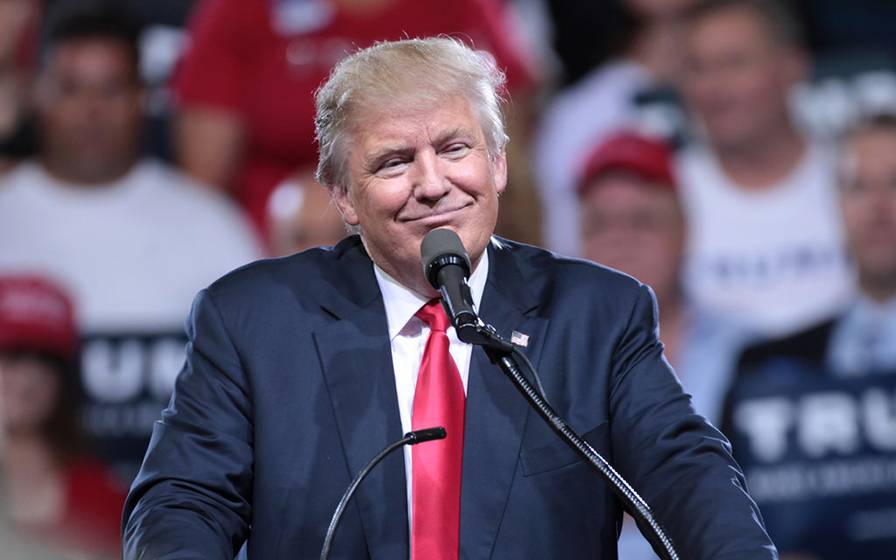
Donald Trump.
Airlines to dairy
Investors may also be slightly more inured to global economic instability, given the conveyor belt of crises in recent times, from Covid to tariffs to war.
Airlines and logistics companies certainly couldn’t escape the immediate impacts of oil price rises on their businesses, Smith noted, meaning service cuts and price rises were obvious consequences. Retailers who relied on stock being transported would also feel that pinch.
But the key factor was the duration of the disruption to the oil supply transiting the Strait of Hormuz. Petrol prices at the pump don’t fluctuate directly in line with the crude oil price, so a short-term shock may not feed through directly into the economy, but the longer the shock persists, the worse the downstream effects will be.
“Everyone's looking at this really closely. The Uber driver just asked me when the war is going to finish. Because it’s relevant to everyone. When’s the petrol price going to go back down?”
The latest Global Dairy Trade auction, early on Wednesday morning, resulted in a 3.4% drop in the index, including a 0.7% decrease in the whole milk powder price. The index had been in positive growth territory so far this year, although the prior auction only pushed the index up 0.1%.
The result likely reflected the war’s impact on consumer confidence and predicted spending power.
Rate held
Of course, the Reserve Bank of New Zealand held the Official Cash Rate steady at 2.25% this week, as predicted.
Smith said the message from the central bank’s governor, Anna Breman, was one of 'wait and see' on the impacts of the war, yet he was interested in commentary about how the RBNZ was looking at the impact of oil prices on economic growth.
Even though the RBNZ has price stability as its primary mandate, that demand-side impact from higher oil prices would act as a tax on the economy, and on growth.
“The New Zealand economy was only just getting into the throes of the early stages of a recovery, and then you obviously have this thrown at it, and the weak Kiwi dollar as well,” said Smith. “If oil prices go up, and you start jacking up interest rates, then you have really got your stagflation.”

RBNZ Governor Anna Breman.
Manufacturing confidence
The BusinessNZ Performance of Manufacturing Index (PMI), released on Friday, showed sector expansion, albeit at a lower rate than in previous months.
The seasonally adjusted PMI for March was 53.2, down from 54.8 in February and 55 in January, but still above the long-term average of 52.5.
BusinessNZ advocacy director Catherine Beard said it was “concerning” that the proportion of businesses commenting negatively about their situation increased to 62%, from 44.5% in February, and that the comments showed that the war in Iran, and its wider consequences, were weighing heavily on the minds of survey respondents.
Despite the downturn in confidence, the 'new orders' sub-index was the strongest, at 55.8, which Smith said showed the manufacturing sector had not overreacted to the war’s impacts.
“Even though petrol prices have gone up … all the oil that's travelling around on ships and vessels at the moment was all put on there before the conflict started, so there are some theories that the real impact of what we're seeing won't really be felt until the next couple of months.”