Good morning and welcome to your Monday summary of international business and political news from the weekend.
First up, a Ukrainian drone strike has ignited fires at one of Russia’s Black Sea ports, ahead of fresh talks to end the war. Two people were wounded in the attack on the port of Taman, in the Krasnodar region, on Sunday local time, the AP and ABC reported.
The strike resulted in damage to an oil storage tank, warehouse, and terminals. Meanwhile, falling debris from Russian drones damaged civilian and transport infrastructure in Ukraine’s Odesa region, causing disruption to the power and water supply.
Chinese President Xi Jinping has targeted domestic demand as a main source of economic growth. China should “coordinate efforts to boost consumption and expand investment and fully leverage the advantages of China’s super-large-scale market,” Xi said in a speech, Bloomberg reported.
Xi said China would remain committed to innovation‑driven development and accelerate new growth drivers. “We must focus on improving people’s livelihoods and boosting future growth, stabilising investment,” he said.
The blueprint laid out by Xi made clear China was bracing for more uncertainty overseas, after recording a record trade surplus despite trade tariff issues with the United States.
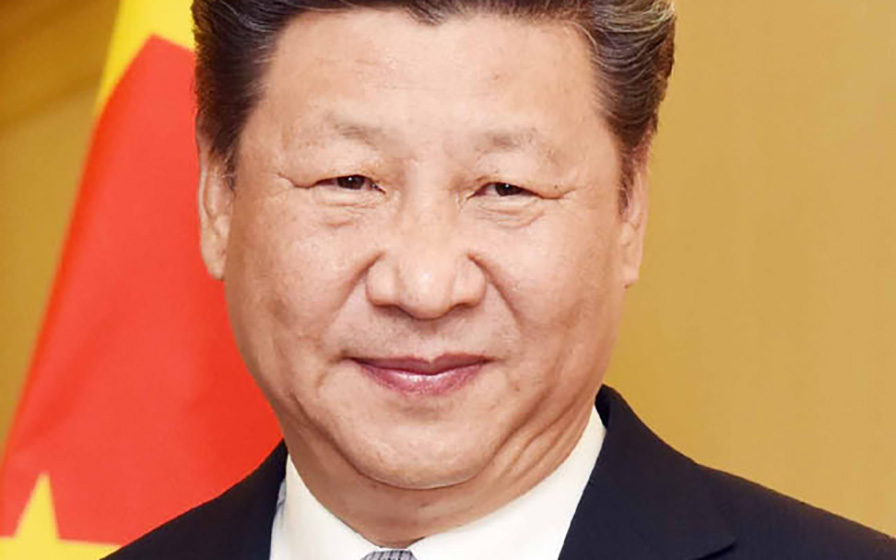
Chinese President Xi Jinping.
Meanwhile, US President Donald Trump is reportedly planning to scale back some of his trade tariffs on steel and aluminium goods. The Financial Times said the Trump administration was reviewing the list of products affected by the tariffs and planned to exempt some of those items.
The US would instead launch more targeted national security investigations into specific goods. US trade officials thought the tariffs were hurting consumers by raising prices for goods within the US, the Guardian reported.
US inflation data showed further moderation in price pressures, reinforcing a disinflation trend. Headline CPI rose 0.2% in January, compared with the month before, below an expected 0.3%.
On an annual basis, headline inflation slowed to 2.4%, below a forecast of 2.5%, and a step closer to the Federal Reserve’s 2% target.
Analysts said while core inflation was still above target, inflation continued to trend downwards. In addition, there were “limited signs” of any impact from tariffs, as prices for commodities held steady last month, the BBC reported.
Premier Miton Investors chief investment officer Neil Birrell said the effects of tariffs remained uncertain. “The US economy looks to be in fine fettle with growth strong, inflation stable, the job market looking firmer, and a Fed that has room to manoeuvre.”
Elsewhere, a "deep divide" has opened between Europe and the US, according to German Chancellor Friedrich Merz, calling on all sides to “revive” trans-Atlantic trust, the BBC reported.
At the opening of the Munich Security Conference, Merz warned the rules-based world order "no longer exists" and that freedom was "not guaranteed" in an era of big power politics.
“The culture war of the Maga [Make America Great Again] movement is not ours," Merz said.
Separately, Trump said founding member countries of his Board of Peace had pledged more than US$5 billion towards humanitarian efforts and reconstruction in Gaza, Bloomberg reported.
Board members will convene this week in Washington DC to confirm pledges and commit “thousands of personnel” to a stabilisation force to help maintain security in Gaza, Trump said on Sunday local time.
In the UK, the High Court ruled that the government’s ban on campaign group Palestine Action as a “terror group” was unlawful and disproportionate, Al Jazeera reported.
Palestine Action co-founder Huda Ammori said it was a pleasing victory, labelling the ban “a Trumpian abuse of power”.
The UK government said it planned to appeal the ruling. “I am disappointed by the court’s decision and disagree with the notion that banning this terrorist organisation is disproportionate,” Home Secretary Shabana Mahmood said.
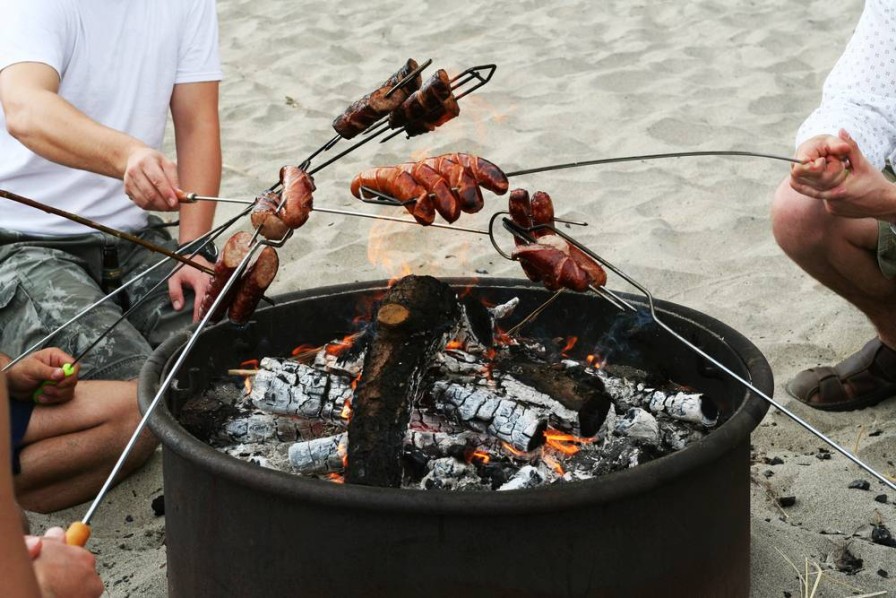
Finally, more than a dozen food companies urged the European Commission not to ban the use of words, such as ‘sausage’ and ‘burger’, for non-meat alternative products.
Companies including Linda McCartney Foods, Quorn, and THIS signed a joint letter calling on commissioners to “let common sense prevail” ahead of a debate on the proposed ban, the Guardian reported.
The companies said it would cause unnecessary confusion for customers if burger patties would be referred to as ‘disks’ and sausages as ‘tubes’. Supermarket giants Aldi and Lidl also opposed the ban.

