Ata mārie and welcome to your Tuesday recap of global business and political news from around the world.
First up, there’s a lot of fresh developments to cover from the Middle East while you’ve been sleeping overnight.
G7 nations were ready to take "necessary measures" to support the global supply of energy as the US-Israel war with Iran sent oil prices surging further this week. However, a meeting of G7 finance ministers and the International Energy Agency (IEA) ended without agreement to release strategic crude reserves, the BBC said.
The oil price reached nearly US$120 a barrel on Monday local time over fears of a lengthy disruption to global supplies.
"We stand ready to take necessary measures, including to support global supply of energy such as stockpile release," the G7 said in a statement.
At least five energy sites in and around Tehran were hit by airstrikes, prompting accounts of “apocalyptic” scenes. Kuwait’s national oil company also announced a precautionary production cut amid retaliatory attacks by Iran, the Guardian noted.
Explosions reported in Qom and Tehran were heard hours after Israeli attacks on oil facilities caused toxic smoke across the capital. Iran’s Foreign Ministry said the attacks were aimed at “partitioning our country to take illegal possession” of oil, Al Jazeera said.
Iran’s Foreign Minister Abbas Araghchi said his country did not want to harm “ordinary Americans who overwhelmingly voted to end involvement in costly foreign wars”.
Meanwhile, Russian President Vladimir Putin said Russian companies needed to “take advantage” of the current situation in the Middle East, as global oil and energy markets get rattled.
He warned that oil production dependent on transport through the Strait of Hormuz could soon come to a complete halt. Russia is the world’s second-largest oil exporter and has the world’s biggest reserves of natural gas.
Experts predict global oil prices could hit US$150 if tankers were unable or unwilling to transit the Strait of Hormuz, the BBC said.
US President Donald Trump said a "short-term" increase was a small price to pay for global security.
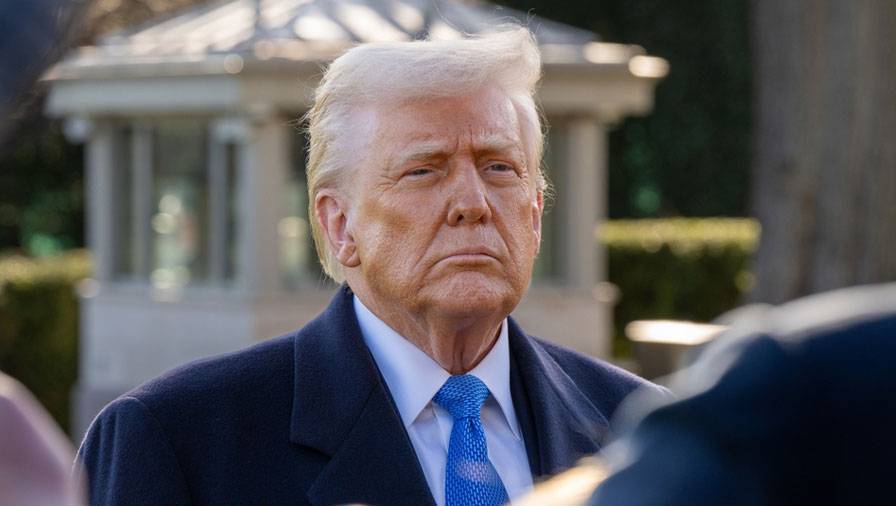
US President Donald Trump.
Iran’s military and political leaders pledged support to Mojtaba Khamenei, who was named to replace his father, Ayatollah Ali Khamenei, as the new supreme leader, Al Jazeera said.
To the markets, now, where it was a choppy session on Wall Street, as stocks fell and oil prices hit their highest level since 2022, CNN noted. Earlier, the Dow Jones fell 447 points, or 0.94%. The S&P 500 fell 0.6%, and the Nasdaq Composite edged down 0.3%.
In the UK, Chancellor Rachel Reeves has warned petrol retailers not to take advantage of the crisis by ripping off customers. Reeves asked the UK’s competition watchdog to monitor the situation, the Guardian reported.
“I have also asked the Competition and Markets Authority to be vigilant across prices, including essentials like road fuel and heating oil. Let me be absolutely clear. I will not tolerate any company exploiting the current crisis to make excess profits at consumers’ expense.”
Prime Minister Keir Starmer said the UK economy was in a better place to withstand a shock to energy supply than in 2022, when Russia's invasion of Ukraine led to prices soaring, the BBC reported.
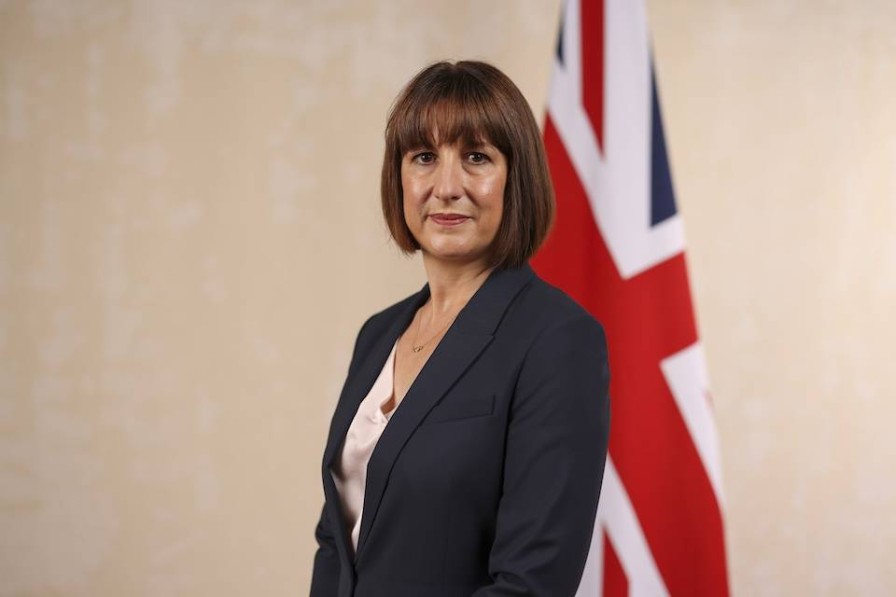
UK Chancellor Rachel Reeves.
The Bank of England, meanwhile, is now expected to hold interest rates steady this month because of the Iran conflict, CNBC reported. “BoE cuts are possible in the first half of 2026, but March is off the table and April requires a clear calming of geopolitical tensions,” JPMorgan chief UK economist Allan Monks said.
“For now, we delay the next cut to April, but the risks are already shifting towards a lengthier pause and larger growth impact.”
European Commission President Ursula von der Leyen said the EU must be prepared to project its power more assertively amid ongoing geopolitical clashes, Reuters reported.
“We will always defend and uphold the rules-based system that we helped to build with our allies, but we can no longer rely on it as the only way to defend our interests or assume its rules will shelter us from the complex threats that we face.”


