Mōrena and welcome to your Friday summary of global business and political coverage from overnight.
First today, Israeli Prime Minister Benjamin Netanyahu said his country was planning direct negotiations with Lebanon on disarming militant group Hezbollah, CNN reported.
"In light of Lebanon's repeated requests to open direct negotiations with Israel, I instructed the cabinet yesterday to start direct negotiations with Lebanon as soon as possible," Netanyahu said.
The prime minister wanted to establish peaceful relations, but at this stage, there is no official ceasefire in place with Lebanon. The Israeli military action targeting Hezbollah was a critical point of contention with the current volatile United States-Iran ceasefire.
Russia said that ceasefire must cover Lebanon, after Israel promised more attacks on Hezbollah. Earlier, Netanyahu confirmed that IDF strikes in Lebanon killed the nephew and secretary of Hezbollah leader Naim Qassem, the Guardian reported.
Iranian Foreign Minister Abbas Araghchi said that it would be “dumb” for the US to allow Israel to jeopardise the regional ceasefire by continuing its intense attacks on Lebanon, Al Jazeera reported.
Araghchi suggested Netanyahu had an ulterior motive for continuing the fighting in the region, noting the prime minister’s corruption trial. “A region-wide ceasefire, including in Lebanon, would hasten his jailing,” Araghchi said. “If the US wishes to ‘crater’ its economy by letting Netanyahu kill diplomacy, that would ultimately be its choice. We think that would be dumb, but are prepared for it.”
On the ground, Lebanon declared a day of mourning after a wave of fresh Israeli attacks killed at least 200 people and injured more than 1000 in one day.
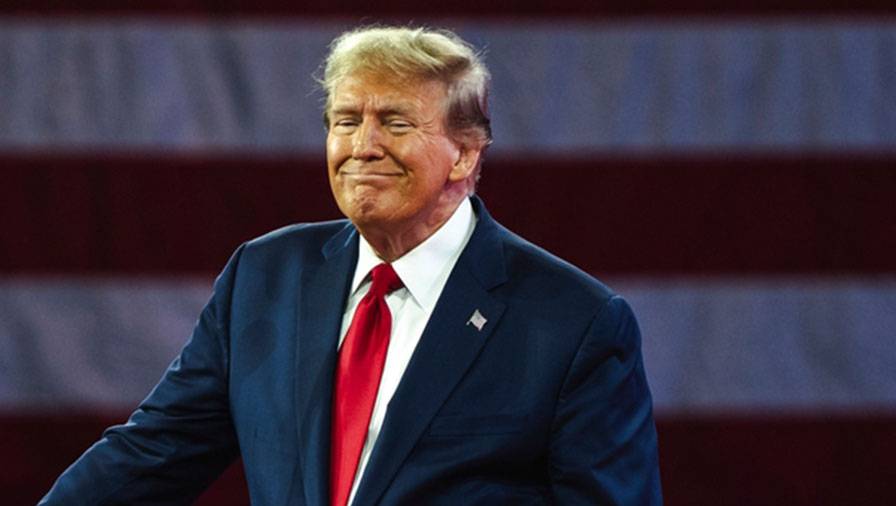
US President Donald Trump.
Meanwhile, US President Donald Trump said “all US ships, aircraft, and military personnel” would remain in place around Iran until a “real agreement” on a ceasefire was fully complied with.
A statement attributed to Mojtaba Khamenei, Iran’s supreme leader, who has still not been seen or heard from in public, was read out across state media. He said Iran remained determined to “take revenge” for his father, who was assassinated on the first day of the Iran war, the Guardian reported.
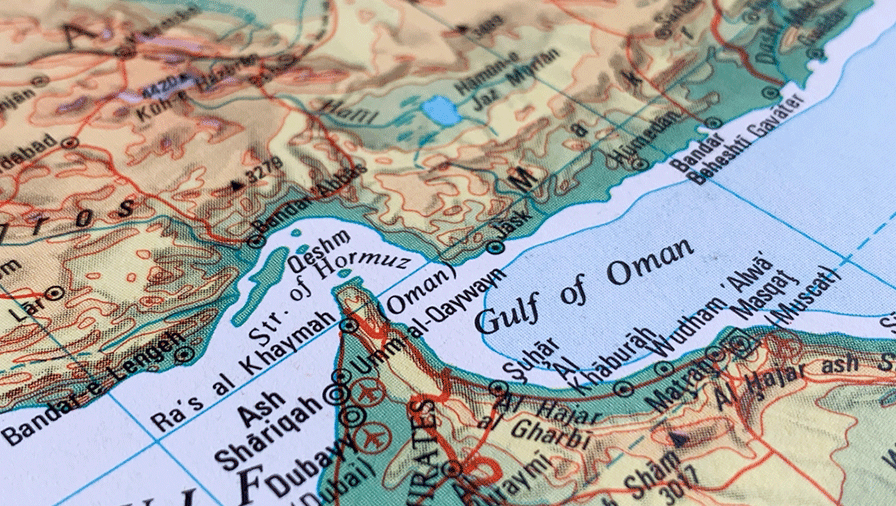
“We will certainly demand compensation for each and every damage inflicted, and the blood price of the martyrs and the compensation for the wounded of this war.” He also said Iran would take management of the Strait of Hormuz into a new phase, but did not elaborate on what that would be.
An estimated 2000 ships and 20,000 seafarers have been trapped in the Gulf since the outbreak of war at the end of February, according to the United Nations.
Nato chief Mark Rutte said its member countries were doing everything Trump had requested, even if some were initially "a bit slow" to provide support to the US over Iran, the ABC reported.
"To maintain the element of surprise for the initial strikes, President Trump opted not to inform allies ahead of time. But what I see, when I look across Europe today, is allies providing a massive amount of support. Nearly without exception, allies are doing everything the United States is asking. They have heard and are responding to President Trump's requests."
After the US-Iran ceasefire this week, vessels in the area of the Strait of Hormuz had received messages they would be "targeted and destroyed" if they attempted to move without permission. Only a few ships had made the journey over the past couple of days, the BBC said.
Shipping analysts warned to expect only a few crossings for now. "Most shipping lines would want to get details and reassurances on what it actually takes to transit, and those details are not available," Lars Jensen from Vespucci Maritime said.
To the markets, where uncertainty over the US-Iran ceasefire deal triggered a rise in oil prices. Earlier, Brent crude rose 2.1% to US$96.77 per barrel, while New York light crude rose by about 3% to US$97.23 per barrel.
The previous day, Brent crude slumped by more than 10% after the initial news of the ceasefire emerged.
Over the Ditch, Aussie motorists are counting the cost of higher fuel prices – especially diesel – with an average fill going up about A$100 for the popular Ford Ranger, the ABC said.
The base model has an 80-litre fuel tank and a diesel engine with an efficiency of 7.2L/100km. In February this year, the ute would have cost A$144.16 to fill up and A$12.97 to travel 100km. By comparison, in the week ending March 29, the same tank cost A$248 to fill up and A$22.32 to travel 100km.
Staying with costs, core inflation in the US held above the Federal Reserve’s target before the recent surge in energy prices, CNBC reported.
The core personal consumption expenditures price index, which excludes food and energy, rose a seasonally adjusted 3% in February. Headline inflation increased 2.8%. On a monthly basis, both core and headline prices rose 0.4%, also in line with forecasts.


