Ata mārie and welcome to your Monday recap of global business and political news from the weekend.
First up, Iran threatened to close the Strait of Hormuz indefinitely if US President Donald Trump followed through with his threat to bomb Iranian power plants.
Trump promised to "obliterate" Iran’s power plants if the Strait of Hormuz was not reopened within 48 hours. Iran, in response, said on Sunday local time it would attack US infrastructure, including energy facilities in the Gulf, if Trump carried out his threat, the ABC reported.
Iran again repeated that the Strait of Hormuz remained closed only to the “enemy and to harmful traffic”, army spokesperson Ebrahim Zolfaghari said.
“It has not yet been completely closed and is under our intelligent control, and harmless transit – under specific regulations that ensure our security and interests – is allowed.
“However, if the United States carries out its threats against Iran’s power plants, the following punitive actions will be taken immediately: The Strait of Hormuz will be completely closed and will not reopen until our damaged power plants are rebuilt.
“All power plants and the energy and information‑technology infrastructure of Israel will be widely targeted.”
Meanwhile, Israel Prime Minister Benjamin Netanyahu condemned Iran after a missile attack on the southern Israeli city of Arad, which injured at least 84 people. The number of people reported killed in Iran and Lebanon since the start of the conflict was now thought to be in the thousands, while anti-war protests were carried out in several cities around the world this weekend, CNN reported.
Netanyahu also called for other countries to join the war against Iran. “They're stopping a maritime international route, energy route and trying to blackmail the entire world,” he said.
"Israel and the United States are working together for the entire world. And it's time to see the leaders of the rest of the countries join up. I'm happy to say that I can see some of them beginning to move in that direction, but more is needed."
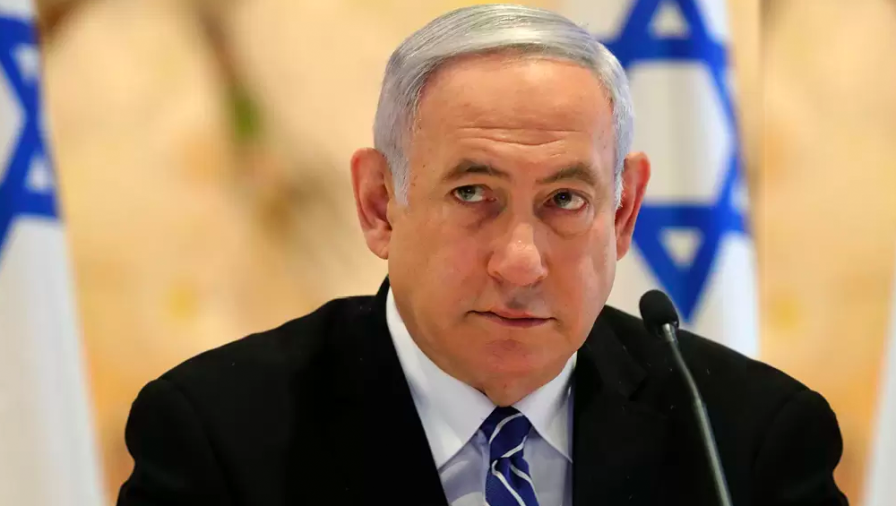
Israeli Prime Minister Benjamin Netanyahu.
US Treasury Secretary Scott Bessent reaffirmed that Trump would do whatever necessary to achieve his goals in the Middle East. “We had a very successful bombing campaign against the military installations at Kharg Island, the nexus for all the Iranian oil supply.”
Brent crude oil settled above US$112 per barrel on Friday local time. US crude oil rose over 2% to US$98.32 per barrel. Goldman Sachs suggested triple-digit prices could stay in place until 2027.
Israeli Ambassador to the US Michael Leiter also told CNN that Israel would continue to respond to Iranian attacks by pressing on “until we bring this regime to its knees”.
“We cannot live anymore with a country that has maligned, that has intent on destroying us, that declares it’s going to destroy us all the time and is now firing ballistic missiles into all of its neighbours. This has to stop.”
Meanwhile, the International Atomic Energy Agency expressed hope that nuclear discussions between the US and Iran could be re-established if the conflict stopped.
Iran fired two missiles at the joint British-American Diego Garcia military base in the Indian Ocean, but failed to reach their target, CNBC reported.
“Our assessment is that the Iranians certainly targeted Diego Garcia. As we understand it, one missile fell short, failed. The other was intercepted and prevented,” UK Housing Secretary Steve Reed told the BBC.
“There is no specific assessment that the Iranians are targeting the UK, or even could if they wanted to,” Reed added.
As the war drags on, the International Energy Agency suggested measures to cut the amount of energy being consumed across the world. It suggested working from home and limiting air travel.
IEA executive director Fatih Birol told the BBC the world was facing "the greatest global energy security threat in history" and it was time for governments to become "more vocal" about how energy was being used.
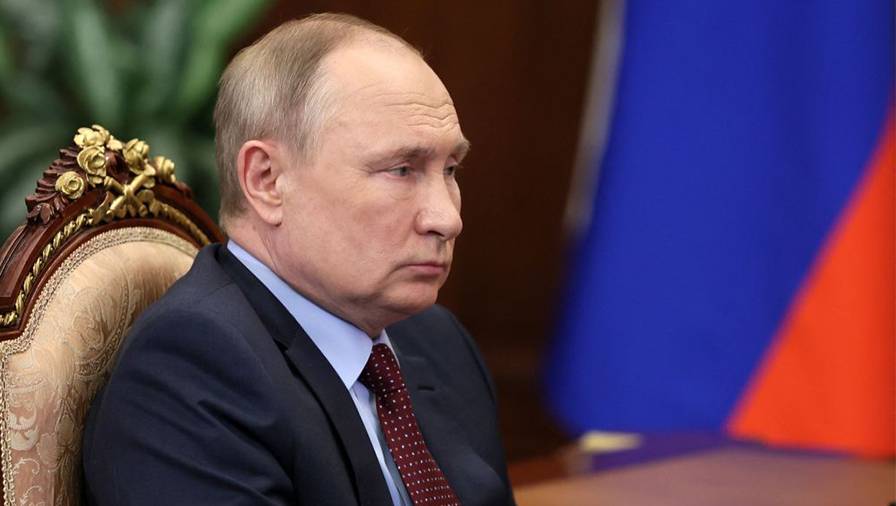
Russian President Vladimir Putin.
Staying with conflict, Russia started a spring offensive in eastern Ukraine, including the use of dozens of tanks and armoured vehicles, CNN reported. Ukrainian President Volodymyr Zelensky said he had a “very bad feeling” about the consequences of the current Middle East conflict for his country.
“You see that our diplomatic meetings, trilateral meetings, are constantly postponed. There is one reason: war in Iran,” he told the BBC.
“[Vladimir] Putin will want a long war. For Putin, a long war in Iran is a plus,” he said.
To China, where Premier Li Qiang promised to further open the country’s economy to foreign businesses and pursue more balanced trade with its global partners, CNBC reported.
China planned to import more high-quality foreign goods and work to promote “optimised and balanced” trade development, Li told the China Development Forum in Beijing.
The annual two-day forum concludes on Monday local time and gives China an opportunity to lay out its economic vision and investment opportunities to business leaders, officials, economists and academics.
Last year, China reported a record US$1.2 trillion trade surplus.


