Mōrena this Waitangi Day. Here’s a quick selection of the main business and political news you need to know from overnight.
First up, the sell-off in US stocks and other commodities has continued as investors take a risk-off stance. The Dow Jones Industrial Average and S&P500 were both down more than 1%, while the Nasdaq Composite fell 1.3%.
Alphabet shares fell 2% after the company projected a sharp increase in artificial intelligence spending, anticipating 2026 capital expenditure of US$185 billion, roughly double its 2025 amount. CNBC reported the projection spooked some investors, with Alphabet the latest of the Magnificent Seven companies to report earnings.
The company's spending plans did push Nvidia marginally higher, while Broadcom shares also jumped 2%. Qualcomm, meanwhile, slid 7% after posting a weaker-than-expected forecast.
Modern Wealth Management director of investments Stephen Tuckwood told CNBC: “The fact that some of these companies do release and they announce just additional capex spending — and it is astronomical at this point — we’re actually viewing that as a positive sign for the market’s health in general, because ... it’s more that the market is discerning at this point rather than just irrational exuberance.”
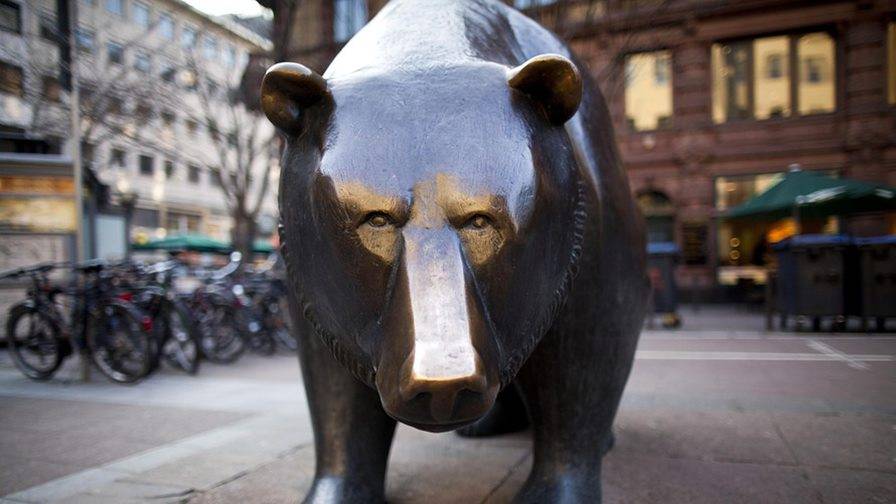
Meanwhile, Bitcoin continued its tumble, dropping below US$70,000 to deepen a sell-off which has wiped out all of its gains since US President Donald Trump was re-elected.
Bloomberg reported the cryptocurrency was down as much as 10% to US$65,344 overnight, its lowest level since October, 2024. Bitcoin's value has nearly halved since it reached a record high four months ago.
“The fear and uncertainty across the market is evident,” Ergonia head of business development Chris Newhouse told Bloomberg. “Without conviction-based buyers willing to lean into the selling, each wave of ETF redemptions and liquidation cascades.”
Further compounding the bad news was US labour market data which showed employers announced 108,435 layoffs in January, the highest for the month since the Global Financial Crisis. Jobless claims for the week ended January 31 also rose more than expected, CNBC reported, with job openings in December also at their lowest level since September 2020.
The official Bureau of Labor Statistics is due to release its January jobs report next week.
“It feels like we’re shifting out of this no-hire, no-fire period that we’ve been in for the past several months,” Tuckwood told CNBC. He added the upcoming BLS jobs report “could likely confirm what we’re seeing here with the others, where the firing and layoffs pieces is starting to turn negative”.
Silver prices, meanwhile, plunged 10%, snapping a two-day rebound, while pressure remained on gold prices, down close to 2% to US$4852 an ounce, having approached US$5400 an ounce last week. Gold is still up more than 70% over the last year.

And in corporate news, resources giant Rio Tinto has abandoned merger talks with rival Glencore, in what would have created the world's biggest mining company. The two sides reportedly disagreed over price and who would run the new business, with it the third time the pair have abandoned talks. Glencore shares were down as much as 11% before recovering to close down 3%, with Rio shares falling 2.6%.
Elsewhere, the US and Iran have agreed to hold nuclear talks in Oman this week, the BBC reports. The talks had earlier appeared to be in jeopardy over disagreements about where they would be held. Iranian Foreign Minister Abbas Araghchi confirmed the meeting, with Trump having earlier issued a blunt warning to Iran Supreme Leader Ayatollah Ali Khamenei.
Asked whether Khamenei should be worried, Trump told NBC News on Wednesday: "I would say he should be very worried." Khamenei had earlier warned the US any attack on Iran would spark a regional war, after Trump built up forces in the area and threatened military action.
Finally today, UK Prime Minister Keir Starmer has apologised to victims of Jeffrey Epstein for appointing Lord Mandelson as the UK's ambassador to the US, after emails revealed more details about the pair's relationship.
The BBC reported Starmer acknowledged it had been publicly known for some time that Lord Mandelson knew Epstein, but that "none of us knew the depths and the darkness of that relationship".
Conservative leader Kemi Badenoch has called the PM's position "untenable", while the Liberal Democrats have called for a confidence vote. Starmer is also facing calls from some Labour MPs to stand down, with is former political director Luke Sullivan reportedly saying he is "fighting for his premiership".

