TGIF and welcome to your recap of international business and political news from overnight.
First, to developing news, Ukrainian President Volodymyr Zelensky has proposed that his people vote on whether to concede disputed territory to end the war with Russia, the ABC reported.
Zelensky said the status of the eastern Donetsk region and future control over the Zaporizhzhia nuclear plant were the two key points of contention in talks on a deal to end the war.
He said the US was still pushing for Ukraine to make territorial concessions.
"They see Ukrainian forces leaving the territory of Donetsk region, and the supposed compromise is that Russian forces do not enter this territory … which they already call a 'free economic zone'," Zelensky told reporters.
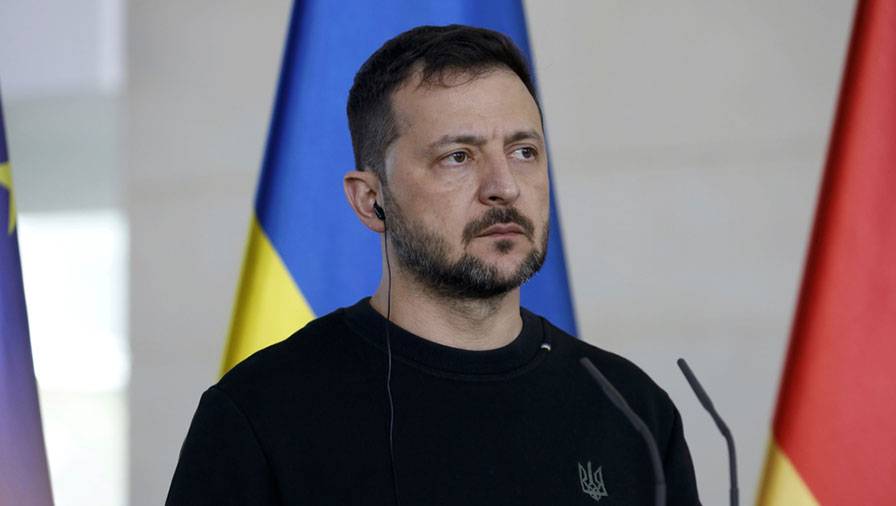
Ukrainian President Volodymyr Zelensky.
In Mexico, lawmakers approved a package of new tariffs, especially on products from China, the BBC reported.
President Claudia Sheinbaum said the tariffs were needed to boost domestic production. The levies are due to take effect from January and will apply to a range of products, such as metals, vehicles, clothing, and appliances.
Dozens of countries that do not have a free trade agreement with Mexico will also be affected, including Thailand, India and Indonesia. Chinese companies had been expanding operations in Mexico in recent years, such as automotive firms BYD and MG, the BBC noted.
In business news, Disney has announced a US$1 billion equity investment in OpenAI, while giving a guarantee to the future of human acting and voiceovers, the Guardian reported.
Chief executive Bob Iger said the deal paired his firm’s “iconic stories and characters” with OpenAI’s AI technology.
“[It will place] imagination and creativity directly into the hands of Disney fans in ways we’ve never seen before.”

Meanwhile, profit fears for the AI industry are on the rise after results from cloud computing and database software maker Oracle failed to impress, the Guardian said.
Oracle missed revenue and profit expectations, while it also reported a jump in spending on datacentres. Capital expenditure is now expected to be US$15b higher than the US$35b estimated in September.
Meanwhile, automotive company Rivian has developed its own AI chip, replacing Nvidia technology, as part of a broader push towards automated-driving features in future vehicles, Bloomberg reported.
“This is not a bet one takes lightly, this is a huge commitment that’s taken us years,” chief executive RJ Scaringe said.
“Usually, you can’t lower cost and improve performance. But here, we improved performance dramatically and simultaneously lowered cost by hundreds of dollars per vehicle.”
US Treasury Secretary Scott Bessent is proposing a major change in how the government approaches financial regulation and stability, CNBC reported, with changes mooted at the Financial Stability Oversight Council.
FSOC was formed after the financial crisis of 2008 to monitor and address systemic risk that led to the collapse of major Wall Street institutions and sent the economy into a slump.
CNBC understands that Bessent is also planning a working group to explore opportunities for AI to promote the resilience of the financial system, as well as possible risks to financial stability from AI.
Elsewhere, renewed fighting between Thailand and Cambodia entered another day as the death toll rises and both countries accuse each other of violating international law, Al Jazeera reported.
Three Thai civilians were killed as heavy combat continued along the country’s border, the Thai military said. Cambodia’s Ministry of the Interior said the death toll on the Cambodian side of the border stands at 11 civilians, including one baby.
Finally, Time magazine has named "The Architects of AI" as its Person of the Year because of the technological advances made by the sector, the ABC and Reuters reported.
"Person of the Year is a powerful way to focus the world's attention on the people that shape our lives. And this year, no-one had a greater impact than the individuals who imagined, designed, and built AI," editor-in-chief Sam Jacobs said.
Jacobs described the architects as "wowing and worrying humanity" and "transforming the present and transcending the possible".
The magazine features interviews with Nvidia chief executive Jensen Huang and SoftBank chief executive Masayoshi Son. Time’s other recent winners included US President Donald Trump, pop star Taylor Swift, activist Greta Thunberg and Tesla chief executive Elon Musk.


