Ross Hyland says New Zealand farmers are enjoying a rare period of stronger returns, but the cost squeeze has not gone away.
The founder and executive chairman of GrowPay has spent five years building what he describes as a finance and payments platform integrated into a digital wallet, with its own farm-focused marketplace.
GrowPay is a registered financial service provider and has listed this week on Catalist, a licensed and regulated growth stock exchange for small and medium-sized businesses. Hyland said the listing was a stepping stone as the company looked to raise capital to accelerate growth over the next 12 months.
The platform was launched earlier this year but is still running under beta while key supplier partnerships are integrated into the app over the next three to four months.
“Getting it right is more important than pushing an ego-driven narrative,” Hyland said.
GrowPay’s public material pitches it as a digital tool for farmers, growers and rural contractors, bringing finances, payments, transfers, account management and marketplace access into one place. Its website says farmers will be able to shop for more than 70 live inputs, including fertiliser, machinery, animal health and agri-chemicals.
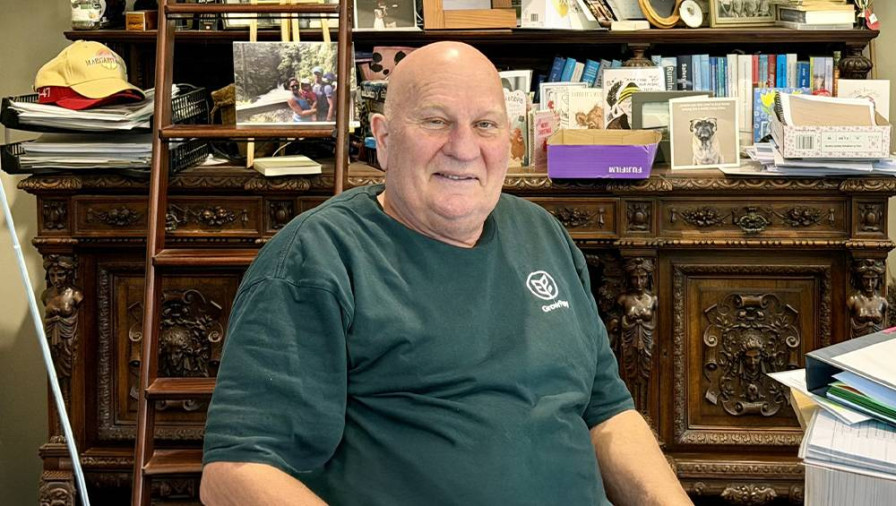
Ross Hyland at his home office in Hamilton
When the bank says no
Hyland told NBR GrowPay had completed close to $5 million of gross transaction value in its first five months, with about twice that again in the pipeline.
That early activity covered three of its five core finance revenue streams: asset finance, livestock trading loans, and farm sale and purchase mortgage funding.
The completed deals included one farm purchase in the South Waikato, where a farmer bought a neighbouring 40-hectare block for $2.2m. GrowPay had also completed more than $1m of lamb trades and was working on refinancing farm machinery and vehicles, including a Hitachi digger and a Toyota 70 Series Land Cruiser.
The numbers are still small, but Hyland said they pointed to where the opportunity sat.
“I think working capital is a real key for us,” he said.
He said farmers often hit the ceiling of their overdraft at the wrong time, forcing decisions that protected the bank’s position but weakened the farm business.
“You want to put on your autumn nitrogen because your feed covers are getting down a bit, and the bank says 'no', you’re going to have to sell some of those lambs, or you’re going to have to wait six weeks,” he said.
“That six weeks has just cost you, say, 1000 kilograms of dry matter going into the winter.”
GrowPay is trying to sit across several parts of the farm business at once. Hyland described it as a finance platform, payments platform, procurement platform and marketplace.
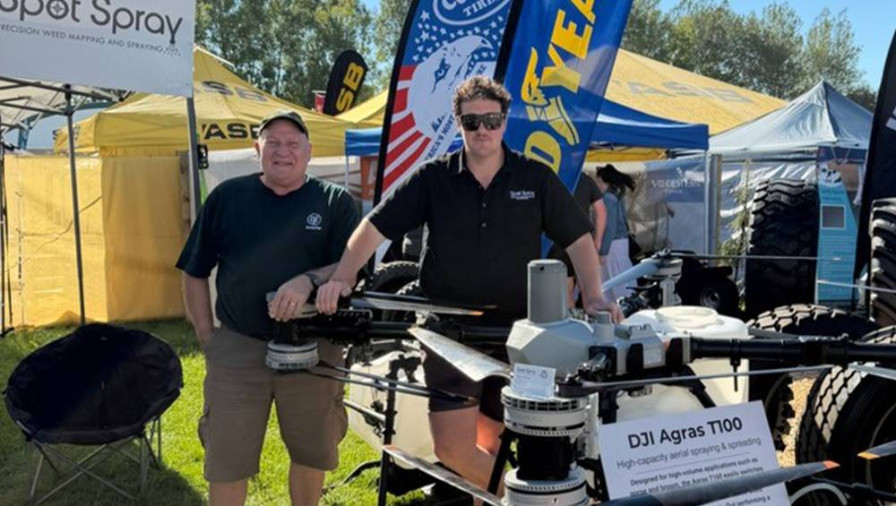
Ross Hyland with Spotspray business owner Nick Chamberlain.
Temu for ag
Finance was likely to become the largest revenue source over time, but Hyland said the marketplace was important because it would drive repeat use.
“The marketplace is, I think, just ripe for disruption,” he said.
“We want to basically become the Temu for ag inputs.” Meaning, things farmers buy to run the farm, such as fertiliser, animal health products, agri-chemicals, fuel, machinery, seed, and related supplies.
Hyland said more than 200 farmers had already shown “very keen interest” in GrowPay, despite what he called minimalist marketing. The company wanted to grow the number of vendors and product lines on the marketplace before ramping up sales.
“GrowPay is deliberately taking a conservative approach as we do not want to create a situation where we get caught out in the classic over-promise and under-deliver scenario.”
GrowPay had started with animal health products and was preparing to add more agri-chemicals, fertiliser, automotive products, fuel discounts and other high-use farm inputs.
Hyland said the model reduced the number of hands between vendor and farmer. The vendor held the stock, carried the logistics and delivered to the farm. GrowPay clipped a smaller margin, while suppliers were paid quickly and farmers could access finance if needed.
He said GrowPay did not hold inventory or carry the cost base of a traditional rural retailer.
“We can do it on very skinny margin. They need 20 to 30% just to survive, to cover their bricks and mortar along with high cost structures and overheads.”
Hyland said a Mackenzie Basin farmer had told him he spent $550,000 a year on agri-chemicals and was not interested in the finance side of the platform.
“If GrowPay can get me 10% off that, that’s $50,000,” Hyland said.
He said one Waikato farmer recently bought B12 Selenium through GrowPay’s website and was “delighted” to find it was 30% cheaper than his local farm supplies store.
GrowPay’s revenue comes from several streams, including brokerage, commissions, marketplace margin, working capital finance, asset finance, seasonal finance and interchange on its GrowPay Mastercard.
Hyland said key partners included Mastercard, BNZ, Heartland Bank, Mobil, Speirs Finance, Yoogo Fleet, Xceda, Aon-Agri and Sangra CTV.
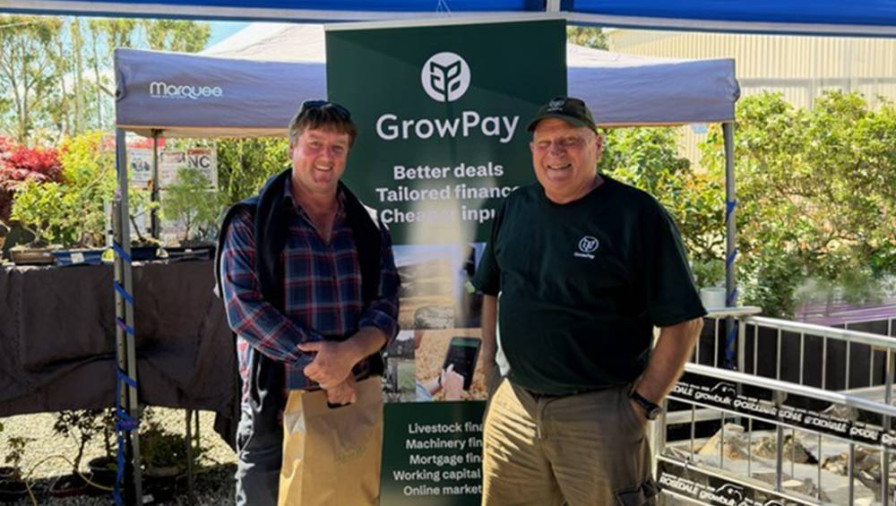
Ross Hyland with Southland farmer Ed Pinckney at Waimumu Fieldays
Serious lessons
The company is not trying to beat the major banks on large rural mortgages, where Hyland said their balance sheets are too strong to compete with.
“We’ll never match the big banks when it comes to on-farm lending from a mortgage perspective.”
But he said the large banks were less efficient at servicing smaller rural loans, particularly in the $2m to $4m range.
GrowPay’s pitch was different, Hyland said, because it could collect farmer information, pass it to a lender, and keep the customer relationship alive through payments, seasonal finance and marketplace use.
Hyland brings more than 25 years’ farming experience and a record of building Seales Winslow from a Morrinsville-based feed business into a national operation. Farmlands bought Seales Winslow in 2024 for $28.3m.
He said that growth also came with hard lessons.
“We nearly went broke at Seales,” he said. “You learn some serious lessons when your nose gets rubbed in the shit.”
One lesson was focus. Hyland said Seales had tried to be too many things to too many people, and GrowPay would be staying focused on New Zealand before looking offshore.
The company is now looking to raise capital to accelerate growth over the next 12 months.
Catalist says companies on its public market can raise up to $20m a year, although Hyland did not disclose how much GrowPay was seeking.
Hyland said GrowPay was open to the right wholesale investor, local or international, if they brought experience and a supportive mindset.
If the raise was successful, the money would be used to hire a chief executive or general manager, add finance, operations, compliance, sales and marketing capability, and potentially establish a small Christchurch head office.
The longer-term ambition is bigger than a farm inputs marketplace.
Hyland said there was no reason GrowPay could not eventually aggregate farmer output as well as inputs, creating trading opportunities for red meat, wool or other products.
He also said there was a possible path to becoming a digital farmers’ bank, although that was well down the track and not on the immediate agenda.
“You’ve got to walk before you can run,” he said.
He said for now, the immediate test is keep winning and build farmer trust, grow supplier volume, and deliver lower costs without recreating the overhead structure it is trying to disrupt.
Hyland said farmers were sceptical by nature, but increasingly comfortable using digital tools.
“If you support the farming fraternity, the farming fraternity supports you.”



