© All content copyright NBR. Do not reproduce, even if you have a paid subscription.
Monday December 1
Tamaki Health reportedly close to sale deal
 Medical centre group Tamaki Health is reportedly to be acquired by the TPG Emerging Companies Asia Fund, managed by US private equity firm TPG.
Australian private equity firm Mercury Capital’s Fund 2 owns 89% of Tamaki Health after initially buying a 49.4% stake in 2017.
The Australian Financial Review has reported that TPG is expected to pay about $500 million for the business, without citing sources.
Tamaki Health runs a network of 49 general practice clinics, mostly in Auckland under the White Cross and Local Doctors brands.
The Auckland practices are contracted to the Total Healthcare PHO, a charitable trust that, in the year to June, provided government health funding to Tamaki Health of $94.3m, plus payment for administration services of $1.4m.
Another outage at ASX creates chaos for investors
Up to 50 ASX-listed companies were affected by an ASX outage, which prevented the publication of corporate announcements on Monday.
The outage began just before 9am Sydney time, but the exchange did not update the market until 11.40am, when it said it was progressing "remediation efforts".
Shares in some companies, such as retailer Metcash, were forced into trading halts because they were unable to publish presentations on first-half results for investor calls.
The outage did not effect the trading of shares.
Wednesday December 3
Timber prices edge up, while home values still soft
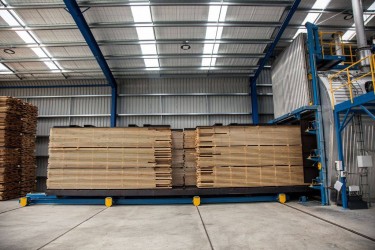
Property values remained at a low ebb last month, with analytics firm Cotality noting a national median of $806,551, still 17.4% below the 2022 peak. The cost of building a new home, by contrast, has started ratcheting up. Data from Quotable Value, out today, shows the first signs of upward pressure as timber and cladding prices rose over the past quarter. The biggest quarterly price jump came from structural timber, which was up 5.2%, with proprietary cladding systems (such as those sold by James Hardie) up 5%, with concrete climbing 4.5%. That, along with labour costs, helped push the average cost of building a 150-230sqm home across the top six urban centres by 0.5% over the past three months and up 1.1% over the past 12 months. Martin Bisset, a quantity surveyor with QV Costbuilder, said while it wasn't a surge by any means, but there were early signs of cost pressure returning, although not to the scale of the pandemic-induced spikes of 38% between 2020 and 2024.
Scales pares back FY26 guidance
Scales Corporation has reaffirmed forecasts for 2025 and issued new guidance for 2026. The NZX-listed agri-business confirmed its underlying net profit after tax attributable to shareholders would range between $54m and $59m in 2025. Scales managing director Andy Borland described it as an "exceptional year" for the company. In 2026, the directors expected an npat attributable to shareholders of between $50m and $55m. That step back was based on the assumption that horticulture volumes would normalise. The guidance range also implied an underlying earnings before interest tax depreciation and amortisation (ebitda) of between $129m and $136m, and an underlying npat (which includes npat attributable to non-Scales shareholders) of between $67m and $73m for 2026.
Coster resigns as CEO over critical police report

Andrew Coster.
Former Police Commissioner Andrew Coster has resigned as chief executive of the Social Investment Agency in the wake of a critical report into the police handling of complaints against then-Deputy Police Commissioner Jevon McSkimming. Public Service Commissioner Sir Brian Roche said Coster’s resignation was effective from today. “I respect Mr Coster’s decision. It was the right thing to do,” Roche said. He said the Independent Police Conduct Authority (IPCA) found no evidence of corruption or a cover-up, but there were serious leadership failures within the organisation that Coster was then accountable for. “Mr Coster acknowledges with hindsight that he should have and could have done better, and as evidenced by his decision, has taken accountability,” Roche said. But he said Coster had performed well as SIA chief executive and made a significant contribution to its work.
Thursday December 4
Government books record mixed results
The Government’s financial statements for the four months to the end of October had good and bad news. The Government’s main indicator – the operating balance before gains and losses and excluding ACC (Obegalx) – recorded a deficit of $4.9 billion, $700m worse than forecast in the Budget Economic and Fiscal Update. Once ACC is included, the deficit was $5.2b, only $400m higher than expected. Despite a higher-than-expected Obegalx, the overall operating balance recorded a surplus of $900m, compared with a forecast deficit of $2.9b. The Government’s core residual cash deficit was $800m smaller at $3.7b and its net core Crown debt was $4.5b lower than forecast at $186.5b, the equivalent of 42.8% of GDP. The Crown’s net worth was nearly $10b higher than forecast at $190b.
New chair for Pacific Edge
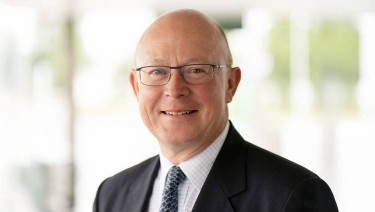
Simon Flood.
Simon Flood is to be cancer diagnostics company Pacific Edge’s new chair, the company’s board said on Thursday morning.
Flood will replace Chris Gallaher, who in September 2024 delayed his retirement until a successor was appointed. Flood will join the board immediately and will become chair at the end of the next board meeting on December 18. Flood is an experienced director and is currently also chair of Queenstown Airport. He has held senior investment management and leadership roles in London, Hong Kong, and Singapore.
Gallaher said he was delighted Flood had agreed to take on the chair role. "With Pacific Edge now in the strongest position yet to regain Medicare reimbursement of Cxbladder in the US, Simon’s deep understanding of capital markets and how to scale innovative technology businesses will be of enormous value to the company. I am meanwhile looking forward to my long-delayed retirement. My confidence in the future of the company remains strong."
Fonterra profit up, Mainland divestment process on track
Fonterra’s first-quarter profit has risen while it navigates downward pressure on commodity prices and the Mainland Group divestment.
The dairy giant today said its Q1 group profit rose $15 million to $278m, compared with the previous year.
Chief executive Miles Hurrell said its earnings were in line with this time last year.
Last week, Fonterra revised its forecast farmgate milk price range for the season from $9-$11 per kg of milk solids to $9-$10 per kgMS, with a new midpoint of $9.50. That was because of strong global milk collections putting downward pressure on commodity prices.
In October, Fonterra’s farmer shareholders approved the divestment of Mainland Group to Lactalis for $4.22 billion.
Today, Fonterra said some of the regulatory approvals had been obtained, including approval from the Overseas Investment Office. Other regulatory approvals are still pending.
The co-op continues to expect the transaction to be completed in the first half of next year.
Air NZ cabin crew strikes averted, but E tū threat still remains

Air New Zealand has confirmed that all strike notices for December 8 have been withdrawn, but acknowledges one remaining notice from the E tū union, covering “around half” of its narrowbody cabin crew for strike action on a new date: December 18.
The airline’s chief people officer Nikki Dines said discussions on the remaining collective agreement were "constructive and progressing well" and that it was "hopeful" an agreement would be reached and that all bargains would be in a position for a vote "as soon as possible".
"At this stage, there is no change to our flight schedule and our focus remains on reaching agreement with E tū and avoiding strike action entirely."
E tū said earlier that its delegates at short haul had withdrawn the December 8 strike notice as a gesture of good faith so that bargaining could continue.
Friday December 5
Fletcher Building pays $7.2m to exit all USPP note financing
Fletcher Building has prepaid all outstanding US Private Placement (USPP) notes as part of a refinancing, at a cash cost of $7.2 million, including $6.7m for the termination of cross-currency interest rate swaps in addition to a make-whole payment.
As part of the refinancing strategy, the company has established a two-year $200m club facility "to strengthen our liquidity position" and extended its $325m Tranche C of the Syndicated Facility Agreement for four years. Its next material debt maturity is in FY28.
It has also extended part of a bank covenant amendment originally agreed in June 2024, which applies solely to the 'Senior Interest Cover' covenant. It will remain at 2.25x up to and including December 31, 2026, and will revert to its standard level of 2.75x from June 30, 2027.
It remains restricted from paying a dividend until it elects to be tested against, and complies with, its standard covenant levels.
The company said its forecasts indicate no concerns regarding compliance.
Former Wendy’s owner’s ‘illogical’ holiday pay approach confirmed
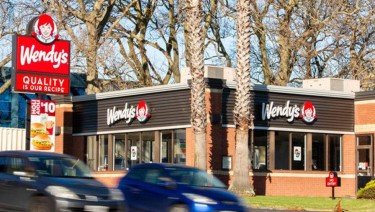
The former owners of the Wendy’s chain of fast-food restaurants in New Zealand have lost an Employment Relations Authority (ERA) bid to overturn an improvement notice involving non-payment of employees on public holidays going back six years.
The ERA confirmed an improvement notice – a formal directive requiring an employer to fix breaches of employment law – issued to Lendco Ltd (formerly Wendco (NZ) Ltd) by the Labour Inspectorate.
Lendco’s system required employees to “volunteer” for public holiday shifts via its rostering system before those days could be considered “otherwise working days”.
ERA member Jeremy Lynch said Lendco had effectively excluded employees from their statutory entitlement to paid public holidays unless they first volunteered to work.
“Under Lendco’s approach, the only way an affected employee can get a paid day off for a public holiday, is to first volunteer to work on the public holiday. The illogical nature of this approach is obvious," Lynch said.


