The securities division of ASX-listed Macquarie Group has been ordered to pay a A$35m ($42m) fine for the misreporting of tens of millions of short sales over several years.
The New South Wales Supreme Court today announced the order, which came from legal action against Macquarie Securities taken by regulator the Australian Securities and Investment Commission (Asic) in its first case against short selling.
Macquarie Securities failed to correctly report at least 73 million short sales between December 2009 and February 2024.
The actual number of short sales misrepresented is estimated at between 298 million and 1.5 billion.
The inaccuracies came from deficiencies in Macquarie’s systems and processes, which went undetected despite a number of internal reviews.
Tuesday March 16
New Zealand Merino Company rebrands as Zentera
 USX-listed New Zealand Merino Company has changed its name to Zentera Wool Company.
The name combined Zen (a symbol of balance and harmony) and Tera (derived from the Latin for earth).
Zentera chief executive Angus Street said the transformation represented a pivotal shift for the company and for the growers and brands it works with.
“We have a proud legacy as a leader for the wool and textile industry - we had a significant role in banning mulesing in New Zealand and we established the world’s first ethical and sustainable wool standards with our ZQ certification. It’s important that our company name and brand is a true reflection of who we are and what we do."
In 2007 NZ Merino established ZQ, an on-farm certification programme to produce ethical wool. It requires growers to meet strict standards with regard to animal welfare, environmental integrity, social responsibility, fibre quality, and traceability.
Zentera uses more than 600 growers and supplies more than 100 brands.
My Food Bag guides slight profit lift, monitoring Middle East
Listed food delivery company My Food Bag expects an increase in its full-year net profit after tax after forecasting a 4.9% uptick in revenue for the year to March 31.
The company said on Tuesday its second-half revenue was up 6% on the same period last year, and despite ongoing ingredient cost inflation, its second-half gross margin had also improved.
It forecast net profit after tax for the 2026 financial year to be between $6.4 million and $6.8m, which would be an improvement on the previous year's $6.3m.
The company said it was pleased to grow its profitability but it was too early to assess how the escalation of conflict in the Middle East would impact it.
"We remain closely connected with our suppliers and we will keep the market informed of any material impacts including providing a trading update at the release of our full year financial results."
ComCom pitches investment rule changes for fibre network builds
 The Commerce Commission is proposing targeted improvements to the rules governing fibre networks as part of its first review of the Fibre Input Methodologies regime.
One key proposal in the draft decision is to introduce a clearer investment test for large fibre network expansion projects, which would be assessed using a cost-benefit framework including analysis of the value consumers place on fibre services through measures such as willingness to pay.
The draft also proposes changes to improve the capital expenditure proposal process, including clearer information requirements and adjustments to regulatory timelines.
Other changes could include refinements to the treatment of connection capital expenditure and insurance.
The draft decision covers issues relevant to the next fibre price-quality reset, which will apply from 2029. Further issues will be considered in the second stage of the review. Submissions on the draft decision are open until April 16.
Promisia Healthcare announces governance shakeup
Promisia Healthcare’s largest shareholder will step down from his executive role and become a non-executive director at the company.
The small NZX-listed aged care provider this morning announced that Tom Brankin will relinquish his position as an executive director following its 2026 annual meeting. It comes as the New Zealand Shareholders’ Association previously raised concerns about the company’s heavy reliance on Brankin for everything from strategic advice to supplying assets. Today, Promisia praised Brankin, who owns 42% of the company, for his contributions, saying shareholders have benefited from his work.
It also announced that Craig Percy has been reinstated as an independent director, one year after he held an executive role with the company.
While official guidelines suggest a former executive might not be deemed ‘independent’ until three years after they have left their post, the board disagreed because his role was temporary, operationally focused, and part-time.
Appointments made to inquiry into Tauranga landslides
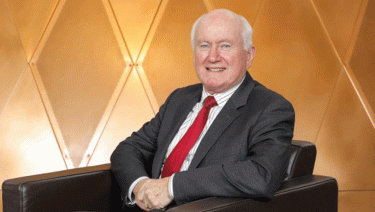
Mark O’Regan.
Retired Supreme Court judge Sir Mark O’Regan has been appointed chair of the Government inquiry into the fatal landslides in Tauranga in January.
He will be assisted by a former Ministry of Research, Science, and Technology CEO Dr Helen Anderson as well as Steve Symon, who was recently chair of the Ministerial Advisory Group on Transnational, Serious, Organised Crime.
Emergency Management and Recovery Associate Minister Chris Penk said the inquiry would establish how the landslides occurred, report on whether relevant authorities took appropriate steps to manage the apparent risk before the two fatal landslides, and identify any lessons that can be learned.
Penk expects the inquiry to deliver its final report with recommendations by December 3.
Middle East price volatility to linger for consumers
Monthly food price inflation has fallen slightly as discounts flow through at the supermarket checkout, but economists warn of ongoing price volatility arising from the Middle East war.
Statistics NZ data today showed food prices dropped 0.1% in February, when compared with January, driven by declines for the grocery category; fruit and vegetables; as well as meat, poultry, and fish.
Those falls helped to outweigh an increase in prices for restaurant meals, ready-to-eat food, and non-alcoholic beverages.
ASB economists cautioned that there was ongoing volatility, and the March data will likely see a “sharp jump” in fuel prices and airfares amid the Middle East conflict.
Meanwhile, Stats NZ corrected its January food price index. Previously, it said food prices were up 2.5% in January, when compared with December. The correct increase was 2.1%.
“Specifically, for one supermarket data provider, only 18 of the 31 days were included. This was due to human error,” Stats NZ said.
Government support for geothermal projects
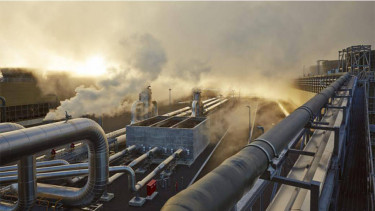
TeMihi Contact geothermal power station.
Regional Development and Resources Minister Shane Jones said $50 million from the Regional Infrastructure Fund (RIF) has been ringfenced to pay for the development of geothermal projects. That is in addition to the $60m ringfenced in the fund in 2024 to invest in exploring the potential of supercritical geothermal technology.
Jones said today’s announcement was about de-risking investment in geothermal projects.
Three projects had so far been successful in getting funding from the RIF, totaling $23m.
“Through this ringfenced funding, two $10m loans have been granted to two projects – the Taumanu and Kopura geothermal projects near Rotorua and Kawerau,” he said.
Those projects, if successful, had the potential to develop additional renewable, reliable, low-emissions energy, while boosting Māori economic development, jobs, and long-term regional growth and resilience, he said.
Wednesday March 18
Whole milk powder price edges lower at latest auction
The price of key export commodity whole milk powder has reversed course and edged lower for the first time this year. Data overnight showed the commodity fell 4% to US$3709 per metric tonne, following consecutive increases since late last year. The overall GDT index was flat, recording only a 0.1% gain, to US$4330 per metric tonne. Dairy farmers have benefited from higher commodity prices and increased global demand, but uncertainty is building with the current Middle East conflict. Even so, Rabobank’s latest Rural Confidence Survey, out today, edged higher because of improved dairy sentiment. The latest survey, completed between February 16 and March 6, found 39% of New Zealand farmers were now expecting the performance of the broader agri-economy to improve in the year ahead. Importantly, the number expecting conditions to worsen had fallen to 8%, from 12% previously.

Fisheries Amendment Bill introduced to Parliament
The Fisheries Amendment Bill has been introduced to Parliament today, with Oceans and Fisheries Minister Shane Jones saying it will ensure sustainability while removing obstacles to growth. Jones said the Bill would streamline science-based decision-making, address concerns about private and commercially sensitive footage from cameras on boats, and give fishers more options about what to do with their catch. “A key part of the reforms is changes that allow us to be more agile in response to changes in fisheries abundance. Being able to quickly adjust catch limits up or down is good for the fishery and people who use it,” he said. Jones said the Bill, along with operational changes, would make it easier to harvest fish in a sustainable way. He urged people to make submissions when the Bill went to select committee for consideration.
BHP appoints Brandon Craig as new chief executive
ASX-listed mining giant BHP has announced the appointment of Brandon Craig as its new chief executive. Craig has been with BHP since 1999, and his most recent role was heading up the company’s increasingly important copper and potash divisions. He will take over as chief executive on July 1 from Mike Henry, who has served in the role for just over six years. BHP is the world’s largest mining company, with a market capitalisation of A$252.6b ($305.8b).
Government gives assurance about levels of fuel stocks
New Zealand continues to hold healthy stocks of petrol, diesel and jet fuel, according to the Government. Finance Minister Nicola Willis said at midnight on Sunday, combined petrol, diesel and jet fuel stocks equated to about 49 days. This included fuel already in storage terminals and fuel on ships already bound for New Zealand. “Levels are down slightly from last week, but the changes reflect normal patterns of consumption and shipping,” Willis said. Associate Energy Minister Shane Jones, who is responsible for fuel security, said the Government was working closely with industry to strengthen the quality and timeliness of fuel stock and shipping data. “All indications are, so far, that New Zealand is well-placed to deal with the fallout from the closure of the Strait of Hormuz. We are working closely with other countries and our suppliers to ensure this continues,” Jones said. He said he wanted to be clear that at this stage, there was no need for fuel restrictions.
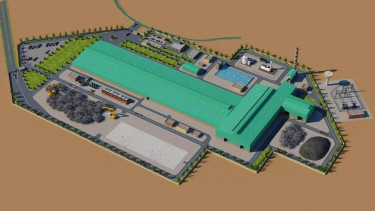
Steel manufacturing plant approved under fast-track process
A Waikato structural steel manufacturing plant has received fast-track approval. Infrastructure Minister Chris Bishop said National Green Steel lodged its application in July 2025 to build the plant in Hampton Downs, and approval had taken about five months after the establishment of the expert panel.
“New Zealand has a major infrastructure deficit. We need to deliver infrastructure faster, and we need the supply chains to back that up. A project like Green Steel can do both, building local manufacturing capacity and help provide material for a wide range of developments,” he said.
It is the 13th project approved under the fast-track process and the first project to feature steel manufacturing. Regional Development Minister Shane Jones said it would process about 200,000 tonnes of steel each year and create about 200 skilled jobs.
Datagrid signs 140MW power purchase agreement with Mercury
Southland data centre development Datagrid New Zealand has announced the signing of a 140 megawatt long-term power purchase option agreement with electricity provider Mercury.
The 15 year, 1.2TWh per year agreement is equivalent to 3% of the current national electricity demand, Datagrid said.
The announcement noted that NZX-listed Mercury had just completed expansion of its Ngā Tamariki Geothermal Station near Taupō, while stage two of its Kaiwera Downs Wind Farm near Gore and Kaiwaikawe Wind Farm near Dargaville were both due to begin generating in 2026.
Kaiwera Downs' first stage has a generation capacity of 43MW but that is due to rise to 198MW after stage two is completed. The company's other existing South Island generator is a wind farm at Mahinerangi, which generates 12MW, while stage two at that site is due to ramp installed capacity up to 190MW.
Overall, the company is targeting 3.5GW of installed capacity by 2030, with much of the uplift coming via wind farms.
Former ADHB official guilty of accepting bribes
Garry Gorham, a former senior manager at the Auckland District Health Board, has admitted to receiving $258,541 in payments from medical equipment and software supply companies in a case brought by the Serious Fraud Office. Gorham entered guilty pleas on three charges of acceptance of gifts by an agent, related to receiving $223,112 from ADHB suppliers Alpine Medical Hardware (AMH) and Device Technologies. Gorham also pleaded guilty to one charge of disclosing official information on six occasions between April 2012 and August 2014. He was found guilty of accepting a further $35,428 from medical software providers, Scotland-based company Newgate Technology and local company Technology Solutions Industry. The conviction follows the sentencing of AMH director William Mackenzie to four months' community detention in October, for giving gifts to an agent. AMH had made 28 payments totalling $170,215 over seven years to 2015 to the ADHB manager. Gorham will be sentenced on August 10.
Thursday March 19
Summer boost for profitability at Turners Automotive
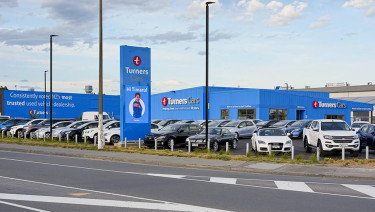
Listed automotive dealer Turners has upgraded its earnings guidance for the financial year to March 31, off the back of a stronger summer trading period. The company now expects net profit before tax, before goodwill adjustments, to be about $63 million, an increase from the previous guidance of about $60m, and approaching the previously stated profit target of $65m in FY28. Turners noted strong vehicle sales volumes and an improvement in vehicle margins in the auto retail division. It also benefited from disciplined purchasing, competitive pricing, and market share gains. Finance lending activity also improved in January and February, with several new lending records. CEO Todd Hunter said it planned to update the market on its five-year business strategy next week, with a new target for earnings over that period.
Friday March 20
Vulcan Steel chair trims holding
Vulcan Steel chair Rhys Jones has sold $950,000 worth of shares in the dual-listed steel distributor.
A note to the stock exchange today showed interests associated with Jones sold 130,000 shares at $7.50 on March 18. The sale reduced his holding in the company to 3.17% from 3.27%.
Vulcan chief financial officer Kar Yue Yeo told NBR Jones sold the shares for “tax planning purposes”.
Jones was Vulcan’s chief executive until January 1, when he stepped down to assume the role of non-executive chair. Vulcan’s chief customer officer Gavin Street replaced him in the top job.
Street more than doubled his relatively small holding in the company on March 12, when interests associated with him acquired 8100 shares.



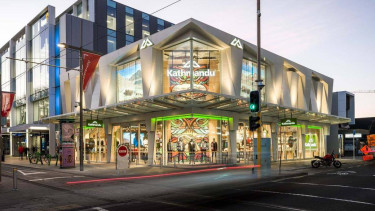 NZX and ASX-listed outdoor retailer KMD Brands, in response to media reports, has confirmed it had engaged Goldman Sachs to assist with its treasury and capital management strategy, but it had not made a decision regarding recapitalisation and no refinancing terms had been agreed to.