Monday May 4
UP Education triples profit
Private training provider UP Education, said to be in the midst of a sale process, has reported a 200% increase in profit for the year to December.
Accounts filed to the Companies Office show 2025 net profit of $29.3 million, up from $9.6m the previous year.
Revenue grew 26% to $475.4m.
Up Education, controlled by Pacific Equity Partners, runs a group of vocational training providers in New Zealand and Australia, including NZMA, NZ School of Tourism, and Yoobee.
During 2025, it made several acquisitions, including Auckland Institute of Studies for $15.9m, Australian online accountancy trainer Monarch for A$12.4m, and New Zealand farming trainer Land-Based Training for $12m.
At balance date, the group’s net equity was $353.7m, including intangible assets of $905.9m and debt of $492m.
In March, The Australian reported private equity firms Kohlberg Kravis Roberts and Bain Capital were potential buyers after PEP hired Morgan Stanley and Stanton Road Partners to advise on a sale.
Profits soar at Craigs
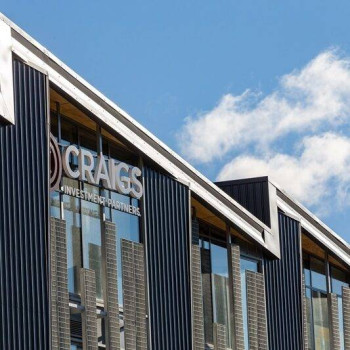 Financial advisory firm Craigs has reported profits up 121%, aided by a gain on the sale of its 50% stake in Australian sharebroker Wilsons.
In financial statements filed to the Companies Office, Craigs parent company CIP Holdings reported net profit of $49.2 million for the year to December, up from $22.1m the previous year.
Revenue grew 17% to $311.5m, comprising $230.1m in fees, $63m in brokerage, and $18.4m in commissions.
The company paid dividends to its shareholders of $72.5m, up from $18.1m in 2024.
CIP Holdings is ultimately 50% owned by private equity firm TA Associates and 50% by its employees.
Last July, Craigs sold its 50% stake in Wilsons for A$22m ($26m), generating a gain on sale of $13.7m.
Wilsons was wholly acquired the following month by Canadian multinational Cannacord Genuity.
In June last year, a month before completing the transaction, Craigs described reports it was considering selling its Wilsons stake as “purely speculation”.
New Zealand and Singapore sign essential supplies agreement
New Zealand and Singapore have signed the Agreement on Trade in Essential Supplies (AOTES) in Singapore today.
It was witnessed by Prime Minister Christopher Luxon and Singapore’s Prime Minister Lawrence Wong and guarantees neither country will impose export restrictions on the other, as well as formalising cooperation on supply chain resilience.
Luxon said the agreement was a demonstration of New Zealand and Singapore working together as trusted partners. “With a third of New Zealand’s fuel refined in Singapore, this agreement turns trust into action and right now, that’s keeping fuel flowing to New Zealand when it matters most,” Luxon said.
Trade Minister Todd McClay, who signed the agreement, said it built on the cooperation forged during the Covid-19 pandemic and recognised that access to essential goods was critical during times of crisis.
Tuesday May 5
KiwiRail pinged $400k for ferry grounding, lack of training
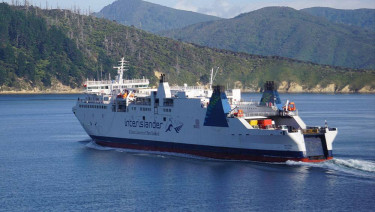 The Wellington District Court on Monday fined KiwiRail $375,000 for failures leading up to the grounding of the Aratere in June 2024, during a freight sailing between Picton and Wellington. The court added another $25,000 at sentencing, after Maritime NZ prosecuted the rail and ferry operator for breaches under the Health and Safety at Work Act 2015.
The maritime safety regulator took a year to bring charges, after which KiwiRail pleaded guilty to charges under sections 48 and 36 of the Act.
Maritime NZ director Kirstie Hewlett said their investigation had found failures in KiwiRail's change-management processes and controls, with a clear knowledge gap about how to work critical steering functions.
There were 39 crew members and eight passengers on board when it ran aground at Titoki Bay in Picton Harbour on June 21. The ferry was refloated the following evening with no injuries.
Synlait gets debt covenant waivers
Bank lenders to milk processor Synlait have agreed to waive two covenants on its debt as the company faces “a number of headwinds outside of its control”.
In a brief statement to the NZX, Synlait said it had asked its banking syndicate to waive the quarterly minimum earnings before interest, tax, depreciation and amortisation threshold for the period ending April 30, as well as the interest cover ratio for April 30.
Synlait’s interest cover covenant was waived for the January 31 reporting date, while the minimum ebitda event of review threshold was waived for the half year to January and amended for the two subsequent periods.
After completing the sale of its North Island assets on April 1, Synlait’s bank debt reduced to $200m from $400m.
The banking syndicate comprises ANZ, China Construction Bank, Bank of China, Rabobank, Industrial & Commercial Bank of China, Bank of Communications and Bank of East Asia.
Peter Jessup to leave NZX board for ASX role

Peter Jessup.
Sydney-based Peter Jessup will retire as a director at the NZX in November, the stock exchange operator said on Tuesday.
Jessup has been a director for four years, having earlier been appointed to the NZX Technology Committee. He informed the board of is decision on Monday night after taking on a job at the ASX. The role is not in management or involved in any strategic business decisions, the NZX noted.
NZX chair John McMahon said Jessup had made a positive contribution.
“Peter has been a highly valued member of the NZX Board, bringing more than 35 years’ specialist financial markets technology and capital markets expertise to the table. His skills and knowledge in trading, surveillance, clearing, depository and settlement systems have been vital to ensuring NZX continues to maintain and invest in the right people, processes and technology fundamental to the effective running of markets.”
Jessup will remain a director until November 30.
Three new directors appointed to ACC board
Three new directors have been appointed to the ACC board, with ACC Minister Scott Simpson saying they would play a key role in supporting the performance of ACC under its turnaround plan.
The three are Richard Keys, Lindsay Wright, and Michael Playford.
Keys was formerly CEO of Abano Healthcare Group and has governance roles that include Southern Cross Central Lakes Hospital and the Pacific Clinical Research Network.
Wright is on the boards of Spark New Zealand and the Guardians of New Zealand Superannuation, while Playford is an actuary.
“The combined skills of the newly appointed directors and their experience in health and disability, investment management, and actuarial forecasting will strengthen the board’s ability to deliver on the turnaround plan,” Simpson said.
Trade Window reports 20% rise in annual revenue

Trade Window has reported a 20% rise in annual trading revenue despite a “volatile” economic environment, which the company said showed the critical nature of its trade-related software products.
In an operational update ahead of its full-year results due out later this month, the NZX-listed trade software provider did not state its profit for the year, but noted revenue had hit $9.6 million in FY25.
Annual recurring revenue had climbed to $10.1m at the end of March, up 17% on 12 months earlier.
Average revenue per customer per year was up by 22% for ‘shipper’ clients and 27% for freight forwarders.
Gross margin rose three percentage points to 63% between the end of Q3 and Q4.
The company said its fourth quarter showed recovery from softer-than-anticipated Q3 seasonal export volumes, supported by resumption of normal export activity across key primary industry customers and continued onboarding of new accounts in both the shipper and freight forwarder segments.
Wednesday May 6
Broadcasting Standards Authority to be scrapped
The Government is going to scrap the Broadcasting Standards Authority, with the New Zealand Media Council – an industry self-regulator – expected to become the primary regulator of journalism. Media and Communications Minister Paul Goldsmith said the BSA was designed for a broadcasting environment that was rapidly disappearing. “Today audiences move seamlessly between traditional broadcasting, on-demand services, podcasts and online platforms, yet only a small portion of that content is subject to the BSA’s regulatory oversight. It doesn’t make sense,” he said. Goldsmith said he was confident that greater industry self-regulation was the most practical way to regulate media. It could provide an appropriate level of oversight to maintain ethical journalistic standards and audience trust, he said. Legislation repealing provisions related to the BSA would be drafted in the coming months.
Canva fined over late filing

Australian graphic design unicorn Canva has paid A$792,000 ($966,000) in fines after four of its companies were late in lodging financial returns for the year ending December 2024. Each of the companies has paid A$198,000 for failing to lodge their reports by the deadline of April 30 last year. Canva achieved significant growth in 2024 and surpassed 220 million monthly active accounts during the year. Filings showed that Canva generated revenue of more than US$2b ($3.4b) in 2024, although expenses also grew to US$2.3b. Canva’s last fundraising round, in August 2025, valued the company at US$42b as it heads towards an IPO in the US, now slated for 2028.
Channel Infrastructure boosts profit guidance
Fuel terminal operator Channel Infrastructure has increased its earnings guidance for the year to December, citing higher revenue from more diesel and jet storage.
In a presentation to its annual meeting on Wednesday, chair James Miller said earnings before interest, tax, depreciation and amortisation would be $97-105 million, up from previous guidance of $95-$100m.
The increase reflected “additional revenue from the early commissioning of the Z Energy jet storage, and additional diesel storage revenue, balanced against an uncertain fuel demand outlook in the current high fuel price environment,” said Miller.
Channel Infrastructure said its 93 million litres of extra diesel storage for the Government was on track for commissioning by May 31, generating revenue from July, while its jet fuel tank for Z Energy would also be ready in July, six months ahead of schedule.
Thursday May 7
Comvita capital raise meets minimum threshold
Comvita says it has hit a target of raising at least $25 million from shareholders, which means its refinancing package has been secured. In May, it launched a $30m pro rata renounceable rights offer, priced at 65 cents a share, to refinance and pay down debt. The raise was partially underwritten by Singapore-listed consumer group Fraser and Neave, which would take a 19.99% stake as part of the deal. This morning, Comvita reported about 44% of shareholders had taken up the rights offer, equating to about $13.2m. Alongside the backing from Fraser and Neave, Comvita has enough support to meet the $25m minimum to secure its refinancing package. The agreement involved two facilities, including a $20m working capital facility to be repaid annually, and a core debt facility of up to $30m. The key covenants in the two-and-a-half-year term included a leverage ratio of 2.5x and an interest coverage ratio of 2.5x, both to be tested quarterly. The rights offer closes today at 5pm.

The proposed Bendigo-Ophir site.
Santana clears OIO consent hurdle
Prospective gold miner Santana Minerals says it has received Overseas Investment Office approval to buy 3680ha of land in Central Otago around its proposed Bendigo-Ophir project. Santana has agreements to buy the land from Bendigo and Argour Stations, subject to approval of its resource consent applications under the Fast-Track Approvals Act. An expert panel is due to decide on the consents in October. Santana chief executive Damian Spring said the OIO decision was “a strong signal that New Zealand is open to foreign investment and recognises the importance of responsible mineral development for regional and national prosperity. With approximately 40% of Santana shareholders based in New Zealand, the benefits of the Bendigo-Ophir Gold Project will be shared broadly across the country through employment, investment, exports and regional economic activity.”
Friday May 8
Fletcher to sell Melbourne property for $65m
Fletcher Building has announced a sale and leaseback deal on a property in Melbourne used by its Laminex subsidiary.
In a statement to the NZX, Fletcher said the conditional agreement with Forza Capital involved the sale of the property at Cheltenham for A$53.8 million ($65m) and a minimum three-year leaseback.
The company said the timeframe would allow for a “broader review of the manufacturing site requirements” for Laminex.
The transaction is expected to complete by the end of June, subject to environmental due diligence and internal governance approvals.
Fletcher said it would generate a gain on sale of about A$14m.
Managing director Andrew Reding said the deal was a further step in optimising the group’s property footprint and contributed to ongoing capital management.
Macquarie’s A$4.85b profit beats forecasts

ASX-listed investment bank Macquarie Group has reported a better-than-expected A$4.85 billion ($5.88b) annual cash profit, driven by its commodities and markets division and fees in the asset management business.
The result was 30% higher than last year’s A$3.72b, though short of the record A$5.18b posted in 2023.
Macquarie declared a dividend of A$4.20, up from A$3.90.
Earnings in the commodities and markets business were up by 49% to A$4.2 million.
The result had little impact on Macquarie shares, which were 2% lower at A$236.60 today in a lower market.
Wellington Airport declares $15.7m profit despite ‘pressure’
Wellington Airport has reported a net profit after tax of $15.7 million for the year to the end of March, down from a profit of $27.7m in the prior year.
Aircraft movement and terminal charge revenue rose from $110.4m to $112.2m, while retail and trading activities added $61.4m in FY26 compared with $54.7m the year prior.
Total revenue grew from $185.3m to $194.2m year on year.
The airport experienced a 4% increase in international passengers, which helped it achieve earnings of $133.4m, up from last year’s $130.2m.
Chief executive Matt Clarke said the result was pleasing despite “pressure on regional connectivity and Air New Zealand’s well-known fleet availability issues”.
“We’ve kept a focus on controlling costs and have worked closely with our airline partners on the timing of infrastructure projects. This has put us in a solid position to manage the current challenges facing the aviation industry and the wider economy.”

