The Aotearoa Art Fair opens at Auckland's Viaduct Events Centre today with 60 galleries, more than 200 artists, and a waterfront sculpture trail that’s nearly tripled in size.
As much as the fair has grown, so has its cultural and commercial centre of gravity. Māori artists, once a standout feature, are now driving much of the event’s identity.
"Last year was the biggest in our 21-year history," fair director Sue Waymouth said. "We had 11,000 visitors and sales leapt from $3.5 million to $7.5 million. That kind of growth shows people are connecting."
The fair is now in its second year under new ownership, after being acquired by international art fair organisers Tim Etchells and Sandy Angus in 2023.
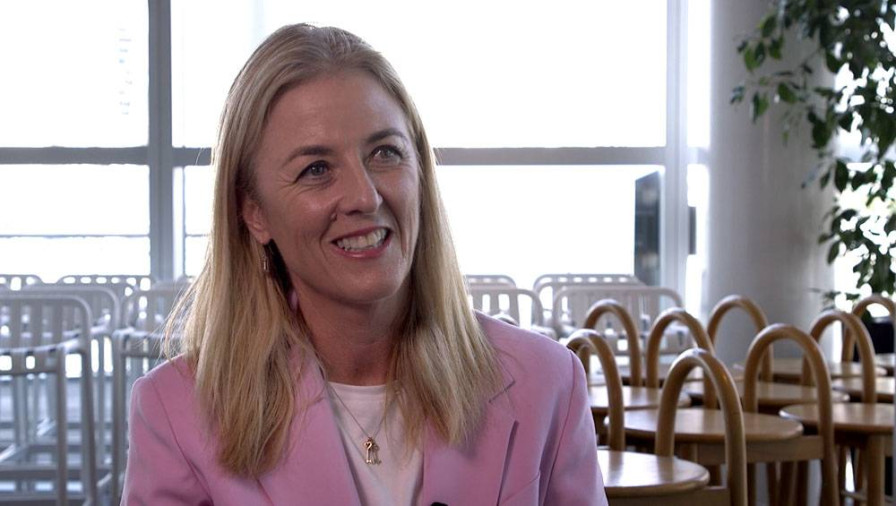
Aotearoa Art Fair director Sue Waymouth.
Waymouth said this year’s fair has expanded in every direction. International galleries were up from nine to 19, and the sculpture trail had grown from nine to 25 works. “It’s really become a public gallery for everyone,” she said. “And it’s lit up the city.”
Among the most visible works covering the front of the events centre is Lisa Reihana’s Anzac, a large-scale piece based on a tāniko cloak pattern that honours Ngāpuhi soldiers. “It’s a commemoration for home,” said Waymouth. “And to have it displayed so publicly is powerful. Anyone can see it.”
Reihana is also showing her video work In Pursuit of Venus [infected] inside the fair. “You get a sense of the diversity, the storytelling, the materials, the people who are part of this creative ecosystem,” she said.
Next to Anzac is Peata Larkin’s Ka Mau Ka Ora, a sculptural installation that honours Te Whare Pora, the house of weaving. “It celebrates wāhine as nurturers and creatives,” she said. “I made it with a lot of aroha and respect for this place.”
The sculpture trail has become a major pull. Open to the public and free, last year it drew more than 500,000 people in the weeks leading up to the fair. Waymouth said it reflected a broader shift. “It’s a chance to show off our Māori and Pacific cultural history combined with international contemporary artists.”
One of those artists is New York-based Reuben Paterson; his Koro is a conch-shaped sculpture near the waterfront. “Coming home is always incredibly special for me,” he said. “It’s even more special to celebrate that with the conch calling from this corner out into the Waitematā.”
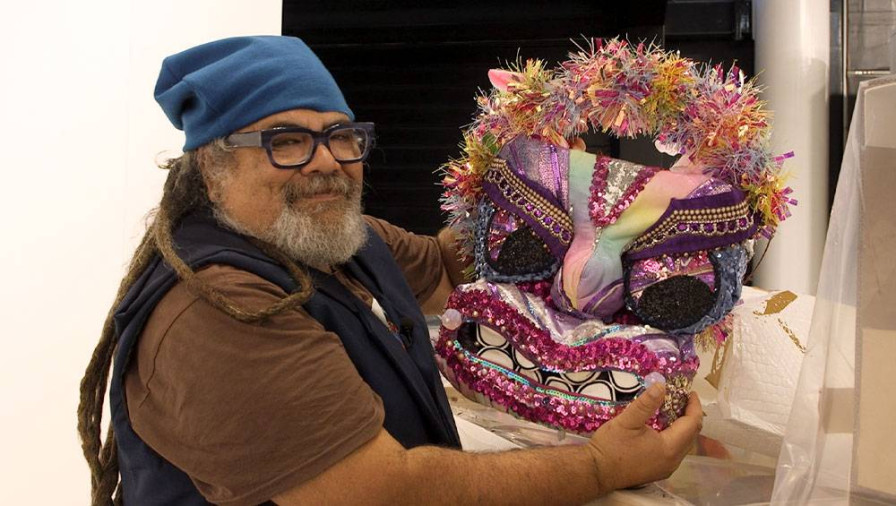
Maungarongo Tekawa unpacking part of his work, Heavenly Dream Boat.
Maungarongo (Ron) Tekawa’s work Heavenly Dream Boat is a textile waka that merges mourning, joy and connection. “Our river is one of the most polluted in the world. This is like a vision board to uplift my people,” he said. “I think the river and the people go hand in hand. If we heal one, we heal the other.”
He called the fair “the Olympics of the art world ... You get all the best together. It’s a good time for artists to connect and see where we’re at as an industry.”
Te Rongo Kirkwood, a glass artist recently recognised in New York, said the fair was a rare chance to share work on her own terms. “You’re sharing a piece of yourself,” she said. “We’re offering something, and that becomes a kind of service.”
Her piece explores a personal moment captured on video as her father passes on a korowai (cloak) to her. “It took a lot of courage for my dad to do that, and for me to be in 100% authentic and to see each other exactly as we are with complete openness – just beautiful, despite all of the life challenges that we have.”
This year also marks the debut of the Kurutai Collective, a group of Māori ceramicists working with uku (clay). Their work is exhibited across two sites: the fair and a satellite gallery at Victoria Park Market.
Curator Chantel Matthews said the collective "reflects who we are: experienced artists, emerging artists, people who’ve never shown at a fair before. Our taonga aren’t just objects. They carry whakapapa.”
Baye Riddell, a founding figure in contemporary Māori clay work, said Māori uku artists were in a unique position to impart an identity to New Zealand ceramics that was immediately identifiable on the world stage.
Artist Graham Tipene said he’d seen firsthand the culture shift. “This very confident new Māori generation ... very capable Te Ao Māori thinkers within our people. Everything’s moving forward together,” he said.
Dorothy Waetford said the fair gave artists a chance to engage directly with buyers. “Some people might be afraid of what we're doing and think it's not for them,” she said. “But we’re creating an opportunity to engage.”
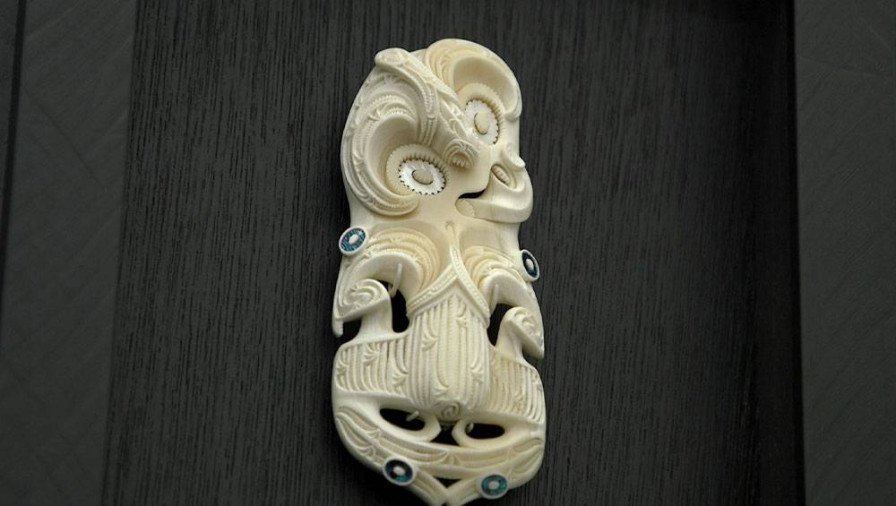
A taonga from Rangi Kipa’s exhibition.
Inside the fair, artist Kauri Hawkins has installed a work on the staircase using a puoro pattern drawn from tā moko. “You literally walk through whakapapa,” he said. “The pattern represents strength and agility. This was a chance to bring it back home.”
Waymouth said the fair’s Horizons space, dedicated to emerging artists, was already proving its value. Last year, seven of the nine were picked up by galleries, she said.
“We’re not just showing art. We’re launching careers. We’ve got legends like Robin Kahukiwa showing alongside young stars like Raukura Turei and Nikau Hindin. Some of them started here. Now their work’s in institutions around the world. This is who we are. And we’re showing it off to the world.”
The Aotearoa Art Fair runs from Thursday until Sunday.




