Sitting in NBR’s Auckland studio at the end of a long year, Helmut Modlik sounds equal parts exhausted and energised. In 2025, Ngāti Toa continued to expand across housing, health, social services, and environmental work.
Under his watch, the iwi shifted more of its capital directly into enterprises that line up with a simple English version of its mission. “We do what we can to enhance the well-being, prosperity, and mana of our people and our community; our manuhiri who live in our community, especially those who need it most.”
That approach has pushed Ngāti Toa away from the classic model of parking settlement capital in passive investments and living off dividends.
“The counterfactual, which most people pursue, is that they pursue returns – financial returns, primarily,” he says. But even if you are world-class, he notes, long-term returns are likely to deliver “somewhere between 8% and 9% per annum”. That will not close the inequality gap in Porirua, nor in the wider rohe or region.
“So that is a strategy that takes our community nowhere,” he says. “That is why we have been very intentional about not only investing the returns, but actually deploying the capital itself into enterprises that are creating directly the outcomes we are after.”
Its strategy for housing shows what he means. When he arrived in the role about six years ago, “the housing crisis was right at its peak and very acute”. The iwi chose to build a vertically integrated ecosystem.
Ngāti Toa acquired wholesale building outlets such as Toa ITM. It formed partnerships with a housing company, stood up its own property development arm, and took a majority stake in an asset management and maintenance business. Whenever possible, subcontractors for roofing and electrical work were Ngāti Toa whānau or Māori and Pasifika operators in Porirua.
“Why would we let any of those investable activities and expenditures leak out of our community and be enjoyed by somebody else in another city, another country?” he says. “We do try intentionally to create that, to get the heavy lifting being done by our capital.”
Those direct investments sat alongside a social enterprise ecosystem that carried a heavy workload through a difficult year for living costs. The programme ranges from health provision to support services that would rarely feature on a balance sheet but still matter to the strategy.
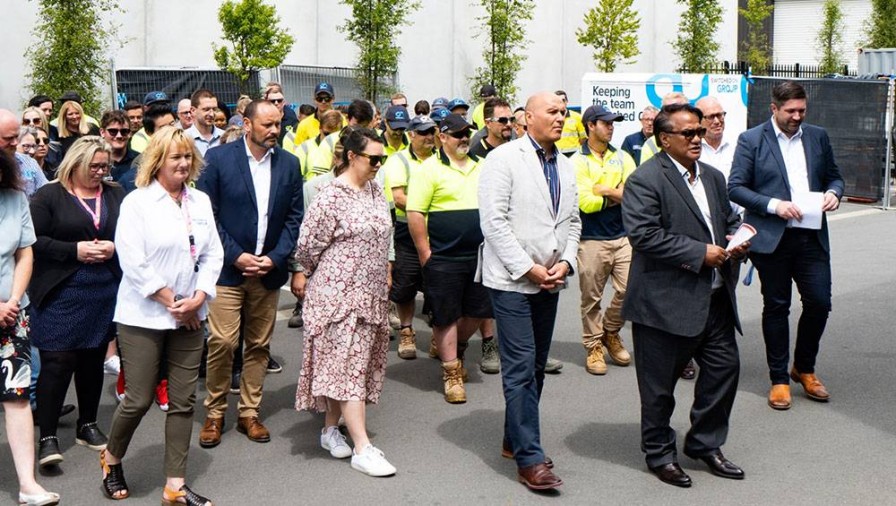
Matariki celebrations for Kā te Rama Switched On Group. The new Māori year has started with an acquisition.
The year added a major new layer to that commercial platform. Kā te Rama Switched On Group, majority owned by Ngāti Toa, acquired PAE NZ. The deal made Kā te Rama the largest Māori-owned facilities management provider and marked a scale shift that lined up with Modlik’s repeated point about using capital to create direct community outcomes.
Alongside that growth sat a maturing internal engine. About a year and a half ago, the iwi appointed Boyd Scirkovich as chief economic development and investment officer. “Boyd has built out our team of analysts and commercial people,” Modlik says. New policies and reporting frameworks followed, bringing a “maturing and refinement”.
The scale of that change was personal for Modlik. He remembers an era when iwi finances ran on raffles and hāngī tickets to fix the marae.
The numbers show the size of the change. “We are 10 years post-settlement. We settled at about $70 million to $75m 10 or 12 years ago. We are $1.1 billion now. That is a good trick.” The achievement he values more is that the conversation has never centred on money. “Anything we ever talk about is, 'What can we do to enhance well-being, prosperity and mana for our people and community?',” he says.
There were sharper moments in the year as well. He speaks candidly about the coalition Government’s Treaty settings. He describes 2025 as a continuation of the “shocking reversals” Māori saw the year before. Policy changes kept coming, even if the visible anger on the streets quietened. A dedicated team inside the iwi spent the year working through consultation cycles.
“The strategy appears to have been to 'boil the frog'. Just keep slowly turning the heat up. And it has felt like that.”
He has not closed the door on the Government entirely. He says some ministers still have Ngāti Toa’s support, but also received blunt feedback. He sees 2026 as a year likely to be shaped by the economy and the election.
During 2025, he also revealed his sense of humour. He spoke about the Australian report that suggested Māori iwi were being sounded out as possible investors in Kiwibank. He said Ngāti Toa had not yet been contacted. He called that omission “flabbergasting”, and joked that if iwi did invest, “we might have to change the name, bro. Get rid of that K on the front”. 
The most powerful moment of the year for Ngāti Toa was not on a spreadsheet or in a select committee room. It was on the Whitireia Peninsula above Porirua Harbour.
In the 1840s, Ngāti Toa gifted that land to the Anglican Church to build a school. No school appeared. The land was sold instead and became the focal case in which Justice James Prendergast called the Treaty “a simple nullity”. It carried the iwi’s maunga and sat at the centre of its identity.
“To finally conclude that and to takahi te whenua, to walk that sacred land again, it is not entirely possible to convey the significance,” he says. On the day the land returned, there were haka, songs, and karakia, then a quiet moment from the iwi’s eldest auntie, in her mid-nineties, who said she was grateful to live long enough to see restored what her grandparents had wept over.
Modlik holds a wider view of history as well. He talks about his grandfather, born in 1903 into a world still ruled by emperors, his mother growing up through the 1930s, and the short post-war arc in which democracy spread and prosperity lifted. He worries that many of those lessons now need to be learned again.
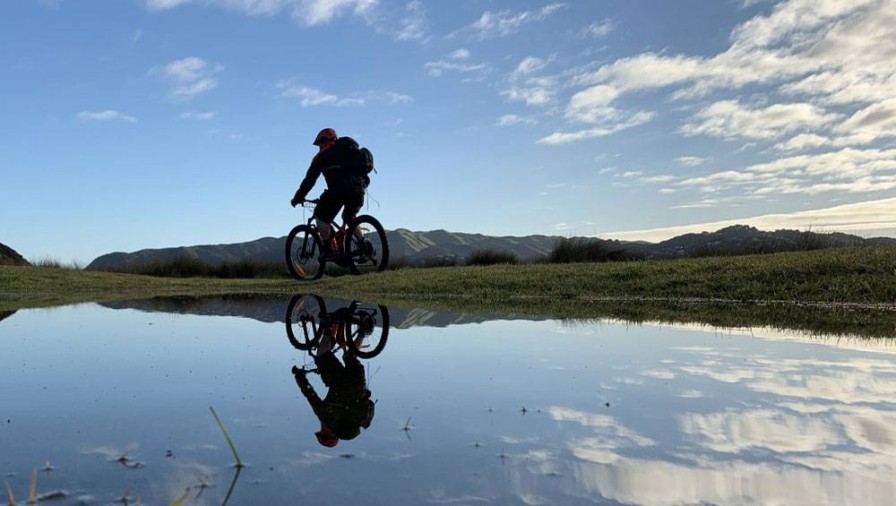
Whitireia Park in Porirua.
Even so, he refuses to see the present as anything more than a difficult stage.
He sees the coalition’s pushback on Treaty policy as “a last gasp in the transition from what was before to what lies in front of us”. His wish for the new year is simple: to move through that transition quickly, then “resume normal service of truth telling, justice seeking, and mutually beneficial outcomes for this beautiful land and all the people who live here”.
Another wish sits closer to home. He speaks about Māori and Pasifika demographic strength and the diaspora in Queensland. His favourite words are: “Uncle, I am coming home.”
Ngāti Toa’s investment strategy aims to make those calls more likely in the years to come.




