© All content copyright NBR. Do not reproduce, even if you have a paid subscription.
In an interview after his match-winning century in last week’s first Ashes Test against England, Australian batter Travis Head apologised to the 60,000 people who had bought tickets for a third day’s play.
The Perth Test, scheduled to go for five days, was over in only two days, in an extraordinary game crowned by Head’s century. The last time a test was over in only two days was 104 years ago, in Nottingham in 1921.
While Australian cricket fans, Underarm included, are revelling in going one up against England in the Ashes series, the early finish is a disaster for Cricket Australia and broadcasters Seven and Fox, who must refund tickets and massage advertising contracts as they cop a loss.
Major bank Westpac has a new four-year sponsorship deal with Cricket Australia worth a reported A$50 million ($57m), and the bank’s logo features prominently on the Australian team shirt.
After replacing long-term sponsor CBA this year, Westpac’s marketing team will be quietly fuming that it won’t be getting another couple of days exposure for its logo, and for the freshly shot ads featuring Australian team members, which have been showing during ad breaks.
Also hurting are the small business concessions at the Perth Stadium, from food to merchandising, who would have at least been banking on a bumper day of trading on Sunday to fill their accounts prior to Christmas.
Then there are the casual workers whose shifts have been cancelled, the restaurant and hotel bookings voided, and the Ubers and taxis that won’t be taken.
Added together, it shows that a lot of people – from the big end of town to small businesses and casual workers – have a lot invested in the Ashes.
For them, a two-day test is not the desired outcome, although this may not extend to the betting companies, who will probably make money anyway.
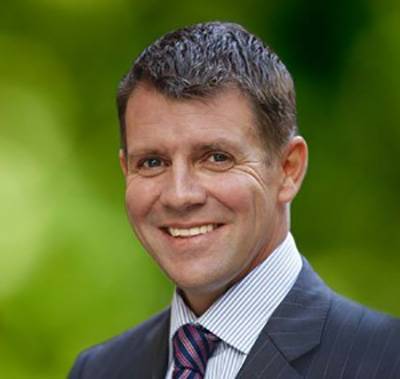
Cricket Australia chair Mike Baird.
Revenue up, profits down
Before the Perth Test, the sport’s governing body Cricket Australia announced a loss of A$11.3m for the 2025 financial year, a result achieved despite a well-attended five-test series against India last year.
While revenues were up for the year, Cricket Australia blamed escalating costs for dragging the result into the red.
The Ashes series against the old enemy England was supposed to put all this to right and, before the series, Cricket Australia chair Mike Baird was forecasting a A$20m improvement.
“Hang on to your hats because next year we are going to have a record year in cricket,” Baird said in October.
“You’re going to see the most attendance, the most viewership, the most sponsorship.”
Indeed, broadcaster Foxtel reported that the first day of the Perth Test on Friday was the most-watched test in their history.
As a result of the two-day result, Cricket Australia are staring at a A$3m loss in cancelled tickets.
Then there are the broadcasters, where – like sponsorship – there has been a recent changing of the guard.
For decades, cricket in Australia was synonymous with the Nine network, which collared the game way back in the late 1970s when the late Kerry Packer came up with World Series Cricket and ushered in the era of professionalism.
Now it is long-time rival Seven that has the free-to-air rights to the game, paying A$1.4 billion in partnership with pay TV provider Foxtel in 2023 for a seven-year deal that will run to 2031.
Foxtel was previously owned by Rupert Murdoch’s News Corporation and Telstra, but they sold out to British-American billionaire Len Blavatnik’s DAZN Group at the beginning of the year for A$3.4b, a sale helped along by DAZN’s partnership with a Saudi Arabian sovereign wealth fund.
The A$1.4b they paid for the cricket might sound a lot but the word out of Cricket Australia’s headquarters at the MCG in Melbourne is that some board members believe they were slightly dudded on that deal, given that US media giant Paramount – which owns the Ten free-to-air network in Australia – had offered A$1.5b for the broadcasting rights.
Cricket Australia reportedly chose the lower offer because it thought it could reach more people through Seven and Foxtel, while Paramount and Ten had no track record as a cricket broadcaster.
More and more people are watching sport on their computers and phones, and this is to the advantage of Foxtel’s streaming service Kayo, where subscribers pay A$27.50 a month for a basic plan.
This evens up the drift in traditional pay TV subscribers, with the number of Foxtel’s residential customers falling from 1.99 million in 2019 to 1.44 million by September 2022, and the service is believed to be bleeding about 50,000 subscribers each quarter.
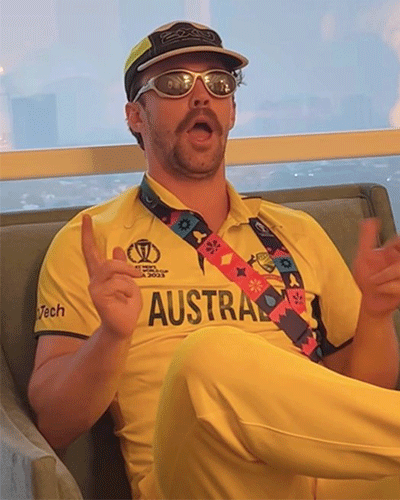
Travis Head putting his feet up.
Travis Head probably enjoyed putting his feet up on Sunday after celebrating Australia’s victory but, if the players looked at the fine print, some may also have been disappointed, because their remuneration is tied to the outcome of the broadcasting negotiations.
Barmy Army splash the cash
The other significant financial impact of the Ashes series is the influx of cricket tourists from the UK, and they have the exchange rate on their side even if they are complaining about the quality of Australian beer.
Australia might be on top in the cricket right now, but the Aussie dollar has weakened in the past year. A year ago, you could buy a British pound sterling for A$1.94, but this week you need A$2.03.
When the first ball was bowled in Perth, about 20% of the crowd – or close to 10,000 people – had travelled from the UK to be there.
They are the advance party of an estimated 40,000 Britons who will visit Australia over the summer with the main objective of catching at least a couple of days’ play.
Perth-based economist Conrad Liveris has estimated the total spend by this group will be in excess of A$300m over the seven weeks of the series, supporting the equivalent of 1050 jobs.
The Barmy Army is a colourful supporter group at the ground, but it is also a commercial operation structured around a private company registered in 1995.
It now has full-time employees, global partnerships, and a sophisticated business model encompassing 55,000 members – and a social media following of two million.
Revenues in 2025 for Barmy Army Ltd were reportedly A$8.5m, and that wasn’t an Ashes year.
Barmy Army travel packages are not cheap, with fans paying £20,000 ($46,700) for business class flights, six nights in a three-star hotel, event tickets, and excursions. About 4000 fans have booked their trips exclusively through the Barmy Army.
Then there is Barmy Army merchandise, which is produced in partnership with a range of providers.
Gray-Nicolls produces cricket-related products such as customised bats; designer British Menswear makes more upmarket apparel such as Barmy Army bomber jackets; while a company called Emprise Teamwear makes T-shirts, mugs, and bucket hats.
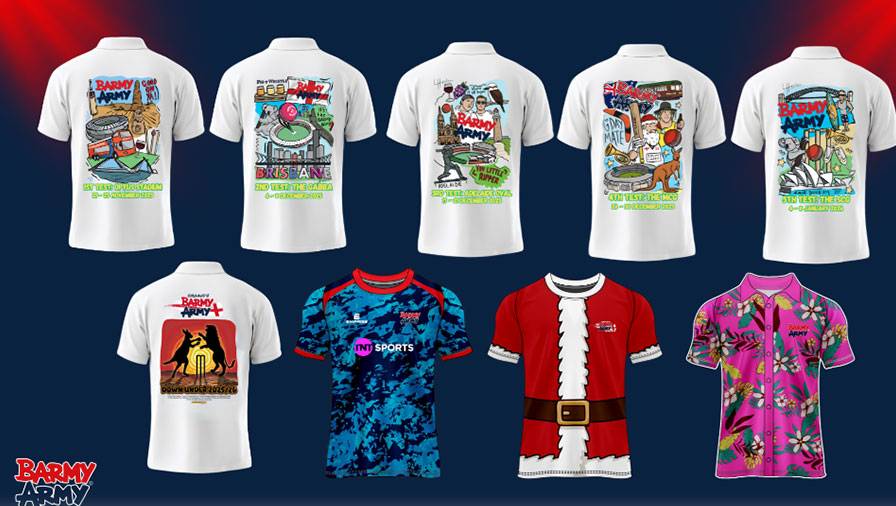
Collared shirt
Underarm himself unwittingly contributed to Barmy Army revenues when he arrived in a collarless black t-shirt for a Test match during the last Ashes series.
He was there using the ticket of an old school friend and these tickets were in the Members Stand at the Adelaide Oval, where the dress code demands a collared shirt.
After being turned away at the gate, Underarm called his friend in a panic. What could be done? Would he have to go and buy a collared shirt and miss the first hour of play, even the morning session?
Underarm’s quick-thinking friend, who was already inside the ground, assured him he had the solution and told him to stay put.
Within minutes, the friend appeared with a brand new collared shirt, purchased from the Barmy Army merch stand.
For the rest of the day and into a long night at various establishments, everyone thought Underarm was a member of the Barmy Army and an England supporter, and gave him the appropriate amount of stirring and abuse.
It was a salutary experience and something that won’t be repeated when Underarm returns to his home town for the third Test in December, by which time Australia will hopefully be enjoying a 2-0 lead and have one hand on retaining the Ashes.
Let’s hope that game goes longer than two days, and everyone will be happy.
Lachlan Colquhoun is a Sydney-based senior journalist with NBR.




