It’s still fashionable to blame the wealthy for what ails society. ‘As the rich get richer, the poor get poorer’ is both a mantra and a description of capitalism.
The refrain put mayoral robes on Zohran Mamdani in New York. He has proposed a mammoth US$127 billion ($213b) budget for the next year and has pushed for a tax on millionaires to help close a US$5.4b shortfall.
Not surprisingly, an outfit called Partnership for New York has pushed back, saying more taxes threaten the future of businesses and jobs. Its 300 corporate and financier members say they have created nearly a million jobs, and also contribute US$13.5b in taxes and generate US$370b to the city’s GDP every year.
The debate has become personal, with financiers Ken Griffin and Marc Rowan both saying they will switch their operations to Florida or Texas because of Mamdani.
Billionaire bashing is popular at book festivals and has spawned titles such as Burned by Billionaires, by Chuck Collins of the Institute of Policy Studies in Washington DC, and The Haves and Have-Yachts, by Evan Osnos of The New Yorker. Max Rashbrooke wrote a Kiwi version, Too Much Money, in 2021.
Promotion for this weekend’s Auckland Writers Festival sought Life of Pi author and international guest speaker Yann Martel’s views on abolishing billionaires. Martel, a Canadian, opted for high taxes over extermination.
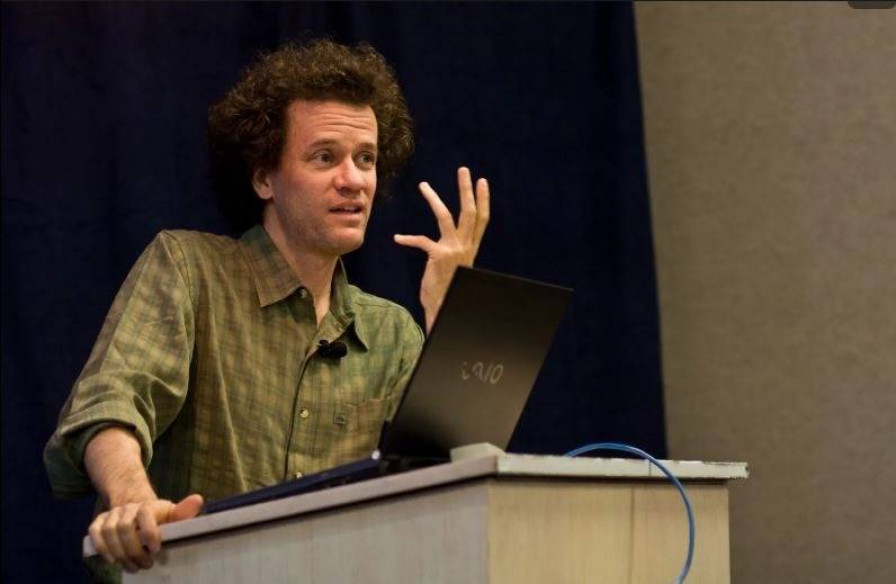
Canadian author Yann Martel in 2007.
Torn social fabric
“What excessive wealth does is detach you from others,” he says. “Wealth gets in the way of connection, creates an invisible barrier. Worse, the wealth of the few impoverishes the many, because the wealthy are wealthy at the expense of the less wealthy. They skew the system in their favour, tear at the social fabric.”
To counter that, you can turn to a handful of American academics who can argue the opposite on economic, political, and legal grounds. One of my favourites is Garett Jones, whose 10% Less Democracy: Why You Should Trust Elites a Little More and the Masses a Little Less (2020) rejects the egregious populism on the left and right.
The billionaires are defended by John McGinnis, professor of constitutional law at Northwestern University. He is also a contributing editor at City Journal and Law & Liberty, as well as a contributor to the Wall Street Journal, National Review, and National Affairs.
McGinnis has produced Why Democracy Needs the Rich, which argues that because they are few, the wealthy do not have the clout and influence in a democracy that might be imagined. Indeed, he identifies more powerful anti-capitalist groupings, ranging from intellectuals in government, education, and the law, to the media and entertainers.

John McGinnis.
Shaping opinion
These groups shape public opinion and have far more influence than the average citizen in a representative democracy, McGinnis says, adding that these groups are more homogenous in their views than a variety of lobbyists and others financed by wealthy individuals.
“While everyone has an equal vote, certain groups – those likely possessing a deeper understanding of the issues – naturally exert more influence,” he says. “Critics of the wealthy’s influence often accept the additional sway of the intelligentsia because of their claims to greater knowledge, despite that group’s unrepresentative ideology and insularity from the broader citizenry and the political workings of the world.
“The impact of the wealthy thus provides a crucial counterweight, especially in a commercial republic where the flourishing of the market not only drives prosperity but also strengthens democracy.”
An important point is how that wealth is created. New Zealand has few billionaires, and NBR’s annual list of them shows most have become so by establishing and owning businesses. The United States is no different. Two-thirds of the Forbes 400, a list of the richest people in America, built their own businesses – a trend that is increasing.
These entrepreneurs still greatly benefit the other 99%, contributing far more to the welfare of consumers, employees, and other shareholders than they retain in personal wealth. Highly paid chief executives also increase the wealth of others.
McGinnis cites the example of how shares in Starbucks jumped 25%, or US$21.4b, on the news of one man, Brian Niccol, becoming the chief executive in 2024.
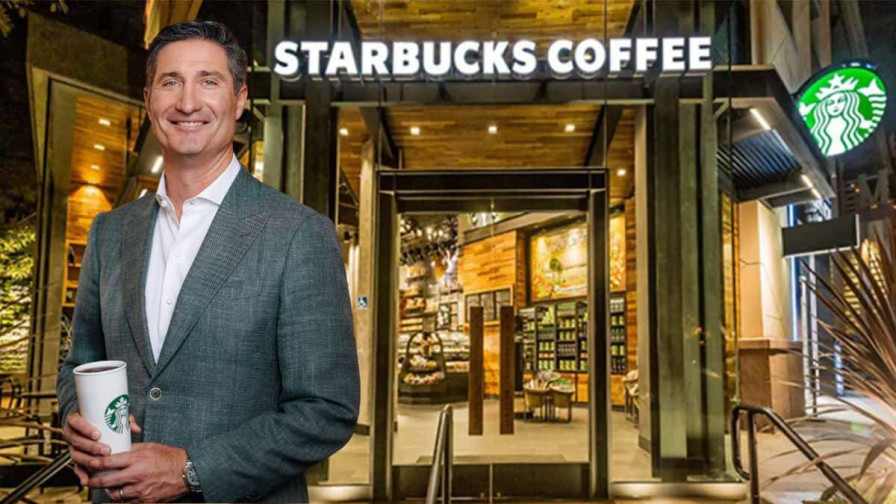
Starbucks chair and chief executive Brian Niccol.
Undermining democracy
Why Democracy Needs the Rich tackles the claims that the rich undermine democracy and have too much influence, while also arguing that democracy encourages conformity, and the rich guard against mediocrity.
The claim that the unfair social power of the rich undermines democracy leads to demands for taxing wealth and unrealised capital gains. These taxes are likely to harm economic growth and are difficult to administer.
Even if they are inefficient and squander resources, they are also justified on the grounds that they curb the political power of the rich. But it is unrealistic to expect everyone to have an equal say in democratic societies, McGinnis says.
Nor can the rich be considered the most powerful voices. The chattering classes featured in the mass and social media wield significant power through books, television, movies, and music. Series such as Succession do not show the positive side of business, reinforcing views that are taught in schools and universities.
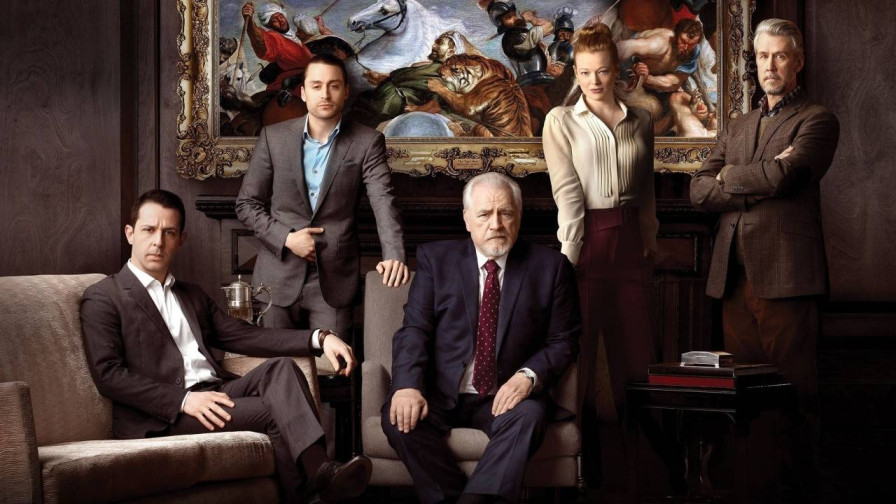
The cast of HBO’s Succession. Photo: HBO.
Hold sway
Bureaucrats hold substantial sway over the day-to-day operation of government, while interest groups – such as unions or trade associations – hold sway on issues of concern to them. Through coordination and access to information, these groups can influence legislators and government agencies, even when their policies may not benefit the majority.
McGinnis argues that influencing public debate is not part of the wealthy’s purpose, although they can use their independence and resources to pursue social interests. As a result, they can make a difference through philanthropy and provide a counterweight to special interest groups that often have a stranglehold on specific public policies.
Democratic societies tend toward conformity, a trend that is particularly pronounced among academics and bureaucrats. Academics depend heavily on the opinions of their peers for their stature.
“The pressures for conformity within academia have intensified over the years and ideological homogeneity has increased,” McGinnis says. This contrasts with the rich, who are more likely to be nonconformists – people who are willing to go against the grain and advocate unorthodox views.
The wealthy also help correct some of democracy’s well-known flaws, “including its tendency toward intolerance, mediocrity, and soft despotism”. They can champion causes that are unpopular with the majority, ensuring these ideas get a fair hearing and helping to correct serious democratic mistakes.
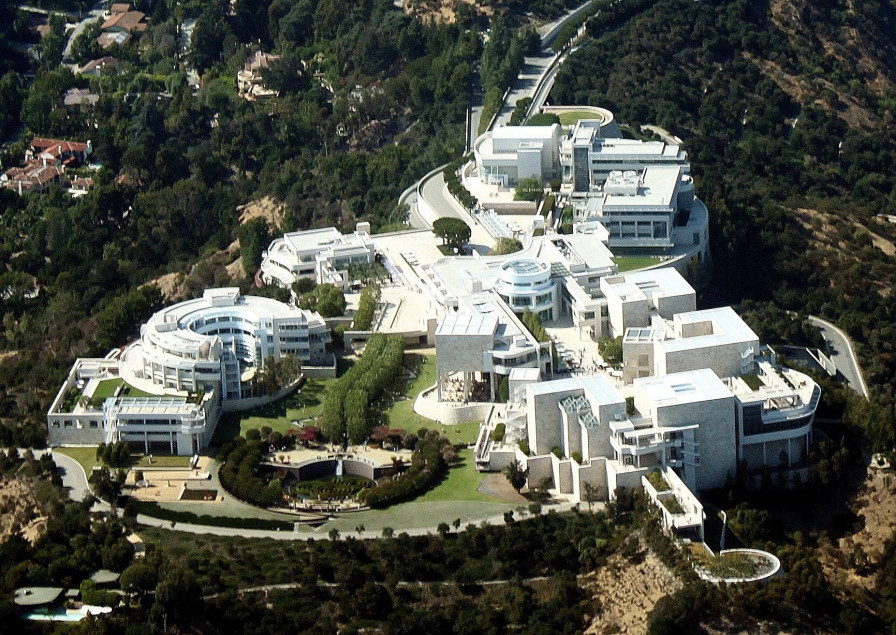
The Getty Centre in Los Angeles is an example of American philanthropy.
Not greedy
“Moreover, the motives behind commerce are not inherently greedy," McGinnis says. "Many pursue it to provide for their children and grandchildren or to acquire the means to support large-scale philanthropic endeavours. The rich’s boosting of commerce is often about building a legacy that connects the living and even the unborn. It draws people from different walks of life into lasting enterprises – companies, schools, foundations – that survive their founders.”
While spectacular examples of philanthropy, such as the Getty Centre in Los Angeles, are not replicated in New Zealand, they do exist on a modest scale.
“Many wealthy people support excellence, particularly in the arts, arresting democracy’s slide toward mediocrity. Because they are less dependent on the state, they have both the means and the interest to question the expansion of government power, counteracting democracy’s tendency to create a paternalistic and fiscally unsustainable government. Their influence, in short, serves as a constraint on the natural excesses of majoritarian rule.”
In contrast to the professional gatekeepers of opinion, such as academics and journalists, the rich are unlikely to exclude those with unorthodox ideas from joining their ranks. Successful New Zealand entrepreneurs, such as Phillip Mills, of the Les Mills fitness empire, have made donations to the Green and Opportunity parties.
“Beyond adding ideological diversity, the influence of the wealthy brings practical realism into politics, offering a grounded understanding of consequences that fosters economic growth. The rich naturally resist the bureaucratic inertia that can stifle new ventures. They also serve as a counterbalance not only to the ideology but also to the style of reasoning of the intelligentsia and their sometimes visionary excesses.”

Les Mills Gym in Auckland.
Small contingent
McGinnis counts himself as among a “small contingent of conservatives [who] emphasise the importance of markets and the unintended consequences of government intervention”. But he says he is not against the existence of the welfare state or progressive taxation, except when the goal is to eliminate the wealthy. Nor does he say his book is a diatribe against non-confiscatory estate or inheritance taxes.
“Being wealthy is a necessary condition for the benefits that the rich provide. It is their wealth that gives them independence, and resources are what allow them to be a counterbalancing, dynamic, and philanthropic force.”
But wealth is not a sufficient condition for beneficial influence. The rich are not likely to be a net positive force in a society where their wealth came from government grants or exploitation.
“Therefore, it makes little sense to argue that the influence of the rich should be curtailed simply because they possess more power than ordinary citizens. The real question is whether their impact yields negative outcomes in a system where many different groups exert differential influence.
“Suppressing such inequality is not only impossible but also counterproductive, as those most invested in a subject often provide valuable insights that the general public cannot.”
Why Democracy Needs the Rich, by John O McGinnis (Encounter Books. Available as an e-book at www.encounterbooks.com or other online suppliers).




