Steven Pinker is one of the world’s smartest guys. Like his fellow Canadian, Jordan Peterson, he started in psychology before moving into broader intellectual pursuits and finally reaching status as a polymath guru on the ways of the world.
Pinker is coming to Auckland in February as part of a lecture and book promotion tour that also includes Australia. His new book is When Everyone Knows That Everyone Knows, which is about common knowledge.
He describes this as “… a technical definition, and it’s a little bit different from our everyday use, but it helps explain the mysteries of money, mysteries of power, mysteries of everyday life, of language, of non-verbal facial expressions, of awkwardness in social encounters, economic bubbles and busts, and bank runs and panics, and even change in politics.”
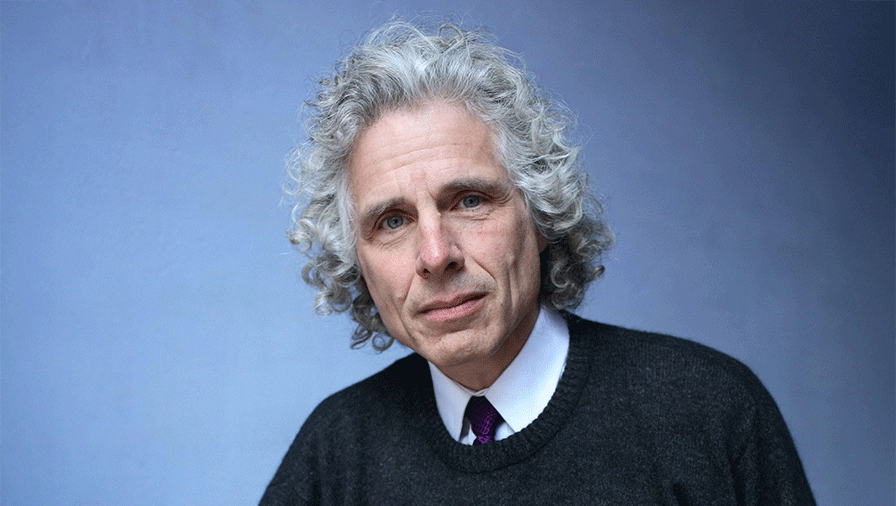
Steven Pinker.
Not much to worry about, then. Pinker’s original field was linguistics before tackling his two major works. The Better Angels of Our Nature (2010) argues that violence in human societies has generally declined over time and identifies six major trends and five historical forces of this decline. Enlightenment Now (2018) further argues that the human condition has generally improved over recent history because of reason, science, and humanism.
In February 2019, Peterson packed Auckland’s Spark Arena, after being upgraded from the Town Hall, while Pinker is pencilled in at the more modest Bruce Mason Theatre in Takapuna. Humanists Australia have withdrawn their endorsement of Pinker’s appearances there because of his views on transgender issues. Here he has support from the Free Speech Union.
This is not surprising as Pinker co-founded the Council on Academic Freedom at Harvard University to protect scholars who were being ‘cancelled’ for having views outside what used to be called woke.
Pinker’s appearance lies in the future, but it is apt that this last book column for 2025 should recap the year’s best reading.
Million-dollar advance
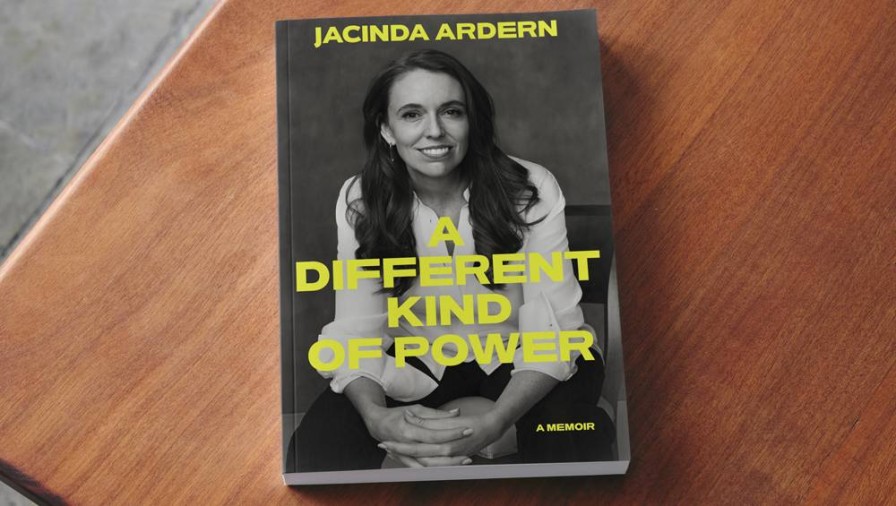
The smartest piece of publishing predictably came from the industry’s behemoth, Bertelsmann-owned Penguin Random House. It reportedly paid some $1 million to $1.5m to Dame Jacinda Ardern for A Different Kind of Power.
While it was the bestselling non-fiction book in New Zealand this year by a clear margin – and was also launched in Australia, the UK, and the US – it’s not known whether it reached anything like the 140,000 to 160,000 needed to recover the advance.
However, UK-based Ardern popped up this week on the BBC World Service’s headline interview programme, so she is still maintaining her profile as the movie Prime Minister hits British cinemas. Incidentally, and contradicting the forecast in David Cohen’s counter-biography, Jacinda: The Untold Stories, she told the BBC she was not seeking to replace António Guterres as secretary-general of the United Nations.
Ardern’s close colleague Grant Robertson also bailed from politics to write his version of the Jacindamania phenomenon, Anything Could Happen. He, too, must have taken advice from his publisher to include as much about possible about his personal life – the impact of his father being incarcerated for fraud, and coming out as gay at university – and to cut down on the boring stuff.
No-one has yet written the definitive version of that two-term Labour Government, though Shaun Hendy’s insider’s account of the Covid-19 response offered some balance to the more outrageous myths about the short-term gains and long-term costs.

Adam Smith’s ‘boiled frog’
It took a Scottish-born banker, Joseph Healy, to provide a clear-minded view of what ails Down Under economies and some suggestions on how to fix them. What Would Adam Smith Make of Modern Australia? invokes the ‘boiled frog’ syndrome: that we often don’t notice big changes if they happen gradually and then find it’s too late to regret that these were allowed to happen.
This applies as much as to technological advances, such as artificial intelligence (AI), as it does to the political myopia of refusing to recognise that public debt and economic growth are not natural bedfellows.
The AI battle of great minds was best described by Bloomberg columnist Parmy Olson in Supremacy, the story of OpenAI’s Sam Altman and Dennis Hassabis, co-founder of DeepMind.
Like Microsoft’s Bill Gates, who released Source Code, the first part of his autobiographical trilogy, they showed early signs of genius. There’s no word on the second volume, which Gates says will focus on his work and career with Microsoft.
The software giant continues to vie for supremacy alongside Apple, Nvidia, and Alphabet/Google as the world’s most valuable companies.
Meta, owner of Facebook, Instagram, and WhatsApp, has fallen off the pace with a raft of setbacks – from the failure of its ‘Metaverse’ concept to the exposure that, while banned in China, it has cannot prevent Chinese-based scams on its social media platforms.
Recalling Gatsby
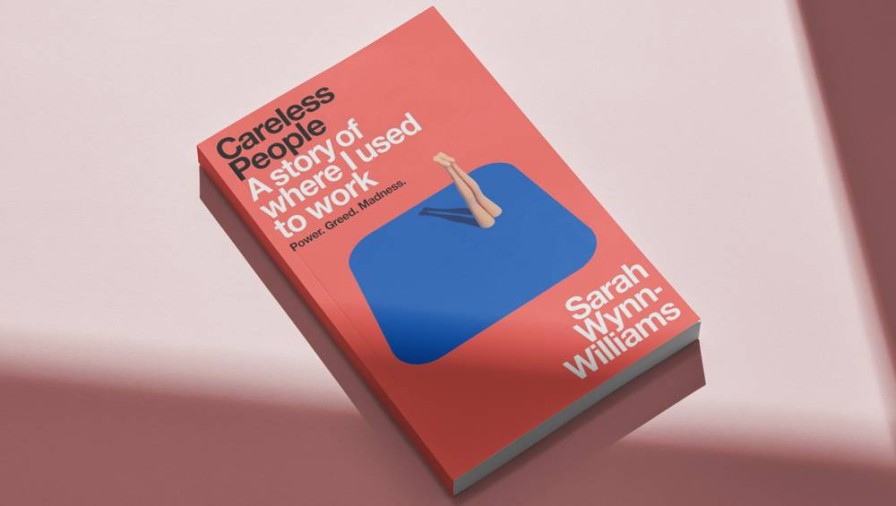
New Zealander Sarah Wynn-Williams provided plenty of prescience in Careless People, which likened the original Facebook crew to the dissolute types in The Great Gatsby. Meta took severe steps to curb promotional activity, but it remains on sale in most bookshops.
Ruthless business practices also abounded at China’s Huawei, although most relate to copying and improving on the efforts of others. In House of Huawei, Washington Post reporter Eva Dou tracks its transformation from a provider of telecommunications infrastructure into the corporate world’s major threat to United States (and supposedly New Zealand’s) national security.
The best overview of China’s addiction to frenetic growth was Dan Wang’s Breakneck, which contrasts its engineer-led ethos about building stuff to America’s hogtied environment where lawyers and nimbyism are rampant in ensuring nothing gets built.
Modern capitalism came under scrutiny in four deeply researched books. John Kay’s The Corporation in the 21st Century is an ‘old school’ analysis that poo-poos the fads and cynicism towards business in favour of celebrating it as a collaborative activity that pursues the provision of goods and services in the most efficient way possible.
Neoliberal champions
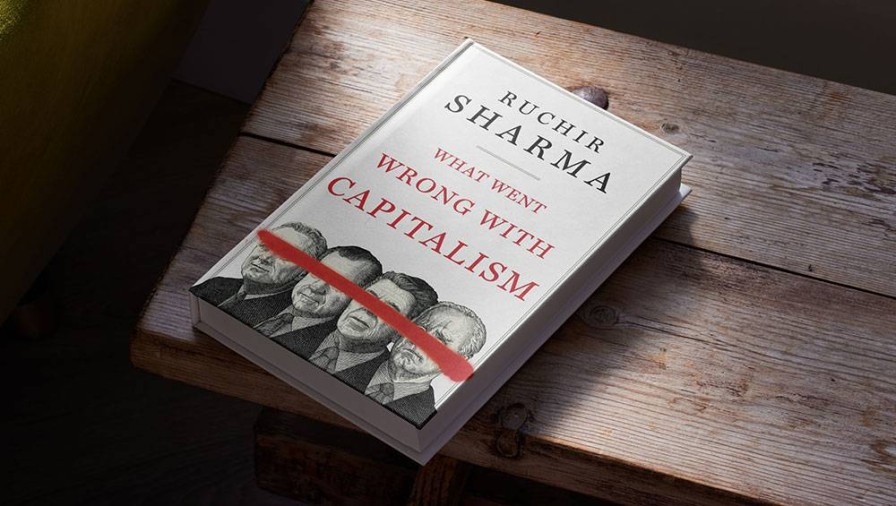
Hedge fund manager Ruchir Sharma calls for a return to neoliberalism and an end of governments living beyond their means in What Went Wrong with Capitalism. The same message comes from another Wall Street stalwart, Ray Dalio, who not only warns about the growth-inhibiting effects of debt but the eventual consequences, in How Countries Go Broke.
His conclusions are at the other end of the political spectrum from German left-leaning economist Ulrike Herrmann. The End of Capitalism is an honest summary of the huge drop in living standards required to usher in a post-capitalist era of ‘green shrinkage’ – an economy with fewer goods produced, no car journeys or aircraft flights, less use of chemicals, smaller dwellings, and no new office blocks or logistics centres.
The most overlooked business book of the year was Bill Buckley’s Ion Man, written with Robert Tighe. From a base in Auckland, the trained fitter and turner became a world force in silicon chip technology before anyone had heard of it.
Buckley is now at the centre of what could become the next major step forward in cancer treatment, known as boron neutron therapy. This puts him in the tradition of Lord Rutherford but also makes him a victim of New Zealand’s nuclear aversion.
A recent NZ Listener article on trials at the University of Auckland makes no mention of Buckley’s role in making the nuclear-powered machines that are already being used in Japan and Finland.
Looking forward
In 2026, I am looking forward to Andrew Ross Sorkin’s 1929: Inside the Greatest Crash in Wall Street, which relives what the publisher describes as a drama of “visionaries and fraudsters, titans and dreamers, euphoria and ruin”.
The book trade is the subject of The Man Who Changed the Way We Read, by Jeremy Lewis. This biography of Allen Lane is being reissued to mark the 90th anniversary of Penguin Books, which popularised the paperback.
Also on my list are three with technology themes: How Progress Ends: Technology, Innovation, and the Fate of Nations, by Carl Benedikt Frey; The Technological Republic: Hard Power, Soft Belief, and the Future of the West, by Alexander C Karp and Nicholas W Zamiska; and The Philosopher in the Valley: Alex Karp, Palantir, and the Rise of the Surveillance State, by Michael Steinberger.
Shattered Lands by Sam Dalrymple is a deep dive into the breakup of the Raj, Britain’s Indian Empire that encompassed an entire subcontinent as well as what is today’s Gulf states.
Finally, there’s the new paperback edition of Robert (Bob) Iger’s The Ride of a Lifetime, about his time as chief executive of The Walt Disney Company, to which he returned in 2022 after his formal retirement. Hollywood will continue to be big news in 2026.
Nevil Gibson is a former editor at large of the NBR.