For the second time this year, Russian President Vladimir Putin has seen another of his allies in the global ‘axis of evil’ being trashed while he is powerless to help them.
First, Venezuelan strongman Nicolas Maduro was abducted without incident and now faces drug-smuggling and other charges in New York.
Iran has come under another withering onslaught by US and Israeli forces, with Putin providing little more than words of comfort and perhaps some covert military assistance in the form of missile defence systems.
Putin is also mired in an invasion of Ukraine that has lasted longer than the Soviet Union’s defeat of the German Nazis in World War II. Comparisons end there, though, as that war cost tens of millions of lives.
The toll in Ukraine is much lower, but nevertheless remains a stain on Putin’s reputation as a leader worthy of his country’s desire to be a world superpower with the same status it had during the Cold War.
Many authors have profiled Putin’s rise from a KGB officer posted to Leipzig just as the Berlin Wall fell, and his ascendancy to replace Boris Yeltsin as Russia’s president.
The latest insights come in the fashionable form of non-fiction dressed up as a novel. Giuliano da Empoli’s The Wizard of the Kremlin was first published in French as Le Mage du Kremlin in 2022. It has just been turned into an English-language movie by Olivier Assayas, with Jude Law as Putin.
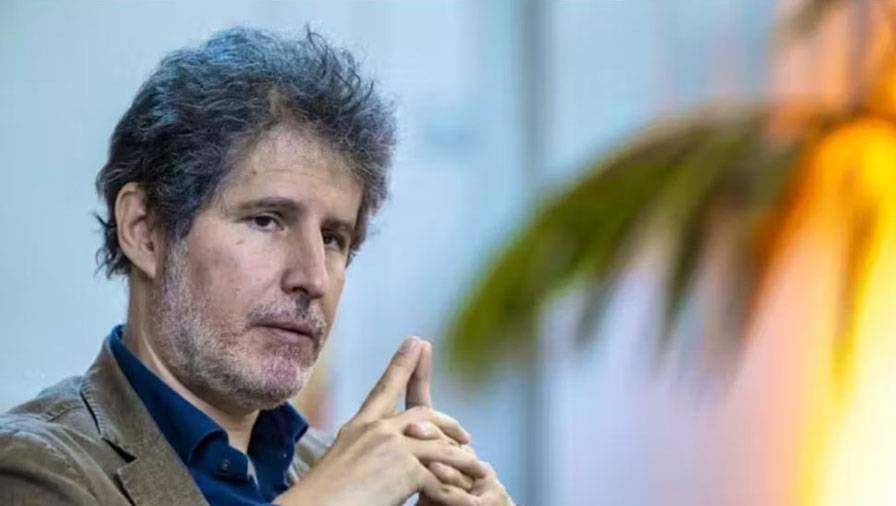
Giuliano da Empoli.
Imperial rebuilder
It tells the story of a political adviser, Vadim Baranov, who spent 15 years working for Putin from 1999. Baranov is based on Vladislav Surkov, a former theatre and TV director who was responsible for creating Putin’s image as a rebuilder of the Russian empire after the demise of the Soviet Union in 1991.
Da Empoli is himself a former spin doctor to Italian Prime Minister Matteo Renzi (2014-16) and moves easily among the political elites of France, Italy, and Switzerland. His most recent book was a series of essays, The Hour of the Predator, and was reviewed previously in this column.
Although they never met, da Empoli says he was intrigued by Surkov’s work in the political shadows. "He is so romantic that he freed me and pushed me to become a novelist,” da Empoli says. The result is an account that falls in the tradition of Machiavelli’s The Prince.
The story unfolds on a night when the fictional Baranov recounts his life story. This includes a potted history of the Soviet Union over three generations and the roles played by his father and grandfather. Both escaped the Stalinist purges but give an evocative description of that terrible period characterised by high levels of paranoia and fear.
While Baranov is fictional, the rest of the characters are not. Putin is described throughout as the ‘tsar’ (lower-case T) and requires someone who is above politics and trustworthy – qualities absent after the collapse of the communist system under Mikhail Gorbachev.
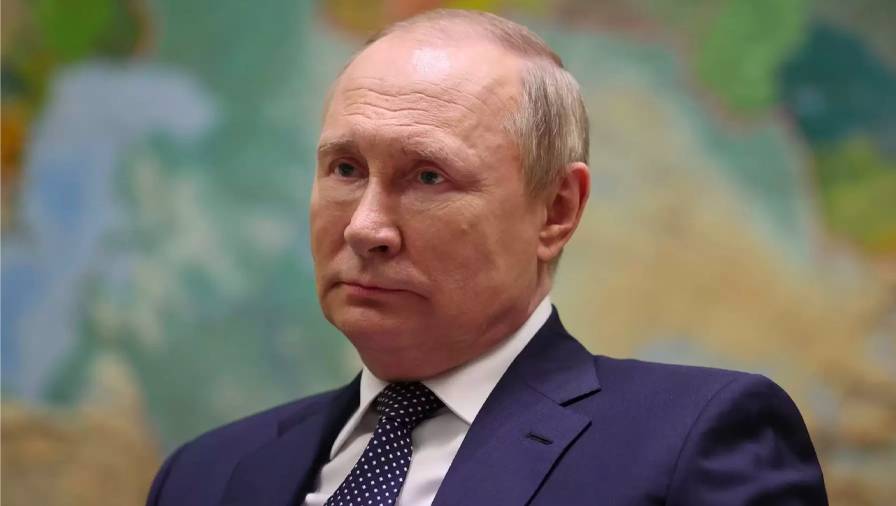
Russian President Vladimir Putin.
Turning point
The turning point in Putin’s course to Kremlin supremacy came after the Chechen bombings of Moscow apartments in 1999. Da Empoli dismisses conspiracy theories that these were done by the KGB’s successor agency, FSB.
Putin visits Russian soldiers and launches a second war against the Chechen rebels. His rhetoric – such as threatening to kill terrorists “in the shit house” – signals that he will use uncompromising force to restore control.
Russians, stung by the chaos and loss of wealth in the post-communist years, recognise this as restoring “the voice of command and control” from the Soviet era. They had “grown up in the countryside and suddenly found themselves in a supermarket,” Baranov says, highlighting a population overwhelmed by deregulated capitalism and instability.
The Chechen war was followed by the 2000 sinking of the Kursk nuclear submarine, with the loss of 118 lives. The media, in a brief window of freedom, played up the Kremlin’s lack of response (Putin was on holiday in Sochi) and the refusal of assistance from Britain and Norway.
This introduces Boris Berezovsky, one of several oligarchs who meet their match in Baranov. Berezovsky loses his 49% shareholding in ORT, the TV channel that formerly employed Baranov and led the Kursk coverage. Although it was Berezovsky who recommended Baranov to Putin, loyalties count for nothing.
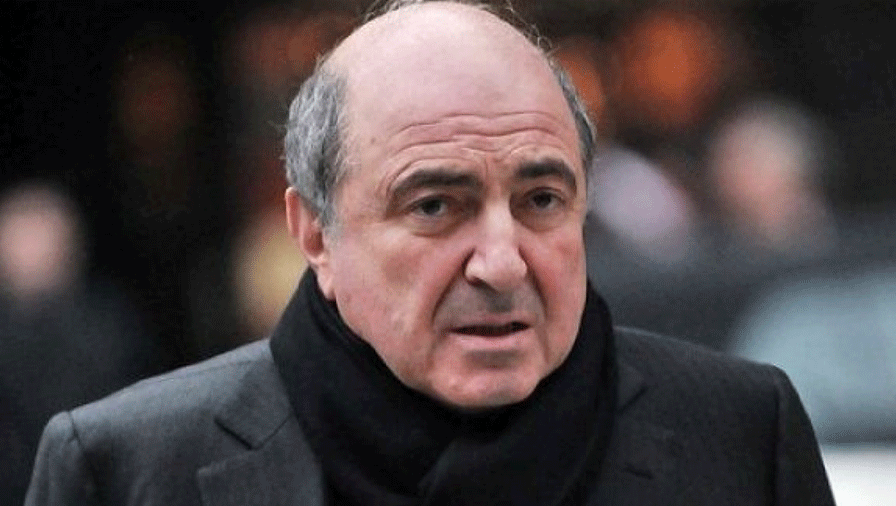
Boris Berezovsky.
Depression and suspected suicide in London followed the loss of Berezovsky’s media empire. The next oligarch victim is Mikhail Khodorkovsky, Russia’s wealthiest man in 2003, thanks to his control of several Siberian oil fields under the Yukos brand.
Again, Khodorkovsky’s arrest and trial send the message that no-one is beyond the tsar’s reach – just as the purges reinforced Stalin’s. In the West, billionaires may be untouchable, but not in the new Russia.
“You self-righteous Westerners think that anger can be absorbed,” Baranov tells the narrator. “That all it takes is economic growth and technological progress … It isn’t true. There will always be people who are disappointed, who are frustrated … Stalin understood that anger is a structured given. At different times, it increases or decreases, but it never disappears.”
After a period in prison, Khodorkovsky is released in a gesture that reinforces the tsar’s omnipotence. Baranov also gains personal revenge, getting back his one-time (fictional) girlfriend, Ksenia, who had married Khodorkovsky because he offered a better lifestyle.
Two other important figures are Yevgeny Prigozhin, the St Petersburg restaurateur and mercenary boss of the Wagner Group; and Alexander Zaldastanov, the motorcycle gang leader of the Night Wolves and champion of Russia’s annexation of Crimea in 2014.
Lesser figures are Putin's faithful government official Igor Sechin; chess player and political opponent Garry Kasparov; neo-Bolshevik ideologue Eduard Limonov; and German Chancellor Angela Merkel, who is intimidated by Putin’s labrador.
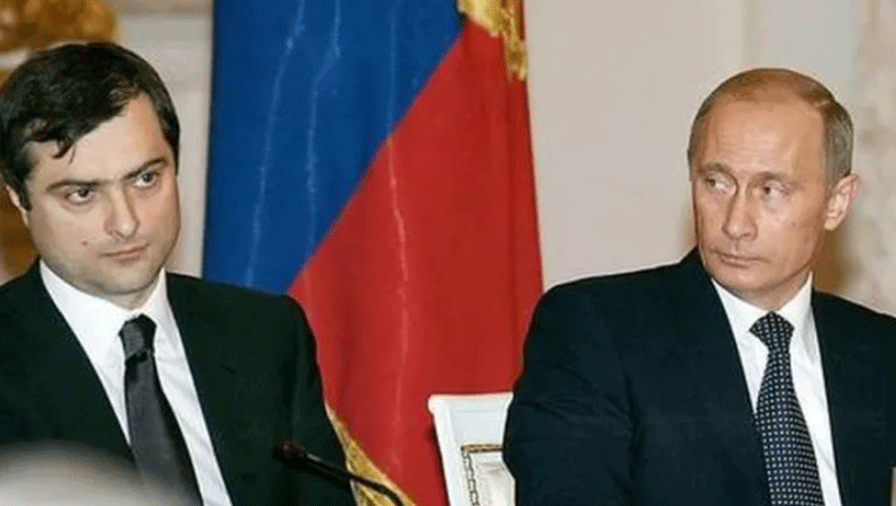
Vladislav Surkov and Vladimir Putin.
Meeting Clinton
During Putin’s first visit to the United Nations, US President Bill Clinton insensitively asks for news of his "friend Boris Yeltsin". This confirms Putin’s view that America revels in Russia’s humiliation, best typified by Yeltsin’s drunken antics.
Baranov expands on the kind of Russians that Putin despises and criticises to boost his poll ratings: PhD economists, human-rights professionals, gay activists, feminists, ecologists, and vegans.
“When that girl band [Pussy Riot] desecrated the Cathedral of Christ the Saviour, yelling obscenities at Putin and the Russian patriarch, we got a five-point boost in the polls,” Baranov says.
The curtain on his story falls after the Sochi Winter Games, where Putin is later exposed as a doping cheater and Russia is banned from future Olympics. Prigozhin, the mercenary boss, died in a plane crash soon after staging a coup attempt on the Kremlin in 2023.
The real Surkov has disappeared from public view. In April 2022, after the Ukraine invasion, he was reported to be under house arrest on allegations of embezzling funds intended for the Donbas separatist region.
From all accounts, the movie version is more conscious of the Ukraine invasion, which occurred after da Empoli had completed his text. It was filmed, with some degree of difficulty, in Latvia. The state would not provide a subsidy, saying its sympathetic treatment of Putin and Baranov amounted to “Russian propaganda”.
Although it premiered at the Venice Film Festival in August 2025, The Wizard of the Kremlin has not been widely screened outside of France, its primary market.
The Wizard of the Kremlin, by Giuliano da Empoli. Translated by Willard Wood (Pushkin Press).
Nevil Gibson is a former editor at large for NBR.




