Auckland ophthalmologist Dr Divya Perumal says a deepfake advertisement using her identity to sell a bogus eye product is a public safety risk and shows how prevalent AI-driven scams are in New Zealand.
Perumal, a New Zealand-trained specialist in glaucoma and cataracts who consults at the ReVision clinic in Mt Wellington and Auckland Hospital, said she first became aware of the video four days ago, when a member of the public sent her a link.
The advertisement also used the likeness of this NBR reporter in what appeared to be a fake news-style endorsement.
“To my disbelief, there was an avatar," Perumal said. "There was a clone, a video of my voice and your voice, with a personality who looked and sounded like us, but was reading out a script which we hadn’t written.”
While her first reaction was disbelief, then came frustration and fear.
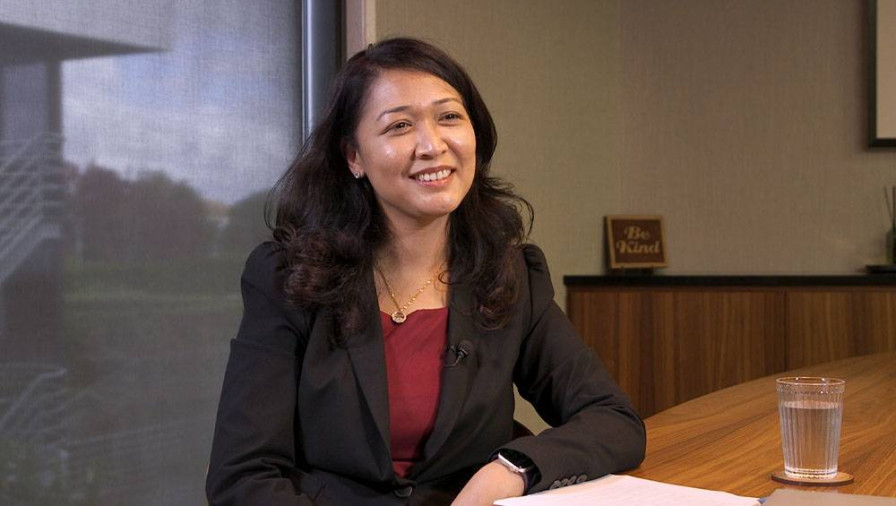
Auckland ophthalmologist Dr Divya Perumal.
“I’ve worked really hard on having a good reputation, and I couldn’t believe the things that were on that script,” she said. “And that's why I felt it was important that I reached out to you and took all the other necessary actions, because this is actually really important in terms of public safety.”
The advertisement falsely presented Perumal as the creator of a treatment that could restore eyesight and avoid "costly" conventional care.
It also portrayed her as attacking her own profession, including claims about a cartel of medical professionals deliberately not informing the public about this supposed cheaper wonder cure.
Perumal said she did not invent the product, had never prescribed it, and had no connection to the advertisement.
She said the scammers appeared to have taken footage from Revision’s YouTube channel, which carries educational material for optometrists and colleagues, and used an AI tool to manipulate her voice, eye contact, and facial movements.
“This is not just any technology. This is actually manipulating media so that you can no longer use your normal warning signs that this is a scam,” she said.
Perumal said the reputational threat was significant. She trained for five years in medicine, spent three years as a junior doctor, completed five years of fellowship training, and had spent five years as a consultant ophthalmologist.
“I’m very proud to say that I’m a doctor. I’m a New Zealand-trained specialist in the areas of glaucoma and cataracts. These are blinding conditions, and I’m a person who upholds my ethics of why I am a doctor,” she said.
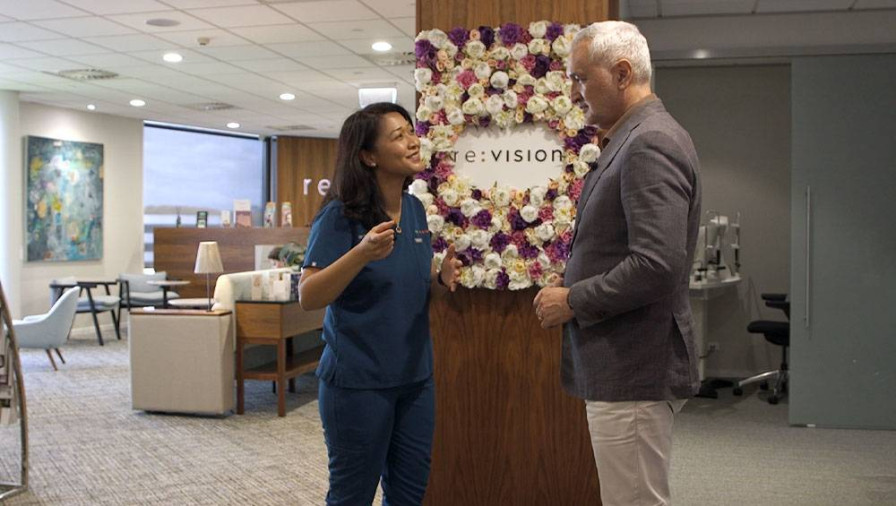
Dr Perumal at Mt Wellington clinic Revision, in an interview with NBR’s Mike McRoberts.
Part of that was the duty of care to patients. “So seeing patients who could potentially be harmed in this manner, using my face ... [and] professional reputation, is unacceptable,” she said.
Perumal said patients had already contacted her clinic asking how to access the product.
One elderly woman from Cambridge with end-stage glaucoma had tried to buy the supposed medicine, but the transaction was turned down by her bank. “She was anxious, very desperate, and she had end-stage glaucoma,” Perumal said.
Glaucoma is a condition where the optic nerves, or cables at the back of the eye, become thinner. It is often described as the silent thief of sight.
The desperate woman had contacted Perumal's private clinic to try to get the so-called medicine.
“Awful,” Perumal said. “These patients are so vulnerable, and this is part of the big issue. These patients are being targeted because they have visual impairments. They’re elderly, and they really want to do something about their sight.”
Perumal said she had filed a police report, notified Netsafe, registered the site with Google Safe Browsing, contacted the domain host, spoken with Ophthalmology New Zealand, and notified the Royal Australian and New Zealand College of Ophthalmologists.
She said the college had told her it appeared to be the first time such a case had happened to an ophthalmologist in Australasia. An official note had been sent to ophthalmologists in Australia and New Zealand warning them about deepfakes.
Perumal said Meta was the one organisation she felt could make a difference, but its reporting process had not worked.
“Unfortunately, in this case, because there is no Facebook URL, despite the fact that the marketing is coming through Facebook, I’m not able to register it as a scam,” she said. She said the advertisement appeared to be a form of dark ad.
Perumal said New Zealand doctors were overseen by the Medical Council and were not allowed to advertise or endorse drugs in the way the video suggested. She urged people to be cautious if they saw familiar faces promoting health products online.
“I think what’s really important here is ensuring that you have some degree of integrity in medicine when it comes to health information. So I would say trust the evidence, not the marketing.”




