© All content copyright NBR. Do not reproduce, even if you have a paid subscription.
The tension within the Federal Reserve’s dual mandate came to the fore this week, as the world’s largest central bank trimmed interest rates and signalled another cut in 2026.
In a move that was widely anticipated by financial markets, the Federal Open Market Committee cut its key benchmark rate by 25 basis points, taking it to a range of between 3.5% and 3.75%.
The committee was divided on the decision, as three of the 12 voting members opposed the move. One member supported holding interest rates steady, while the other two were in favour of cutting rates by 50 basis points.
The decision to lower rates while inflation remains stubbornly high at 2.8% came as the “downside risks to unemployment rose in recent months”, the FOMC said in a statement.
Fed chair Jerome Powell, in a press conference following the cut, reiterated there had been a contraction in jobs recently, as modelling done by the Bureau of Labor Statistics to assess how the labour market was affected by business closures and failures had probably overstated jobs by about 60,000 a month since April.
Forsyth Barr investment strategist Zoe Wallis told NBR the concerns about the labour market were “legitimate”, and Powell's comments suggested there would be a downward revision to the payroll figures. “On the other side of that, you’ve got this shrinking labour market, essentially as a side effect of immigration.”
It meant that, even if payroll figures showed fewer jobs being added, the unemployment rate may not rise as quickly because the pool of people available or looking for work was diminishing, she said.
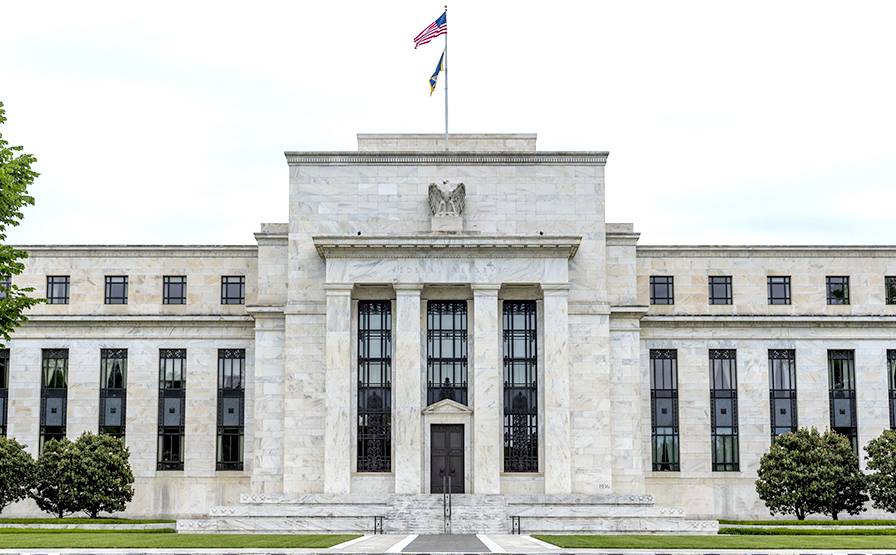
The Federal Reserve building.
Thursday’s decision also saw a shift in tone from the Fed on its view of tariffs. Until now, the Fed had been unsure whether the inflation impact of the levies was going to be transitory.
“Whereas, this time around, they were seeming to have a higher degree of confidence that, actually, it’s going to be a one-off shock and, actually, the downwards trend in terms of inflation should reassert itself once that has passed through.”
Wallis said there was a risk that inflation will run hotter, given the outlook for the US economy is quite firm and some businesses have been absorbing the margin pressures from the cost increases.
“There’s probably an appetite to actually start putting prices back up again when they can.”
The closely watched “dot plot” of individual officials’ interest rate expectations points to just one cut in 2026 and another in 2027 before the federal funds rate hits a longer-run target of around 3%.
A single cut next year “feels about right”, Wallis said, adding that the market was heading towards two 25-basis-point cuts next year.
Closer to home, the Reserve Bank of Australia held interest rates steady at 3.6%.
The RBA, in its statement, said it thought recent increases in underlying inflation were due to temporary factors and there is uncertainty about how much to read into the new monthly inflation reports. “Nevertheless, the data do suggest some signs of a more broadly based pick-up in inflation, part of which may be persistent and will bear close monitoring.”
Wallis said the RBA’s concerns were justified, particularly as the housing market starts to heat up again.
There were differing views on the outlook for rates, ranging from two hikes in the coming year to no change at all.
“I think you’ll probably get a rate hike in the second half of next year but it will really come down to those inflation figures in the next couple of months as to how much sustained underlying pressure they actually think is going to come through.”
Oracle sell-off
On the equities front, tech company Oracle’s shares were hammered this week, falling by 15% on Thursday as the cloud computing and software firm reported lower-than-expected quarterly revenue.
The sell-off dragged down other big-name tech stocks such as Nvidia and AMD.
Oracle’s share price soared to an all-time high in September after it raised US$18 billion in bonds and inked a US$300b deal with OpenAI that same month to provide the company with AI cloud infrastructure.
Wallis said the sell-off goes back to broader nervousness that was rippling through markets in October and November about the scale of investment that was going into artificial intelligence and the valuations of some companies.
There was now more “discernment” across markets about who the winners in AI were going to be, and who actually had fundamentally solid balance sheets.
With that in mind, Wallis said the response to Oracle’s quarterly results was a “pretty rational one”, as they were one of the weaker groups investing heavily in AI, as it had to borrow to do so.
She said that, for a while, a lot of the big AI deals that were being announced resulted in big share price movements, particularly for any company doing a deal with OpenAI, but that sentiment has “faded quite materially” in the past month.
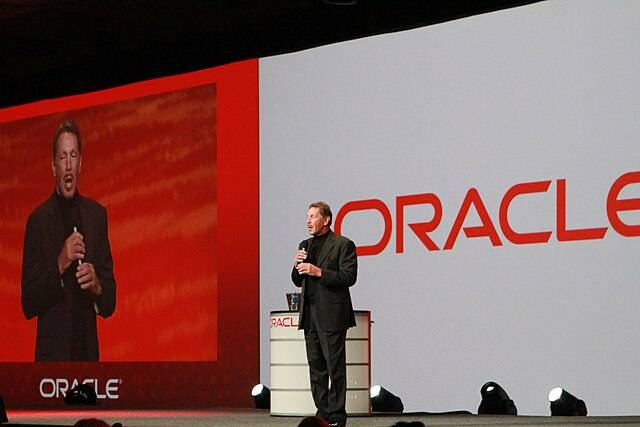
Oracle co-founder and chief technology officer Larry Ellison.
The battle for Warner Bros
While Oracle’s results were front and centre at the end of the week, it was the battle for Warner Bros Discovery that dominated headlines at the start.
Netflix and WBD announced an agreement on December 5 that would see the streaming giant acquire the latter’s film and television studios, HBO Max and HBO, for a US$82.7b deal.
But, on December 7, Paramount Skydance launched a hostile takeover bid for WBD, offering US$30 per share in cash, which values the company at US$108.4b.
The bid outpaces Netflix’s offer of US$27.75 per share in cash and stock. Paramount’s offer is for all of WBD, while Netflix is only interested in the Hollywood studios and streaming business. “We’re really here to finish what we started,” Paramount chief executive David Ellison told CNBC.
“We’re sitting on Wall Street, where cash is still king. We are offering shareholders US$17.6b more cash than the deal they currently have signed up with Netflix, and we believe when they see what is currently in our offer, that’s what they’ll vote for.”
Netflix has a fight on its hands if it wants to acquire Warner Bros Discovery.
Ellison was in New York on December 10, where he met with investors to try to convince them his company’s offer was a better bet than Netflix’s.
According to people who attended the meetings, Ellison and his deputies left several WBD shareholders with a positive view of the advantages of Paramount’s US$108b bid over Netflix’s offer, the Financial Times reported.
Ellison reportedly tried to assuage concerns about Paramount’s reliance on investors from the Middle East to fund its offer, which became contentious in negotiations with WBD’s board.
Mario Gabelli, a fund manager who attended the meeting, told the FT that Ellison’s team did an “extraordinarily good job” answering questions.
Gabelli said his clients would be better off tendering their stock under the Paramount offer if Netflix does not change the structure of its proposal.
It’s worth noting that any deal would require approval from federal competition regulators and could face scrutiny from US states as well.
Enjoyed this recap? Don’t miss the forecast. NBR member subscribers can read our Market Outlook every Monday to know what to expect in the week ahead.