If global financial markets taught us anything over the past week, it was that they were largely supportive of US imperialism.
US President Donald Trump’s move to detain Venezuelan President Nicolas Maduro and his wife on drug trafficking charges and take control of the country’s vast oil reserves elicited a favourable response from Wall Street, with the S&P 500 rising on the first full trading day following the incursion on January 3.
Since then, the benchmark index has notched a gain of about 1.11% as of Friday New Zealand time. Japan’s Nikkei 225 Index initially surged on the invasion but has walked back some of those gains as the week has drawn on, while key markets in Europe have also risen.
Closer to home, the local Top 50 index shrugged off the invasion and surged to a record close on Wednesday, as heavyweight Fisher & Paykel Healthcare buoyed the bourse.
While the initial reaction has been positive, Harbour Asset Management portfolio manager Shane Solly told NBR it was too early to say how Trump’s control of Venezuela’s oil reserves is going to pan out.
“The main impact for capital markets is the price of oil and its impact on inflation, and how central bank rate settings react to that inflation.”
Oil
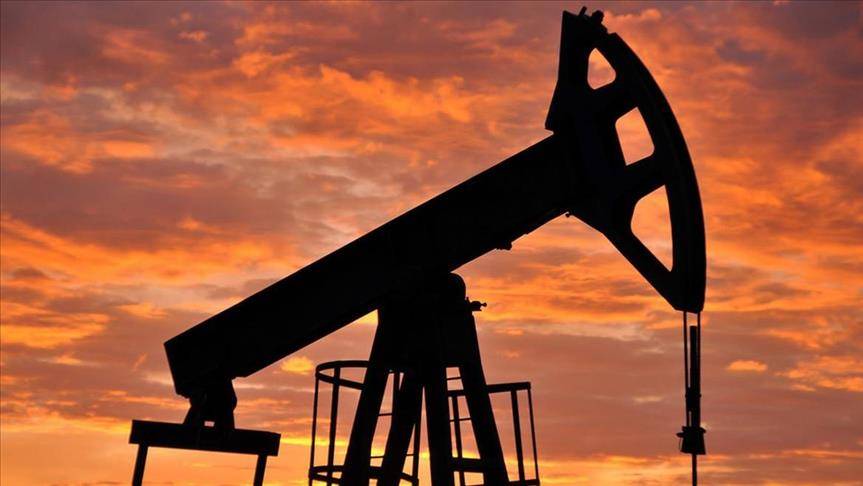
Venezuela has the largest proven crude oil reserves in the world at 303 billion barrels, according to the US Energy Information Administration, but it currently produces less than a million barrels of oil a day, which is less than 1% of global oil production, due to creaking infrastructure.
About half of this production is exported to Russia and China at discounted rates.
As CNBC reported, consulting firm Rystad Energy estimates Venezuela’s oil infrastructure would require about US$53 billion of investment over the next 15 years just to maintain crude oil production of 1.1 million barrels per day, and this figure would have to more than triple to US$183b by 2040 to increase production to 3 million barrels.
Oil prices have risen this week despite the prospect of more supply potentially coming into the market, which may reflect a general feeling among investors that Venezuelan supply is still a long way off from coming onto the open market.
Regardless, oil prices more generally are much lower than they were a year ago due to a glut of supply. For instance, West Texas Intermediate, which is one of the many measures of crude oil prices, is sitting at US$56 a barrel, versus about US$75 a barrel a year ago.
Solly said if the US can get production cranking in Venezuela again, oil prices could fall back into the US$40 range.
Where that investment into Venezuela’s oil infrastructure comes from, however, remains an open question.
Chevron has been the big corporate winner from the attack, with its shares gaining 4.5% this week, as it is the only major US oil company operating in Venezuela.
However, the company already announced in December that it was committing between US$18b and US$19b on capital expenditure in 2026 as it focuses on production in the United States, as well as investments connected to a recently acquired stake in oil-rich Guyana.
But Solly thinks that a lot of other US oil companies are well-positioned to improve production in Venezuela from a technology point of view.
“They don’t actually have to go and discover anything; they just have to actually lift production of the existing fields.”
The price of gold has also perked up following the invasion of Venezuela, inching closer to US$4500 per ounce, as investors regard the precious metal as an asset of safety during periods of uncertainty.

Local front
On the local front, shares in Infratil gained more than 3.3% after the infrastructure investor announced on Monday an A$349m increase in the valuation of its CDC data centre business. CDC forms a large part of Infratil’s portfolio, with its stake in the company now valued at A$6.954b ($8.1b).
Despite the strong demand for data centre capacity globally, Infratil’s share price has waned. As Solly explains, this is because CDC has been slow to announce new customer contracts. On Monday, the company announced increases in both its capacity, as well as its pipeline for future growth.
“That increase in valuation is definitely justified. The share price had a little bit of movement on the back of the [revaluation] but it actually hasn’t run hard.”
Also this week, food giant Nestlé announced it widened the recall of its infant formula products beyond Europe to include China and Brazil over contamination concerns.
As Bloomberg reported, the Swiss food group said some of its product may be contaminated with cereulide, which is a toxin that causes illnesses such as vomiting. It is commonly associated with improperly stored foods.
Solly said the recall could mean that Nestlé loses a little bit of market share, which could be snapped up by infant formula marketer A2 Milk.
“We have seen in the past, consumers do move when they, quite rightly, are concerned about food safety, and that has benefited the New Zealand dairy industry in the past.”
Enjoyed this recap? Don’t miss the forecast. NBR member subscribers can read our Market Outlook every Monday to know what to expect in the week ahead.