In a week where the Reserve Bank and the 2026 Budget dominated headlines, encouraging earnings reports by some of the biggest names on the local sharemarket were easy to overlook.
The May reporting cycle wrapped up on Friday, with more than 20 listed firms turning in their financial reporting cards.
Octagon Asset Management chief investment officer Paul Robertshawe told NBR Fisher & Paykel Healthcare was the best result of the season.
The company had been trading down 15% to 20% from its recent highs amid concerns about a potential slowdown in the year ahead and surging fuel prices pushing up freight costs.
But the medical equipment maker allayed most of those fears when it put forward a solid earnings forecast for FY27, guiding to full-year operating revenue of between $2.45 billion and $2.57b, and net profit of between $500 million and $550m.
“The market expected something worse,” Robertshawe said, adding that it was a positive catalyst for the recent surge in the company’s share price, which was up more than 10% for the week.
“It wasn’t a big beat, it wasn’t a big raise to guidance, but it was a [case of] ‘hey, this is a quality company delivering in a tough backdrop’,” he said.
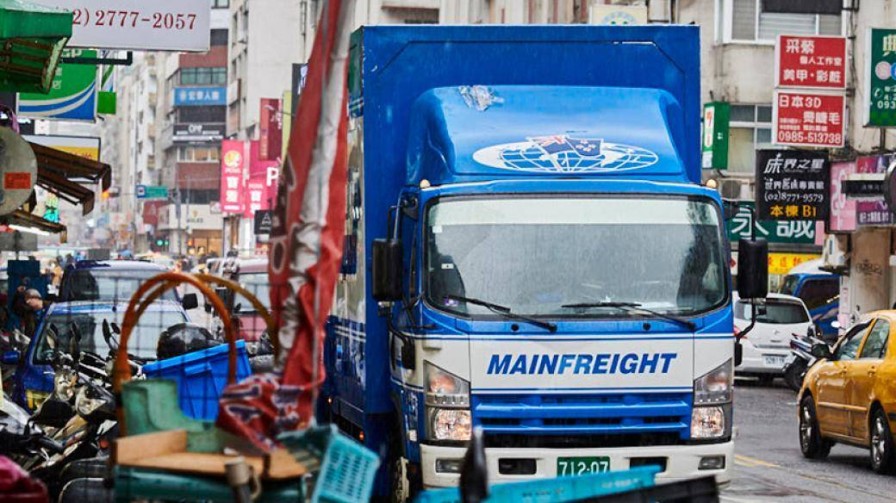
Mainfreight keeps on trucking.
He said it was a similar story with global logistics company Mainfreight. The company is among those most exposed to the impacts of rising costs from the conflict in the Middle East.
“People probably did expect them to have a risk of missing [their guidance] and they didn’t.”
The company’s revenue rose 3% to $5.38b and its net profit, while down 8.5% on the prior year, was slightly ahead of analysts’ expectations at about $351m.
“Forward guidance was probably a fraction better than expected,” Robertshawe added. That helped the company’s shares climb 6.7% on Thursday to a two-month high.
He said that FPH and Mainfreight were among best companies in the country, with good management and good business models. “They’ve got a lot of strings to pull if things aren’t going well.”
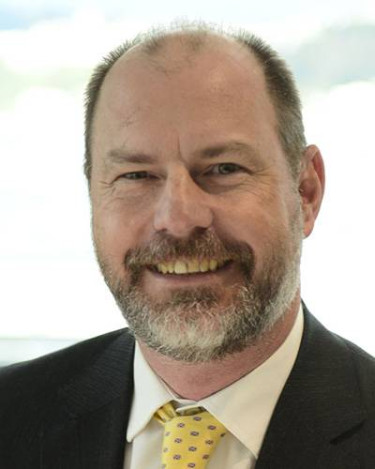
Octagon’s chief investment officer Paul Robertshawe.
Ryman’s growth in care
Dual-listed Ryman Healthcare was among those that turned in a solid full-year report card, although its outlook was on the softer side.
The retirement village operator reported positive free cashflow at its balance date for the first time in a decade, a reduction in net debt, and a near doubling of its operating earnings.
Robertshawe called out the “really strong progression” of Ryman’s care business, which was the main driver for the big increase in underlying earnings, due in part to favourable funding changes for care across the Tasman.
Aged care for a long time was seen by listed operators as a drag on their business models because government funding did not keep up with the costs of providing it.
Operators could afford to treat it as an afterthought when interest rates were low and the housing prices were rapidly rising, which saw the retirement village arms of these businesses boom.
Companies could borrow cheaply and undertake large developments because of fat development margins and large resale gains.
That all changed when interest rates started to climb and house prices cooled.
Robertshawe said these “false tailwinds” fooled companies into thinking they were good operators, when it was in fact the macro environment helping them out.
The shift in conditions has forced operators to improve the profitability of their care operations.
While progress in this area saw Ryman’s share price rally, Robertshawe said the market was not going to get too excited until there were signs of a broader recovery in the housing market.
Infratil
Blue-chip infrastructure investor Infratil also turned in its full-year results.
Shares in the company initially dipped on the day but rebounded after some investment analysts raised their target prices and maintained their favourable ratings. Much of the market focus has been on the Australian data centre business, CDC, in which Infratil has close to a 50% stake.
On May 6, Infratil announced a new 555MW contract for CDC with a major US customer, which caused its shares to skyrocket. They are now trading close to 30% higher for the month.
There are favourable tailwinds for CDC, given the global demand for data centres, but Robertshawe said it was “dangerous” for a company if its share price relied on winning the next deal.
A story emerged in the Australian Financial Review this week, reporting that AI giant Anthropic has been running a process to find an Australian-based data centre provider, and CDC was named as one of the parties auditioning for the contract, along with NextDC, AirTrunk, and Firmus Technologies.
“Only one of them can win, so what happens if Next wins and Infratil doesn’t? Does the share price fall a buck or about two bucks?”
Robertshawe said Infratil was going to continue to report great numbers and he could understand why the market was attracted to it. “But we are now at a price level that needs new announcements to keep driving it forward.”

Tourism Holdings.
THL bid
The week rounded out with campervan company Tourism Holdings receiving a sweetened offer from private equity firm BGH Capital and the Trouchet family on Friday.
The revised bid of $3.10 per share follows last June’s failed $2.30 offer. The dual-listed company’s shares closed at $2.20 on Thursday.
THL also lowered its February guidance to underlying net profit after tax from a range between $43m and $47m, to between $40m and $43m.
Robertshawe said while the bid is great in its own right for THL, the bigger takeaway was that the New Zealand market was relatively cheap in some sectors.
“There’s a bunch of businesses in New Zealand that are trading way below levels of two or three years ago, and the better businesses could be exposed to bids like this,” he said.