American corporates have been exceeding expectations “by a reasonable magnitude” this earnings season despite tariff uncertainty, a soft labour market, energy supply disruptions, and war.
Earnings growth among listed US companies was running at about 25% year on year at the topline but, even after stripping out the impact of mega-cap tech companies, growth was still travelling at 16%, JBWere investment strategy senior manager Phil Borkin noted.
Even the median stock on the S&P 500 has earnings growth of 11% year on year, Borkin said.
“Those are really good numbers at a time when you could think of lots of reasons why they shouldn't be. When you've had tariff uncertainty, you've had a labour market that's soft, you've obviously had disruptions with energy supplies and things.
“So, it just highlights that that resilient and healthy fundamental picture for US corporates is a really important part of why markets have been able to withstand all the shocks and noise that have been thrown at them over the last few years.”
Borkin was bullish on data centre-related capital expenditure continuing to filter through the US economy – and further afield in Asia too.
“The semiconductor stocks have clearly been an outstanding performer over the last little while, and that's a key part of it. Our guess is that it’s still got further to run, given those capex numbers of data centres etcetera are only just continuing to rise higher.”
Borkin said markets were encouraged by indications of peace dialogue over the Iran conflict during the week, and that it appeared the conflict was not currently expanding regionally nor into the further destruction of energy infrastructure.

AMD chair and CEO Lisa Su.
Tech infrastructure
Nasdaq-listed semiconductor company Advanced Micro Devices, or AMD, reported earnings and revenue that beat analysts’ estimates, resulting in a 17% appreciation in the value of its stock on Wednesday.
British semiconductor company Arm Holdings also beat expectations this week although its share price initially slipped lower on fears about whether the chipmaker could keep up with AI-related demand.
It’s having impacts in this region too, where Infratil’s announced this week that a business of which it owns nearly half – CDC Data Centres – had signed a deal to build a huge 555-megawatt data centre in Australia under contract from an unidentified US-based “high-end investment-grade customer”.
Infratil’s stock jumped some 13% on the day and continued to rise throughout the week, to be about 19% up over five days.
Borkin acknowledged the market’s concern over whether cloud computing hyperscalers can justify the high level of capital expenditure, and whether a commensurate return will be forthcoming.
“When you're seeing the share prices move to the degree that they are – like double-digit gains day after day – you do start to ask some questions around whether this is forcing investors just to chase this rally, and you're starting to see exuberant price action.
“There are some question marks now starting to emerge over whether the market’s getting to that ‘blow-off’ stage you often see later in cycles, where investors are forced to chase it if they haven't been involved …
“That's a valid debate to be having but, at the heart of it is those hyperscaler capex numbers, and the fact that they're still going up and showing no signs of slowing down.”
Yet Borkin suggested investors needed to be disciplined about trimming positions in those runaway stocks and “take the profits when the market's giving it to you”, as well as being mindful of how large certain stocks may be getting within a portfolio as valuations get a bit “frothy”.
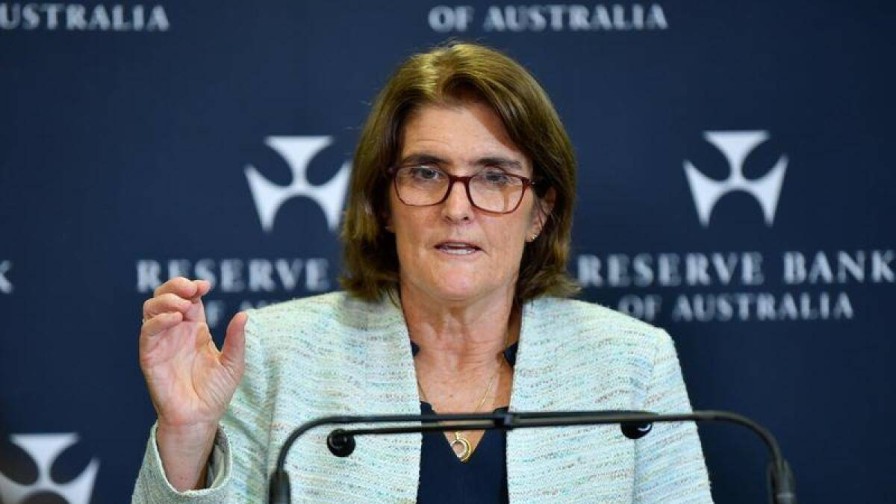
RBA Governor Michelle Bullock.
Interest rates, unemployment figures
Meanwhile, the Reserve Bank of Australia’s interest rate hike during the week – up 26bps to 4.35% – illustrated that economy’s ongoing battle with inflation.
Its third hike in a row should now give the RBA some flexibility to “take a breath and see how it plays out,” said Borkin, noting Australia’s annual rate of inflation reached 4.6% in March 2026, up from 3.7% in February and far above the central bank’s 2% to 3% target.
“I think you'd have to argue, given where inflation’s sitting, that the risks are still that they have further to go.”
While Australia started the cycle with good economic momentum and a tight labour market, New Zealand has plenty of spare capacity, below-average wage growth, and a high under-utilisation rate, which measures beyond unemployment into people who are underemployed or potential jobseekers.
New Zealand unemployment figures out during the week showed a slight fall from 5.4% in the December quarter to 5.3% in the March quarter, which was better than economists expected.
Overall, there were 163,000 unemployed people in the quarter, compared with 165,000 in the December quarter, as measured by the Household Labour Force Survey. The labour market participation rate dropped marginally from 70.5% to 70.4%.
The under-utilisation rate remained at 12.9%, with 406,000 such people identified in the March quarter.
More capacity tended to reduce the likelihood of second-order impacts of inflation, where households and firms start to embed higher prices into their future expectations, Borkin said.
“It's still a risk, but the odds of that are lower, so that gives the Reserve Bank of New Zealand a bit more flexibility to look through [inflation] than, unfortunately, the Reserve Bank of Australia enjoys.”