Happy Thursday and welcome to your morning wrap of the key global headlines from around the world.
First up, the Federal Reserve has left its key benchmark interest rate unchanged in a move that was widely anticipated, but it noted there were “uncertain” impacts from the conflict in the Middle East, CNBC reported.
The Federal Open Market Committee voted 11 to 1 to keep the federal funds rate in a range between 3.5% and 3.75%.
The committee made few changes to its view on the economy, flagging a faster pace of growth and higher inflation projections for 2026. The closely watched “dot plot” pointed to one rate cut this year and another in 2027.
The committee said that war in Iran and its impact on the global oil market had threatened to keep inflation above its 2% target. “The implications of developments in the Middle East for the US economy are uncertain,” the statement said.
To the war in Iran now, where the price of oil has spiked after Iran threatened to attack key energy infrastructure in the Gulf states following a major gas field attack, Reuters reported.
Brent crude oil, the global benchmark, has jumped more than 5% to sit just under US$109 a barrel. The rise contributed to Wall Street's key indices sliding between 0.7% and 1%, as they also came under pressure from hotter-than-expected wholesale inflation.
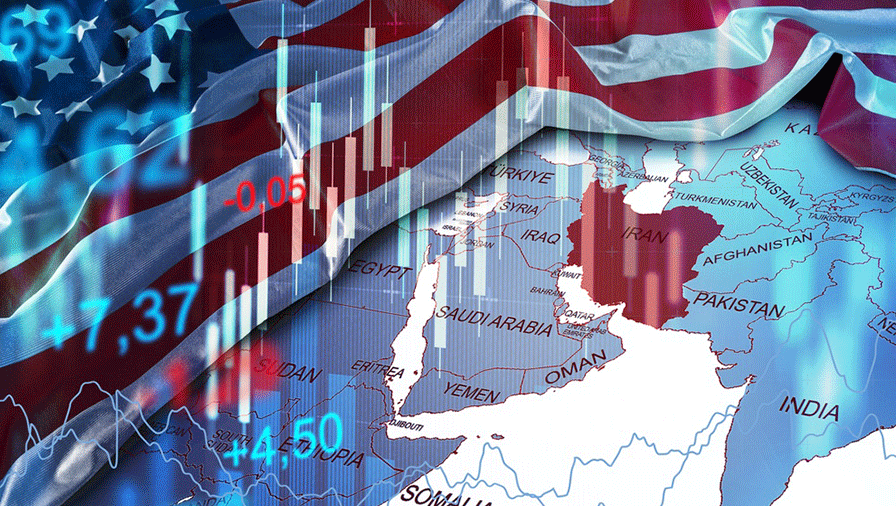
The attack on the South Pars gas field has been reported in Israeli media to have been carried out by Israel with US consent, though neither country has acknowledged responsibility.
Pars is the Iranian sector of the world’s largest natural gas deposit, which Iran shares with Qatar. Iranian media reported that gas tanks and parts of a refinery had been hit, while workers had been evacuated to a safe location.
Both Qatar and the UAE have denounced the attack, with the former calling it a “dangerous and irresponsible” escalation that put global energy security at risk.
Iran, in response, has listed an array of prominent regional oil and gas targets belonging to Saudi Arabia, the UAE and Qatar, which it said were now “direct and legitimate targets” and should be evacuated at once.
The spike in oil comes despite the Trump administration announcing a couple of measures to try to contain prices. The US President has temporarily allowed foreign-flagged ships carrying oil and gas to travel between US ports, The Guardian reported.
The president issued a 60-day waiver to a law passed in 1920 that aimed to protect the US shipping industry by preventing foreign ships carrying commodities from travelling through US waterways.
PGIM chief global economist Daleep Singh, in a note to clients reported by CNBC, said the impact of suspending the Act will likely be limited. “Put plainly: the US can now move fuel around more easily, but it still can’t refine enough of what it produces for self-sufficiency,” he said.
The Trump administration has also eased sanctions, allowing US companies to do business with Venezuela’s state-owned oil and gas company in an effort to boost global supply, Associated Press reported.
The Treasury Department has given broad authorisation allowing Petróleos de Venezuela SA to sell directly to US companies on global markets, which is a massive shift after Washington has for years largely blocked dealings with Venezuela.
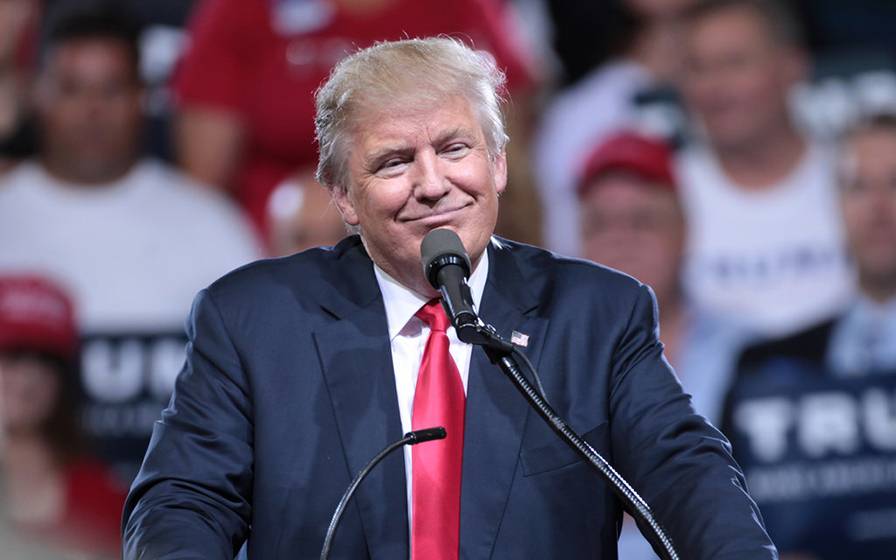
US President Donald Trump.
Iran’s president has confirmed the death of the country’s intelligence minister, Esmaeil Khatib, in an Israeli strike, marking the third high-profile killing in two days, ABC reported.
Earlier this week, Israeli attacks killed Iran’s powerful security chief, Ali Larijani, and the head of Iran’s Basij paramilitary forces, Gholamreza Soleimani.
Following Khatib’s death, Israel Defence Minister Israel Katz said the Israeli Defence Force has been authorised to target any senior Iranian official without the need for approval. “No one in Iran has immunity and everyone is in the crosshairs.”
Iranian President Masoud Kezeshkian, in a post on social media, confirmed Khatib’s death, labelling it a “cowardly assassination”.
In Tehran, thousands of people have appeared in the streets for a funeral for Larijani and other figures killed by strikes. Overnight, Israeli attacks on central Beirut killed at least 12 people, according to the Lebanese health ministry.
In other news, Volodymyr Zelensky has said that Ukraine faces a missile shortage due to the conflict in the Middle East.
In a sit-down interview with the BBC, the Ukrainian president said Russia’s Vladimir Putin wanted a “long war” between the US, Israel and Iran because it would weaken Kyiv and see US resources directed elsewhere.
"For Putin, a long war in Iran is a plus," he said. "In addition to energy prices, it means the depletion of US reserves, and the depletion of air defence manufacturers. So [Ukraine has] a depletion of resources."
This would lead to a “deficit” of US-made patriot missiles for Ukraine, he said.


