Ata mārie and welcome to your Friday summary of business and political news from around the world.
In developing news, US President Donald Trump announced that Israel and Lebanon have agreed to a 10-day ceasefire and the leaders of the two countries will meet next week for the first time in 34 years, the ABC reported.
Trump asked Vice President JD Vance and Secretary of State Marco Rubio to ensure “lasting peace” between the two sides. Iran-linked terror group Hezbollah was not involved in the ceasefire discussions.
Trump said he "just had excellent conversations" with Israeli Prime Minister Benjamin Netanyahu and Lebanese President Joseph Aoun. He also said the pair would become the first two leaders of their respective countries to meet face-to-face in 34 years.
A senior Hezbollah politician, Hassan Fadlallah, told Reuters that everything was tied to Israel's commitment to halt all forms of hostilities.
Meanwhile, Trump told reporters that Iran agreed to hand over its store of enriched uranium, and the two sides were "close" to a peace deal ending six weeks of conflict, the ABC said.
"There's a very good chance we're going to make a deal," Trump said. A key priority remained reopening the strategic Strait of Hormuz, where tensions remained high as the US continued a blockade of ships, Bloomberg noted.
Chair of the Joint Chiefs of Staff Dan Caine said as of Thursday morning local time, the US military had not boarded any ships, and 13 had turned around in the Strait of Hormuz, the ABC said.
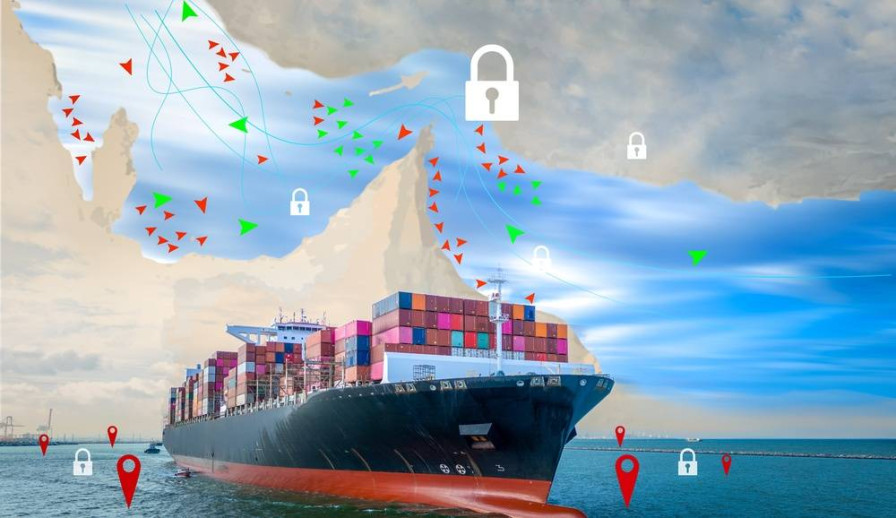
US Defence Secretary Pete Hegseth added the military blockade of Iran’s ports would continue for as long as possible, repeating the US remained “locked and loaded” to attack Iran’s energy facilities, Al Jazeera reported.
China added more crude oil to its massive stockpile in March even as the rest of the world started to draw on inventories to compensate for the loss of millions of barrels from the closure of the Strait of Hormuz, Reuters said.
Europe, meanwhile, has "maybe six weeks of jet fuel left", according to the head of the International Energy Agency. Stocks could reach a tipping point in June if Europe were unable to replace at least half of its imports from the Middle East, the BBC reported.
IEA executive director Fatih Birol said there could soon be flight cancellations if supplies remained blocked. In its monthly oil market report, the IEA said exports from the Gulf region were the largest source of jet fuel to the global market.
On the markets, the S&P 500 and Nasdaq Composite were relatively unchanged on Thursday local time after hitting fresh all-time intra-day highs, CNBC reported.
Earlier, the Dow Jones added 69 points. This week, the S&P 500 and Nasdaq had risen more than 3% and more than 5%, respectively.
In other news, Russia launched one of its largest drone and missile attacks on Ukraine, killing more than a dozen people and wounding more than 100 people across the country, CNN reported.
Russia launched 659 drones and 44 missiles in the 24 hours before Thursday morning local time, the Ukrainian Air Force said, in waves of attacks on major cities including the capital Kyiv, Kharkiv, Odesa, Dnipro and Zaporizhzhia.
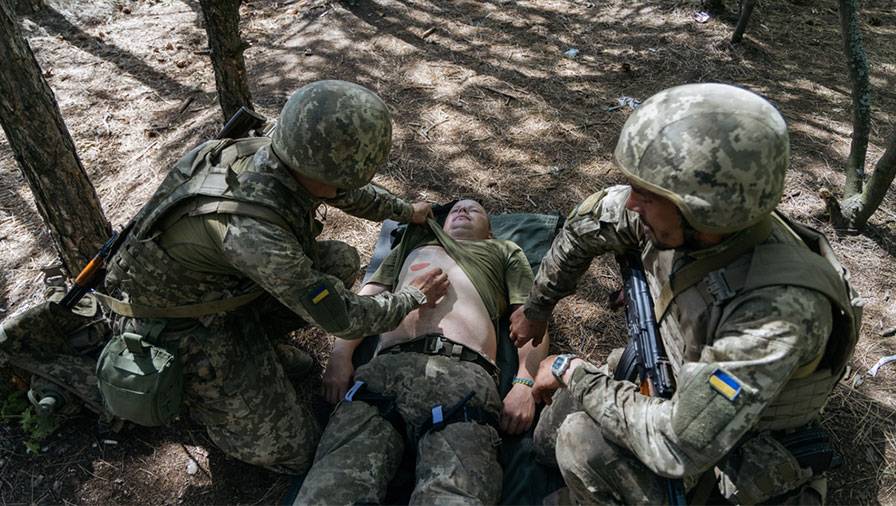
Medics in Ukraine.
To the UK, where the economy expanded by a stronger than expected 0.5% in February, suggesting the economy was gaining momentum before the Middle East war, the Guardian said.
Economists had only expected 0.1% growth, while January’s flatline figure was revised up to 0.1% growth. The February growth was driven by a strong performance from the services sector and manufacturing, as well as recovery in construction.
China's economy also grew faster than expected in the March quarter. Gross domestic product rose 5%, compared to a year earlier. That was slightly ahead of 4.8% pencilled in by economists, the BBC reported.
The growth was driven by manufacturing, while vehicles and other exports were a major bright spot in the data.


