Happy Wednesday, and welcome to your morning wrap of the latest political and business headlines from around the world.
We begin with the conflict in the Middle East, where US President Donald Trump has told the New York Post that Iran talks could resume “over the next two days”, after the latest round of talks between the two countries ended without a deal.
"Something could be happening over the next two days, and we're more inclined to go there [to Pakistan]," he told the newspaper.
Overnight, Iran’s state media said messages have been exchanged between the country and Pakistan, but there is “no information” about any agreement to hold further talks with the United States.
Meanwhile, Israeli and Lebanese delegations met in Washington DC to discuss a ceasefire, as Lebanon was not covered by the temporary truce between the US, Israel and Iran, the ABC reported.
Israeli Ambassador to the US Yechiel Leiter has confirmed at a press conference that talks between the US, Israel and Lebanon have ended.
He told reporters that the Lebanese government made it clear it no longer wished to be “occupied” by the militant group Hezbollah. He also said the three parties talked about a clearly delineated border between the two countries.
It’s the first time since 1993 that the two countries have met for direct talks. They have remained technically at war since Israel was established in 1948.
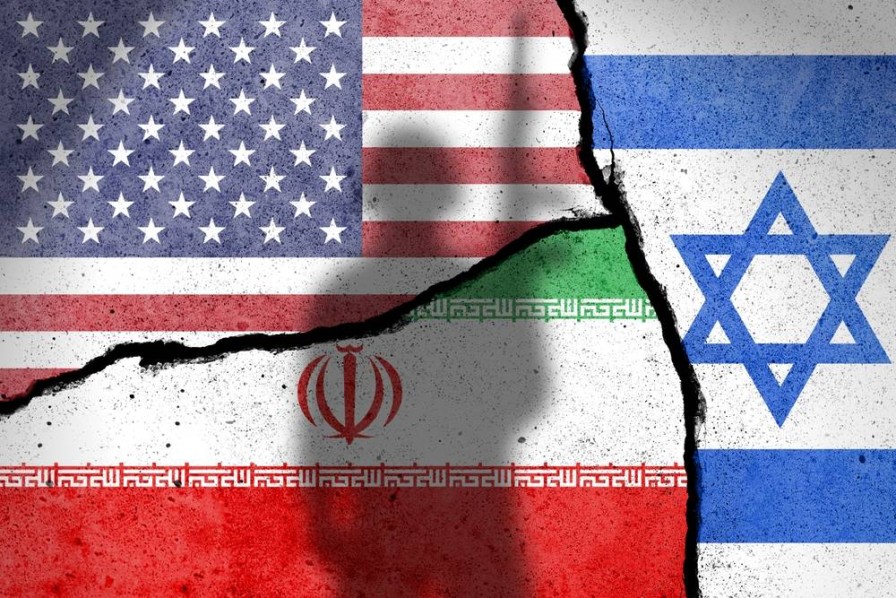
In other news, the International Monetary Fund has cut its global growth outlook due to the Middle East war, Reuters reported.
Due to the ongoing uncertainty over the conflict and the related spike in energy prices, the IMF presented three growth scenarios: weaker, worse and severe.
Under its worst-case outlook, the IMF said the global economy could teeter on the brink of a recession, with oil prices averaging US$110 a barrel in 2026 and $125 in 2027, and growth falling this year to 2% from 3.4% last year. This would lead to secondary inflation effects and require central banks to hike rates to cool price rises.
The middle path envisions a longer conflict that keeps oil prices around $100 per barrel this year and $75 per barrel in 2027, with global growth falling to 2.5% this year.
The most benign scenario assumes a short-lived conflict and oil prices normalising in the second half of this year.
IMF chief economist Pierre-Olivier Gourinchas said the outlook may already be outdated minutes after its release, and told reporters that the "adverse scenario" looked increasingly likely. Emerging and developing economies would be hit the hardest by the conflict, the IMF warned, while the UK was the most exposed developed nation.
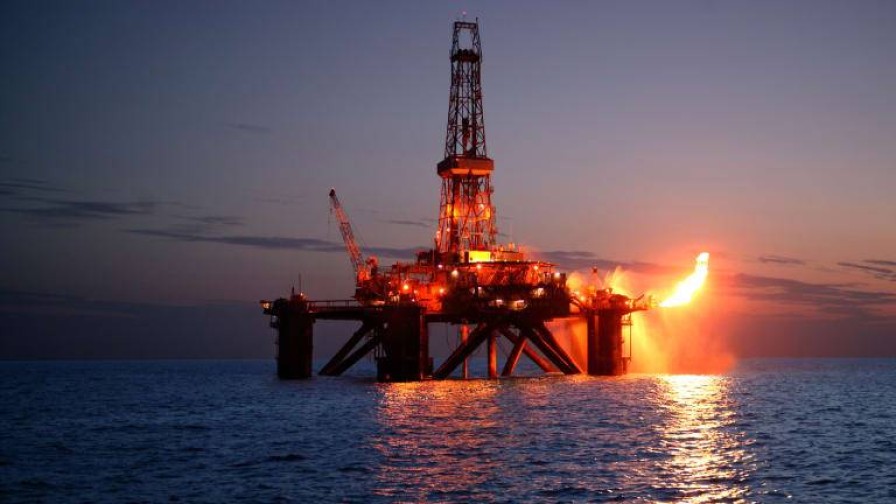
The IMF is concerned about the impact of elevated oil prices.
In business news, tech giant Amazon said it would acquire satellite communications company Globalstar for US$11.6 billion, CNBC reported. The transaction gives Amazon’s nascent LEO satellite internet business a boost as it tries to compete with Elon Musk’s SpaceX.
Six years ago, Amazon unveiled plans to build a constellation of thousands of low-Earth satellites, designed to provide high-speed internet to consumers. However, the company has faced delays in its deployment milestones, asking government officials in January for more time to meet a deadline to launch roughly 1600 satellites by July.
In contrast, SpaceX’s Starlink business, which dominates the sector, has more than 10,000 satellites in orbit and over nine million users. Investors have reacted favourably to today's deal, with Amazon shares up more than 4%.

On Wall Street, the S&P 500 has marched higher, wiping out the losses suffered after the conflict in the Middle East broke out in late February.
It comes as investors appear optimistic that a deal between the two countries is still possible, alongside a surge in technology stocks such as Oracle, Palantir and Salesforce.
The S&P 500 was up 1%, the Dow Jones Industrial Average was up 0.6%, and the tech-heavy Nasdaq was up 1.8%.
Brent crude oil fell more than 4% to around US$95 per barrel, while gold gained 2% to reach US$4866 per ounce.
Finally, Trump’s nominee to replace Jerome Powell as the head of the Federal Reserve might become the richest central banker ever if he’s confirmed.
Recent filings from Kevin Warsh, who is a former Federal Reserve governor, show he holds assets of well over US$100m, Reuters reported. The 69-page disclosure includes two investments worth $50m each in the Juggernaut Fund LP, and $10.2m in consulting fees from the investment office of Wall Street giant Stanley Druckenmiller.
The underlying assets in the fund are not disclosed due to pre-existing confidentiality agreements, but come with a promise from Warsh that he will divest them if confirmed.
He also has dozens of other assets that are mostly focused on artificial intelligence and crypto, among other sectors. The holdings of his wife, Jane Lauder, whose family interests include the Estée Lauder cosmetics company, which Forbes estimates has a net worth of around $1.9b, were also included.
The financial disclosures will likely be a focus of his upcoming confirmation hearing next week, as there are strict rules that limit what Fed officials and their immediate families can hold and how they manage their investments.


