Happy Thursday and welcome to your morning wrap of the latest headlines from around the world.
We begin again in the Middle East, where war has engulfed the region, pushing up the death toll and roiling financial markets.
The Associated Press reported that Israel stepped up airstrikes against Iranian missile sites and factories overnight, while Iran has retaliated, striking a US embassy as well as other locations in Gulf states, which disrupted energy supplies and travel across the region.
Explosions continue to ring out across Tehran, Isfahan and Lebanon from Israeli attacks.
Israeli Prime Minister Benjamin Netanyahu claimed Iran was building “new sites, new places” underground for making atomic bombs, while Iran said it had not enriched uranium since the 12-day war in June, though it maintained the right to do so.
Iran responded as drones struck the US Embassy in Saudi Arabia, although a Saudi minister was quoted by Reuters as saying the embassy sustained little damage. The US then ordered the closure of its embassies in Saudi Arabia, Kuwait and Lebanon.
US President Donald Trump hosted a press conference earlier this morning in the Oval Office, where he said the US launched the campaign because he felt Iran was going to attack first, based on the way diplomatic negotiations had been going, Reuters reported. "If anything, I might have forced Israel's hand," he said, adding that it’s “too late” for talks with Iran.
The US campaign had four objectives: to destroy Iran’s missile capabilities, wipe out its navy, prevent it from obtaining a nuclear weapon, and ensure it could not support allied groups such as Hamas or Hezbollah.
Trump said “someone from within” the Iranian regime might be best to take power once the US-Israel campaign was finished.
He also criticised Iran for attacking countries that had “nothing to do with what’s going on” and has threatened to end trade ties with Spain after that country said it would not allow its military bases to be used for strikes on Iran.
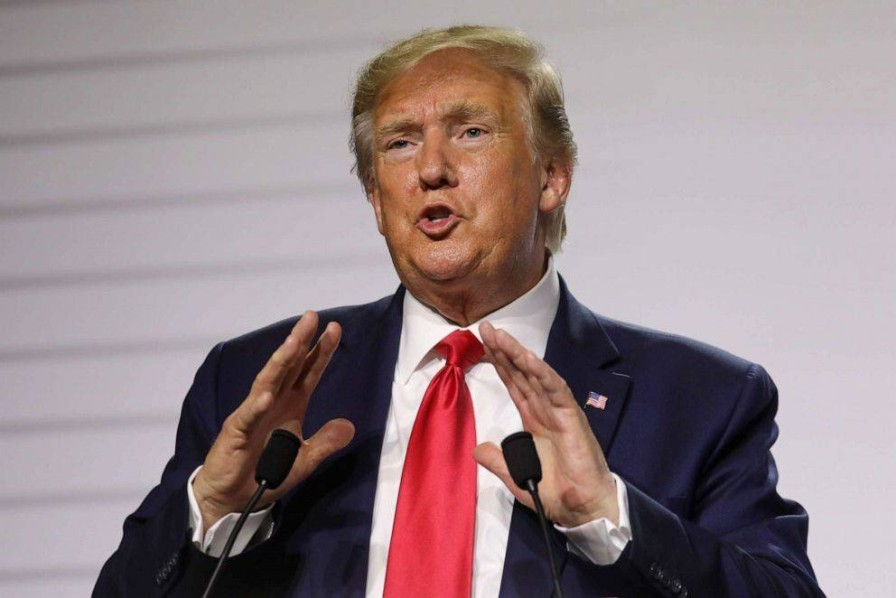
Donald Trump.
According to the Associated Press, the BBC and Al Jazeera, 787 people have been killed in Iran by the attacks. In Israel, where Iranian missiles struck several locations, 11 people are dead. Israel’s retaliatory strikes on Lebanon, where militant group Hezbollah is backed by Iran, killed 52 people, while the US confirmed six service members died over the weekend.
Equity markets took a beating and oil prices surged as the conflict across the Middle East entered its fourth day.
Wall Street’s main indices were in the red overnight, as the Dow Jones Industrial Average, the S&P 500 and the tech-heavy Nasdaq were down 1.3%, 1.4% and 1.6% respectively.
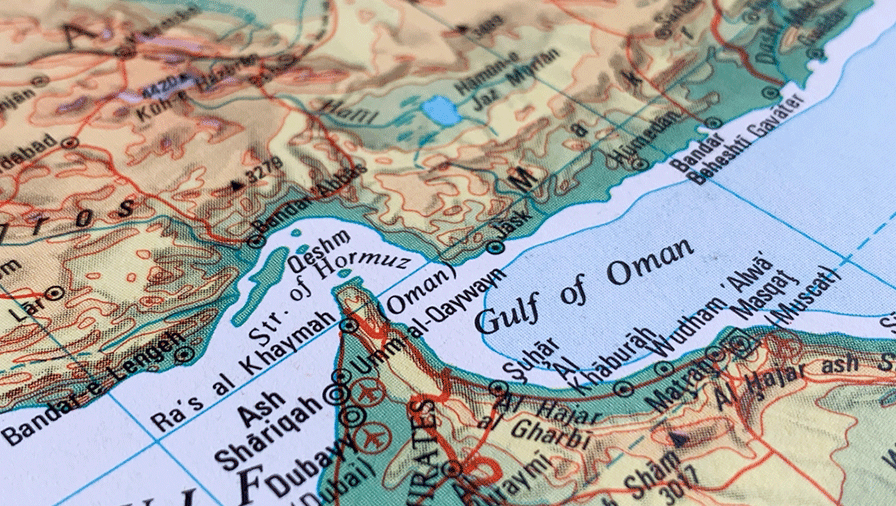
The Strait of Hormuz is a narrow channel through which about 20% of global oil flows through.
The turmoil was also felt across European and Asian markets.
Brent crude oil, the global benchmark, gained as much as 8% in early trading but pared that back to 6.5%, leaving it up about US$5 at US$82.68 a barrel. Prices are up more than 24% over the past month as mounting tensions between the US and Iran pushed them higher.
It came as Iran ordered the closure of the Strait of Hormuz, through which about 20% of the world’s oil passes, and threatened to attack any tanker that tried to move through the narrow channel.
Precious metal gold, often considered a safe haven during times of volatility, fell 4.3% to US$5083 per ounce.
The US 10-year Treasury yield also topped 4.09% before inching back to 4.06%, as investor concerns about the inflationary impact of the war rippled through the economy. Bond yields have an inverse relationship to face value.
Adam Crisafulli of Vital Knowledge, in a note quoted by CNBC, said that after markets initially took the Middle East war in their stride, anxiety had ratcheted up amid concerns that a leaderless Iran would execute a prolonged retaliatory response across the region, targeting key economic and energy infrastructure.
“While the US and Israeli militaries have complete dominance in the region, they can’t knock out every cheap missile and drone fired off by Iran, especially since interceptor stockpiles are rapidly depleting,” he said.


