Happy Wednesday and welcome to your morning wrap of the latest political and business headlines from around the world.
First up, we begin in Australia where millions of children across the country are waking up with no access to their social media accounts after a world-first ban came into effect.
As CNN reports, the ban is aimed at sheltering young people from so-called addictive algorithms, online predators and digital bullies.
Most of the 10 banned platforms – Instagram, Facebook, Threads, Snapchat, YouTube, TikTok, Kick, Reddit, Twitch and X – say they’ll comply with the ban, using age-verification technology to identify under-16s and suspend their accounts, although they don’t believe it’ll make children safer.
Meanwhile, Australian Prime Minister Anthony Albanese has claimed the ban is already a success because families are talking about social media use.
“We’ve said very clearly that this won’t be perfect… but it’s the right thing to do for society to express its views, its judgment, about what is appropriate,” Albanese told the public broadcaster ABC on Sunday.
There is no punishment for people who flout the ban, although there are fines for platforms that fail to show they’ve taken “reasonable steps” to deactivate accounts used by under-16s.
There have been a range of responses from young people spoken to by the media about the prohibition. For instance, Ezra Sholl, a 15-year-old quadriplegic from Melbourne, told the BBC that social media gives him access to a community of like-minded people. “Banning social media will make my world smaller.”
Meanwhile, Emily, a 14-year-old from Canberra, told the BBC the ban is a good thing because she sees social media as “dangerous and addictive”.
In other news, US President Donald Trump has scolded European leaders in a sit-down interview with Politico, denouncing the bloc of nations as “weak” and belittling the traditional US allies for failing to control migration and end the Russia-Ukraine war.
He also signalled that he would endorse European political candidates that aligned with his own vision for the continent and offered no assurances that the US would stand by Ukraine and its continental allies amid Russian aggression.
“I think they’re weak,” Trump said of Europe’s political leaders. “But I also think that they want to be so politically correct.”
“I think they don’t know what to do,” he added. “Europe doesn’t know what to do.”
In the interview, Trump also made a number of blunt comments on domestic matters, for instance, saying that immediately slashing interest rates was a litmus test in his choice of the next Federal Reserve chair.
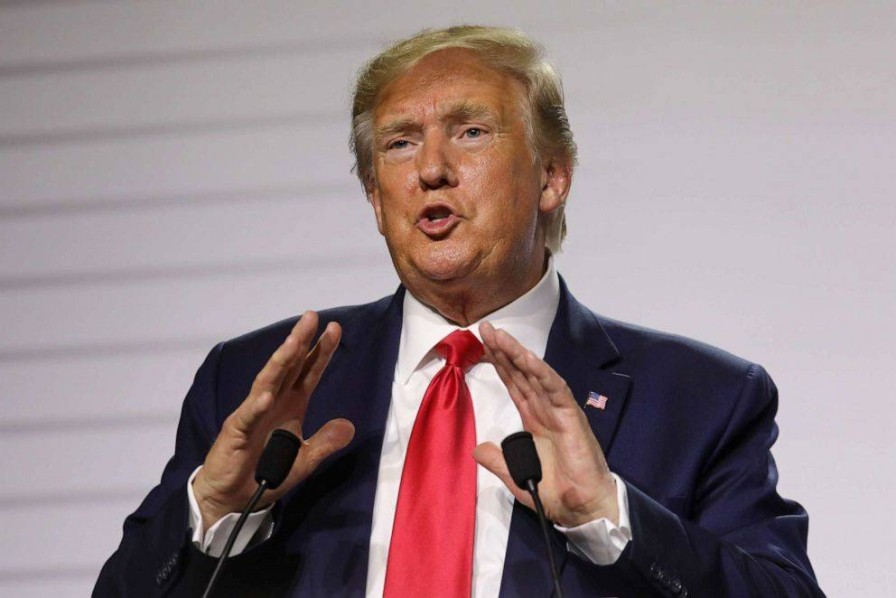
Donald Trump.
In trade news, Beijing is set to limit access to Nvidia’s advanced H200 chips despite Donald Trump’s decision earlier this week to allow the export of the technology to China.
The Financial Times reported that, according to two people with knowledge of the matter, regulators in China’s capital have been discussing ways to permit limited access to Nvidia’s second-best generation of AI chips.
It comes as China wants to become self-sufficient in semiconductor production.
Access could be limited by possibly requiring buyers to go through an approval process where they must submit requests to purchase the chips and explain why domestic providers are unable to meet their needs.
Donald Trump, in a social media post earlier this week, said he told Chinese President Xi Jinping that the US would allow Nvidia to ship its products to “approved customers” in China under conditions that allow “strong National Security. President Xi Jinping positively!”
Trump added that 25% of revenues would be paid to the US, though it is unclear how such a mechanism would work.

Nvidia chips.
Staying with artificial intelligence, Microsoft has announced US$23 billion in new AI investments, the bulk of which is slated for India as the tech giant deepens its bets on the fast-growing digital market.
As Reuters reported, Microsoft chief executive Satya Nadella said the company would spend $17.5b in India, building on a $3b commitment announced earlier this year.
The four-year spending plan starts in 2026 and would give Microsoft the largest cloud-computing presence in India.
In commodity news, the oil market faces a “super glut” next year as new supply clashes with weakness in the global economy, according to one of the world’s largest commodity traders.
As reported by the Financial Times, Trafigura chief economist Saad Rahim said that new drilling projects and slowing demand growth were likely to weigh further on already depressed crude oil prices.
“Whether it’s a glut, or a super glut, it’s hard to get away from that,” Rahim said in remarks alongside the company’s annual results.
Brent crude oil has fallen 16% this year and is on track for its worst-performing year since 2020.
Chinese demand is likely to be slower next year due to its huge fleet of electric vehicles.
Meanwhile, the US government has been trying to keep prices low, with President Trump pledging to “drill, baby, drill” in order to increase American production.


