Nvidia’s first-quarter reporting was again ahead of analyst consensus this week, with earnings at US$58.3 billion ($99b), but Wall Street remained unimpressed, pegging back its share price on Thursday.
The California-based AI chip company, whose products are considered a critical component to the rampant expansion of artificial intelligence factories, is capitalising on what its chief executive Jensen Huang describes as the “largest infrastructure expansion in human history”.
As at its opening on Friday in the US, Nvidia Corporation was trading at a market capitalisation of US$5.4 trillion.
To put that into perspective, that’s more than five times the value of all New Zealand real estate, which is valued at $1.7tt across the country’s 1.73 million dwellings.
It’s also a whopping 12 times the sum of New Zealand’s accumulated wealth – across listed stocks, commercial real estate, NZ Super, and KiwiSaver.
That, according to data from Cotality, comes in at $760b. New Zealand’s GDP, for its part, came in at about $445b last December.
DeVere Group chief executive Nigel Green said the muted Nvidia response reflected concerns over the chip giant’s “towering valuations” and whether it could withstand pressure from bond markets and elevated yields.
Green said while investors rightly expected another blockbuster set of numbers, he noted that even the strongest earnings growth may struggle to fully offset mounting valuation concerns in the current macro environment.
“Demand linked to AI and tech remains extraordinary and the company continues to dominate the most important growth theme in global markets,” he said.

CIP’s Mark Lister.
At the same time, valuations were becoming harder and harder to justify as bond markets continue to exert pressure on expensive growth stocks.
Those higher yields are changing the equation for investors, Green said, creating a scenario where future earnings become less valuable when discounted against rising rates. That also creates increasing scrutiny around companies trading at extremely elevated multiples.
Otherwise, US equity benchmarks proved relatively listless, with the S&P 500 and Dow slightly up by the weekend, as Middle East conflict continued to create pricing ripples across oil prices and the Treasury yields.
Things can change quickly
Investors remained largely focused on prospects for a looming diplomatic resolution, as US President Donald Trump pointed to an imminent conclusion to peace talks with Iran.
Craigs Investment Partners investment director Mark Lister said equity markets during the week represented a “mixed bag”.
He said Australian unemployment numbers during the week were notable, given the jump in the rate from 4.3% to 4.5% was largely unexpected and represented the highest rate in about four and a half years.
Lister said the surprise rise in the rate, which saw an additional 18,600 people unemployed during the month, could pour cold water on expectations of more aggressive tightening by the Australian Reserve Bank – providing a reason to hold off on its fourth consecutive rate hike at its June meeting.
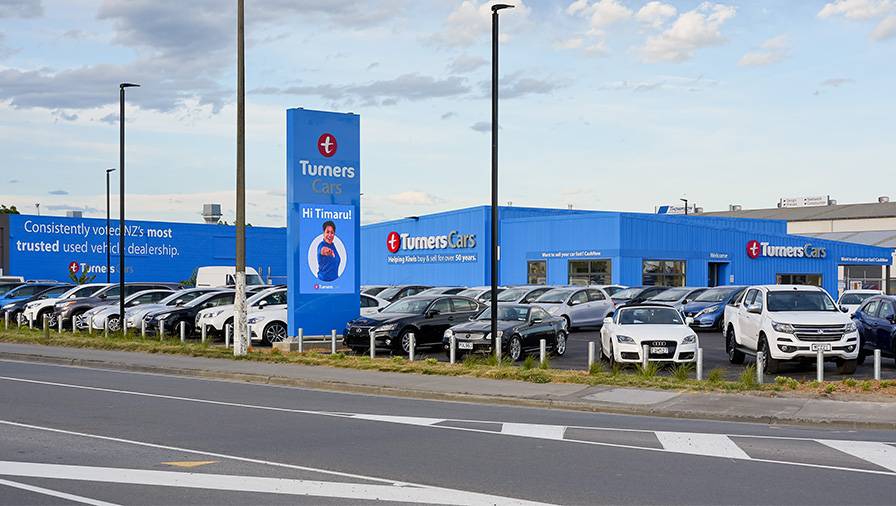
Turners has waved a warning as to geopolitical impacts on consumer buying.
It’s also tangible evidence that the Middle East war and uncertainty was having an economic impact on the Australian market, he said.
He said it was also something worth paying attention to here ahead of next week’s official cash rate review by the Reserve Bank, and a stark reminder that markets can change quickly once “you start seeing weaker economic indicators come through”.
On the local earnings season front, commercial and industrial landlord Argosy and large format retail play Investore both held dividends steady on fairly static earnings, though indicated tenant enquiry had remained encouraging despite geopolitical uncertainty.
Used car dealer Turners Automotive was less positive despite reporting a 9% increase in revenues for its March financial year, raising a red flag as to progressively weakening consumer buying conditions in the wake of the Iran-US-Israel war.