The surprise extension of the US-Iran ceasefire proved a stimulus to US and Asian equities late in the week, as 'war fatigue' weighed more on European markets, which are more dependent on energy imports.
US President Donald Trump said the ceasefire was open-ended, although it has already proven shaky, as Iran continues to fire at and has reportedly seized several cargo ships in the Strait of Hormuz.
The US has maintained a naval blockade, seizing two Iranian tankers in the Indian Ocean this week, and the US Navy has been instructed to sink any vessel suspected of placing mines in the strait.
Negotiations between the US/Israel and Iran are also less than straightforward, with Trump describing Iranian leadership as “fractured” and White House press secretary Karoline Leavitt saying the US wanted to see a “unified” Iranian response.
Iranian officials have reportedly described talks as fruitless given the US’s lack of commitment to prior agreements.
The developments saw the price of Brent crude again ratchet up, to hover just above US$106 per barrel of Brent crude late in the week. Dated Brent remains above US$108, however.
US markets saw gains earlier in the week, amidst a raft of positive earnings reports, with both the S&P 500 and Nasdaq composite hitting new records. However, they had stuttered to a halt by the weekend.
Forsyth Barr senior equities analyst Aaron Ibbotson said the US and global markets had “powered through” on a consensus view that the strait would reopen "one way or the other".
The extended closure would have knock-on implications, but as long as the market could see the contours of a solution, the assumption was that conditions would “normalise”.

Forbar senior equities analyst Aaron Ibbotson.
Warner Bros Discovery shareholders, meanwhile, signed off on a US$111 billion takeover by Paramount Skydance on Thursday, in a deal which sees Paramount take control of all of WBD’s titles and channels.
Those include CNN, Game of Thrones, and Harry Potter. The transaction remains subject to US Department of Justice and European regulatory approval.
Tech giants Meta and Microsoft also announced plans to reduce their headcounts from next month, either through layoffs or hiring freezes, by about 10% and 7% respectively, as they focused on AI investments. That would affect a combined 17,000 roles. Both firms are due to report quarterly earnings this Wednesday, US time.
First-quarter earnings from Tesla, meanwhile, saw the EV manufacturer push revenue by 16% year-on-year to US$22.39 billion ($38.25b). The auto-maker’s stock, which has underperformed its megacap peers this year, showed an initial blip, but then corrected to trade at just over US$387 on the Nasdaq by late in the week.
The company, which has struggled to compete against China’s BYD and Xiaomi lately, confirmed that it planned to make “more affordable trims” of its Model Y SUV and Model 3 sedans.
The South Korean and Japanese benchmarks also hit record highs, led by South Korean memory chip giant SK Hynix. The world’s second-largest memory chip maker and Nvidia supplier posted record first-quarter results, with operating profit up fivefold at 37.61 trillion won ($43 billion).
Ibbotson said the big driver in the market at the moment was the massive build-out of capacity to support AI, which had several layers. That was being driven from the front end – language models such as Claude and ChatGPT – and required massive investment in data centres.
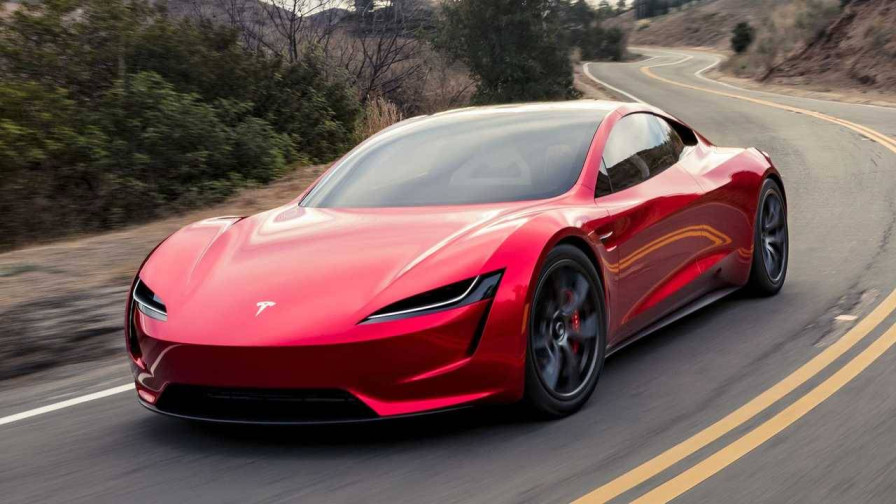
As well as its new high-end Roadster, Tesla is considering newer, cheaper models.
So far, the big winners were companies such as Nvidia and Broadcom, but AI would eventually require more memory, the three biggest providers of which were SK Hynix, Samsung and US firm Micron, he said.
Apple Corporation, meanwhile, announced that its hardware engineering senior vice president John Ternus would become its new CEO on September 1, replacing Tim Cook.
Cook, 65, has been Apple’s CEO since 2011 and was widely credited with pushing Apple beyond its core Mac, iPod and iPhone products and into areas such as entertainment and health – via Apple Watch, AirPods and Apple TV. He will step into the role of executive chair, where he will focus on political and global relations.