Happy Wednesday and welcome to your morning wrap of the latest political and business headlines from around the world.
First up, Iran has stopped communicating with mediators about extending a ceasefire in its war with the US and Israel, according to two Iranian news agencies, although US President Donald Trump has disputed the claim, Associated Press reported.
The reports from Iran’s Fars and Tasnim news agencies, which are both believed to be close to Iran’s paramilitary Revolutionary Guard, came as tensions flared in Israel’s separate but related fight against Hezbollah in Lebanon.
A regional official involved in the mediation told AP that Iran had not communicated at all in the past day after saying that a ceasefire needed to be reached in Lebanon for them to continue. Israeli warplanes have launched dozens of strikes across southern Lebanon overnight, despite an agreement brokered by Trump earlier this week to preserve the ceasefire, The Guardian reported.
Trump, posting on social media, called the reports of a cessation in talks “false and erroneous”.
“The conversations between us have been going on continuously, including four days ago, three days ago, two days ago, one day ago and today,” Trump said in a social media post. “Where they lead, one never knows, but as I told Iran, ‘It’s time, one way or another, for you to make a Deal.”
US Secretary of State Marco Rubio did not address the reported cutoff as he testified at a congressional hearing in Washington overnight.
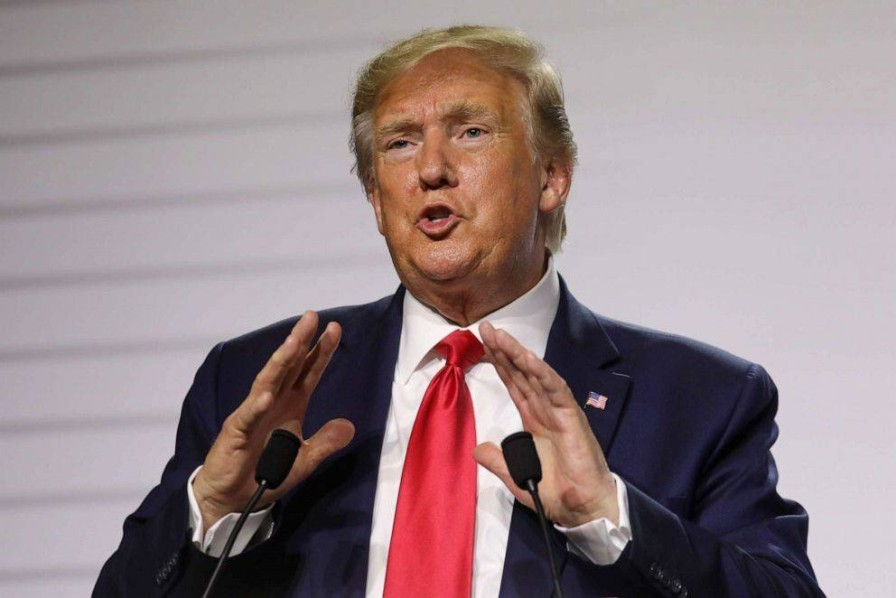
US President Donald Trump.
In business news, AI firm Anthropic will roll out its powerful Mythos artificial intelligence model, which has proven adept at finding software vulnerabilities, to an additional 150 partners in more than 15 countries, CNBC reported.
In April, Anthropic debuted Mythos but restricted access to 50 partners amid concerns over the model’s advanced cybersecurity capabilities. Experts warned that hackers could use the AI model to expose vulnerabilities more quickly.
As worries mounted, the White House held meetings with Big Tech leaders and financial institutions to discuss ways to safely deploy advanced models in the future.
According to Anthropic, its partners have revealed more than 10,000 high or critical-level security flaws since it launched. It estimates that a major cyberattack could impact more than 100 million people.
The new partners that will gain access to Mythos include industries that were not represented in the initial launch, such as power, water, healthcare and communications. They will all need to meet security requirements before being able to test it.
Staying with AI, and Trump overnight signed a narrowed executive order to vet the most advanced models for security risks, the Financial Times reported.
It creates a “voluntary framework” for the US to gain early access to the technology. AI labs will ultimately be asked to submit their new models for security reviews for up to 30 days before they are publicly released.
It is ultimately a watered-down version of an earlier draft, which was due to be signed last month but was pulled by Trump over concerns it could dull innovation and hamper the growth of leading labs, including OpenAI, Google and Anthropic. The original executive order, a draft of which was seen by the FT, asked for a 90-day review period.
The need to establish a framework comes after senior members of the Trump administration, including Treasury Secretary Scott Bessent, raised the alarm about the capabilities of Anthropic’s Mythos model.
Some of Trump’s allies, such as Steve Bannon, have called for leading models to be brought under US government control, while former Trump AI tsar David Sacks warned against measures that may limit the technology’s growth.
In economic news, Eurozone inflation picked up last month, fuelling the case for an interest rate hike later this month, Reuters reported.
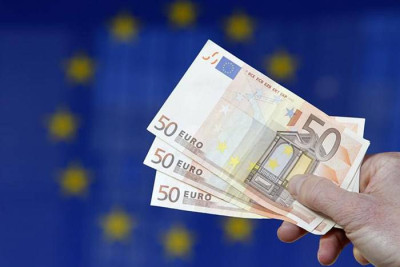
Consumer prices in the 21 nations sharing the euro rose to 3.2% in May from 3%, on the back of a 10.9% lift in energy costs and a surprisingly large pickup in services costs.
Underlying inflation, which excludes volatile energy and food prices, jumped to 2.5% from 2.2%.
"The further increase in headline and particularly services inflation in May reinforces the case for the ECB to raise interest rates next week and suggests that upside risks to underlying inflation may be higher than we had anticipated," Capital Economics chief Europe economist Andrew Kenningham said.
Financial markets have fully priced in a 25-basis-point rate hike on June 11, with one or two more expected later this year.
In market news, Wall Street is flat, and oil prices have crept higher, as Iran reviews the United States’ deal to end the war.
Brent crude oil was up just over 1% to US$96.09 per barrel.
Meanwhile, Bitcoin is back under US$70,000 for the first time since April after sliding more than 5% to about US$67,250.
The move lower began earlier this week when leading crypto treasury company Strategy sold a small amount of Bitcoin it was holding, spooking investors, CNBC reported.
It seemingly contradicts the mantra of the company’s chair and founder, Michael Saylor, to “never sell your Bitcoin”. It was the first time Strategy has sold Bitcoin since 2022.
The sell-off led to a cascade of long liquidations. When leveraged traders who bet on higher prices are forced out of their positions, exchanges automatically sell their holdings to cover their losses.

