Happy Thursday and welcome to your morning wrap of the latest business and political headlines from around the world.
First up, the world's most valuable company, Nvidia, has delivered first-quarter earnings ahead of market expectations.
The chip maker reported revenue of US$81.62 billion ($140b) for the three months ended March, up 85% from a year ago and above market expectations of US$78.86b.
The company also reported adjusted earnings per share of $1.87, which compares with analysts' estimate of $1.76 per share.
“The buildout of AI factories – the largest infrastructure expansion in human history – is accelerating at extraordinary speed,” Nvidia chief executive Jensen Huang said in a statement, which was reported by CNBC.
Financial markets have been hotly anticipating the company’s quarterly earnings as they look for evidence to justify the massive capital expenditure in the AI industry and current lofty valuations.
The company also authorised a US$80 billion share buyback and has increased its quarterly dividend to 25 cents per share from 1 cps.
Staying with business, OpenAI is preparing to file for an IPO as early as this week and is aiming to float its shares as soon as September, the Financial Times and the Wall Street Journal reported.
Citing people who are familiar with the matter, the FT reported that the company has been working with bankers at Goldman Sachs and Morgan Stanley and lawyers at Cooley over the past few months to lay the groundwork for an IPO, which would value the company at more than $1 trillion.
Chief executive Sam Altman has been pushing for the startup to go public ahead of its main rival, Anthropic, which is also eyeing a public listing this year.
The timing could shift depending on market conditions and the performance of Elon Musk’s SpaceX, which is expected to go public in July in what could be the biggest listing of all time.
OpenAI converted from a charity to a for-profit company last year, and this week won a long-running legal battle with Musk, who sued the company and Altman for “stealing a charity”.
The private company has raised close to US$200b, but is looking to the public markets to supercharge its growth in its battle with Anthropic.
OpenAI is behind the ChatGPT language model.
In other news, former Cuban president Raúl Castro has been indicted in the United States on murder charges as part of the Trump administration’s pressure campaign to oust the island’s communist government.
The 94-year-old was charged in Miami, Florida, although there is no evidence that the Cuban government would allow him to be extradited.
The charges stem from a 1996 incident in which Cuban jets shot down planes operated by a group of Cuban exiles, and four men died. Castro, Cuba’s defence minister at the time, is alleged to have given the order to open fire.
Cuban President Miguel Diaz-Canel said the indictment against his predecessor represented a “political manoeuvre, devoid of legal foundation”.
The charges come as US President Donald Trump has pushed for regime change in Cuba. Overnight, he called Cuba a “rogue state harbouring hostile foreign military”.
In financial markets, stocks jumped overnight as oil prices and US Treasury yields slid amid growing optimism that the conflict in the Middle East could soon be resolved.
The Dow Jones Industrial Average was up 1.26%, the broader S&P 500 gained 1.07%, while the tech-heavy Nasdaq rose 1.54%.
Brent crude oil, the global benchmark, eased 6% to US$104 per barrel after US President Donald Trump told reporters the administration was in the “final stages” of negotiations with Iran and three supertankers carrying a combined six million barrels of oil were crossing the Strait of Hormuz, Reuters reported.
Treasury yields, which have been on an upward march in recent days, have cooled on the news, despite minutes from the Federal Reserve’s latest meeting showing that interest rate hikes would be needed if the Iran war continued to stoke inflation, CNBC reported.
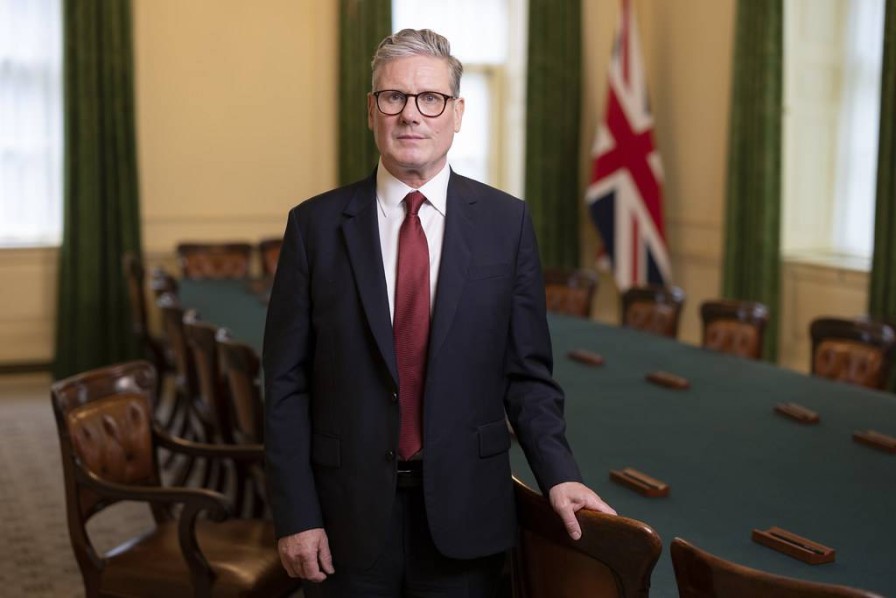
Keir Starmer.
Finally, the United Kingdom has struck a trade deal with the six Gulf states in what Prime Minister Keir Starmer described as a huge win for British business, The Guardian reported.
The deal will offer £3.7b ($8.47b) worth of opportunities for exporters, particularly in the food and luxury car sectors, but also in defence, aerospace, hospitality and other services, the UK government said.
Talks with the Gulf states have been going on for four years, and the deal is seen as a win for Starmer, who has faced instability within his party amid rumours of a leadership challenge in the wake of the UK’s local elections.
The National Farmers’ Union of England and Wales said it was the best agricultural deal since the UK left the EU after it was able to see off demands to lower poultry standards, while the British Chambers of Commerce has also praised the deal.
However, Starmer has faced criticism as the deal did not include a chapter on human rights.


